
Getting your family to eat nutritious food doesn’t have to be a daily battle. Research shows that 73% of parents struggle to serve healthy meals for family dinners that everyone actually enjoys.
We at Laurie’s Grill know that the right approach makes all the difference. With smart planning and simple techniques, you can transform mealtime into something your kids look forward to while meeting their nutritional needs.
What Makes a Family Meal Plan Actually Work
Start With Age-Specific Portions and Nutrients
Toddlers need 4-8 servings of vegetables daily, while elementary school children require 2-3 servings of fruits and vegetables. The American Academy of Pediatrics emphasizes that children need different portion sizes based on their developmental stage. A toddler’s serving equals one tablespoon per year of age, so a three-year-old gets three tablespoons of rice, not an adult portion.
Moderately active adolescents need approximately 2,700 calories daily for males and 2,300 for females, with 25% coming from protein sources. Half of all grains should be whole grains across every age group. Iron needs jump dramatically during adolescence, especially for girls who need 15 milligrams daily compared to 10 milligrams for boys.
Build Your Weekly Menu Around Protein Anchors
Choose five protein sources for the week and plan everything else around them. Monday might feature slow cooker chicken that transforms into Tuesday’s chicken salad and Wednesday’s soup base. Studies from the University of Minnesota show families who plan protein first waste 23% less food and spend 18% less on groceries.
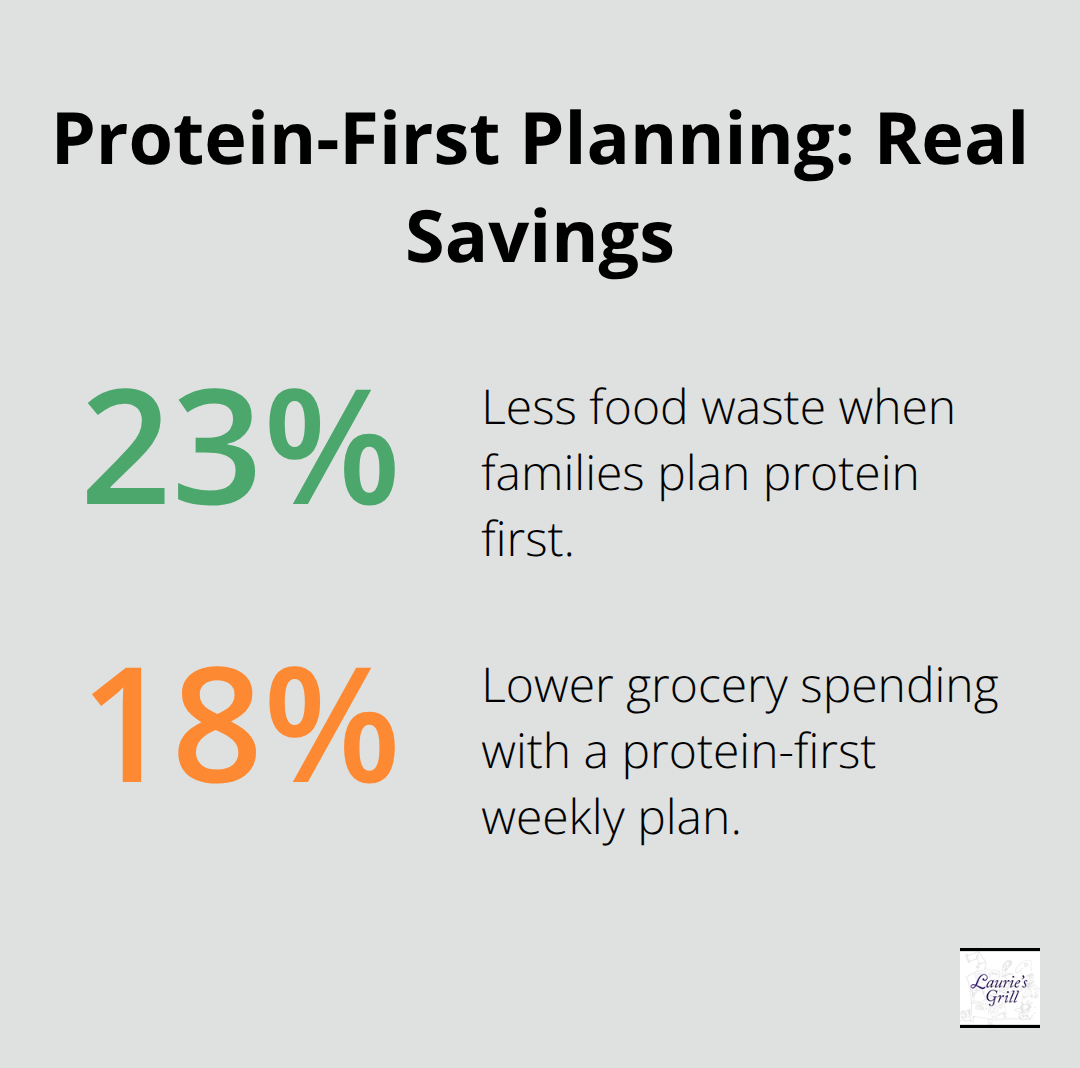
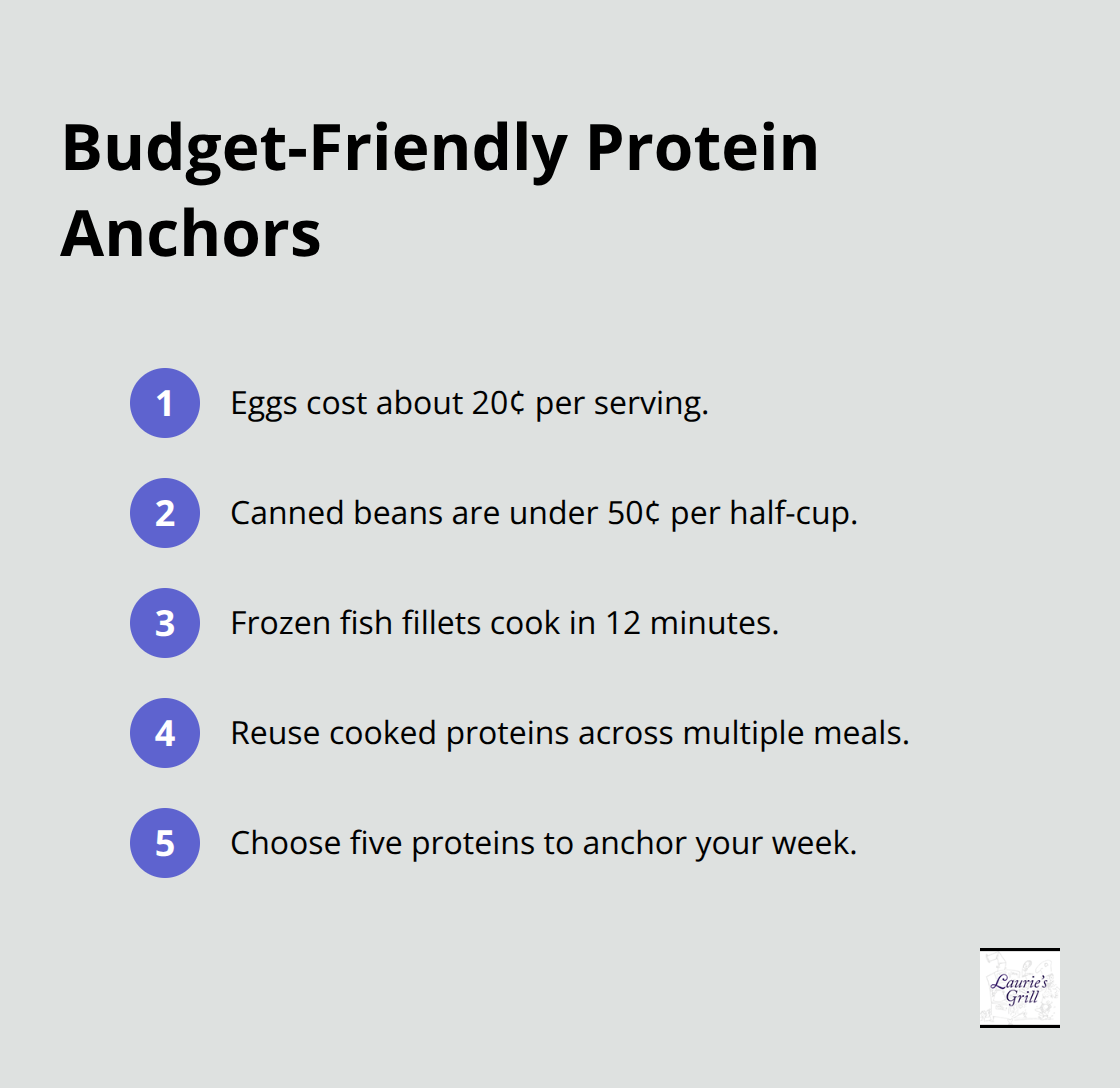
Eggs work for any meal and cost roughly 20 cents per serving. Canned beans provide fiber and protein for under 50 cents per half-cup serving. Frozen fish fillets cook in 12 minutes and offer omega-3 fatty acids without the premium price of fresh seafood.
Shop the Perimeter First, Frozen Second
Fresh produce loses nutrients rapidly, but frozen vegetables maintain vitamin content comparable to and occasionally higher than fresh counterparts. Frozen broccoli costs 40% less than fresh and never spoils unexpectedly. You can buy proteins when they hit their lowest sale price and freeze portions immediately.
A whole chicken costs $1.50 per pound compared to $4.00 for boneless breasts. Ground turkey at $3.00 per pound provides lean protein for multiple meals. Stock up on canned tomatoes, dried pasta, and rice during sales since these pantry staples form the foundation of dozens of family-friendly recipes.
Smart meal plans require more than just good ingredients-they need preparation techniques that actually work in real kitchens with real time constraints.
How Do You Cook Healthy Food Fast Without Losing Nutrients
Steam vegetables for exactly 3-5 minutes – steaming treatment significantly reduces vitamin C retention in most vegetables, with retention ranging from 0 to 89%. Roast at 425°F for 15-20 minutes to caramelize natural sugars in vegetables while you preserve folate and antioxidants better than any other method. Sheet pan meals cook proteins and vegetables simultaneously, which saves 40% of your time while you maintain nutritional density. Cut vegetables into uniform pieces so everything finishes at the same time.
Transform Vegetables Kids Actually Want to Eat
Roasted carrots taste completely different from steamed ones because high heat converts starches into natural sugars. Children prefer vegetables that crunch, so roast Brussels sprouts until the outer leaves crisp up and the centers stay tender. Mix cauliflower into mac and cheese at a 1:1 ratio with pasta – kids won’t notice the difference but get an extra vegetable portion. Grate zucchini into spaghetti sauce where it disappears visually but adds fiber and vitamins. Research shows that children eat more vegetables when they help choose preparation methods.
Prep Once for Multiple Meals
Cook double portions of ground turkey on Sunday and use half for tacos, half for pasta sauce later in the week. Chop all vegetables for the week in one 30-minute session and store them in clear containers so kids can see colorful options. Pre-cook quinoa, brown rice, and other grains in large batches since they reheat perfectly and form the base for grain bowls, soups, and stir-fries. Freeze pre-portioned proteins in marinade so they thaw already seasoned and ready to cook in 15 minutes.
Make Sauces Work Double Duty
Blend steamed cauliflower with milk and cheese to create creamy pasta sauces that cut calories while you boost nutrition. Puree roasted red peppers into tomato sauce for extra vitamins A and C (kids taste sweetness, not vegetables). Make large batches of pesto with spinach mixed into basil – the flavor stays bright while you sneak in iron and folate. These nutrient-dense sauces freeze well and transform simple proteins into exciting meals your family requests repeatedly.
The techniques above work best when your children participate in the process rather than just eat the results.
How Do You Get Kids to Actually Cook Healthy Food
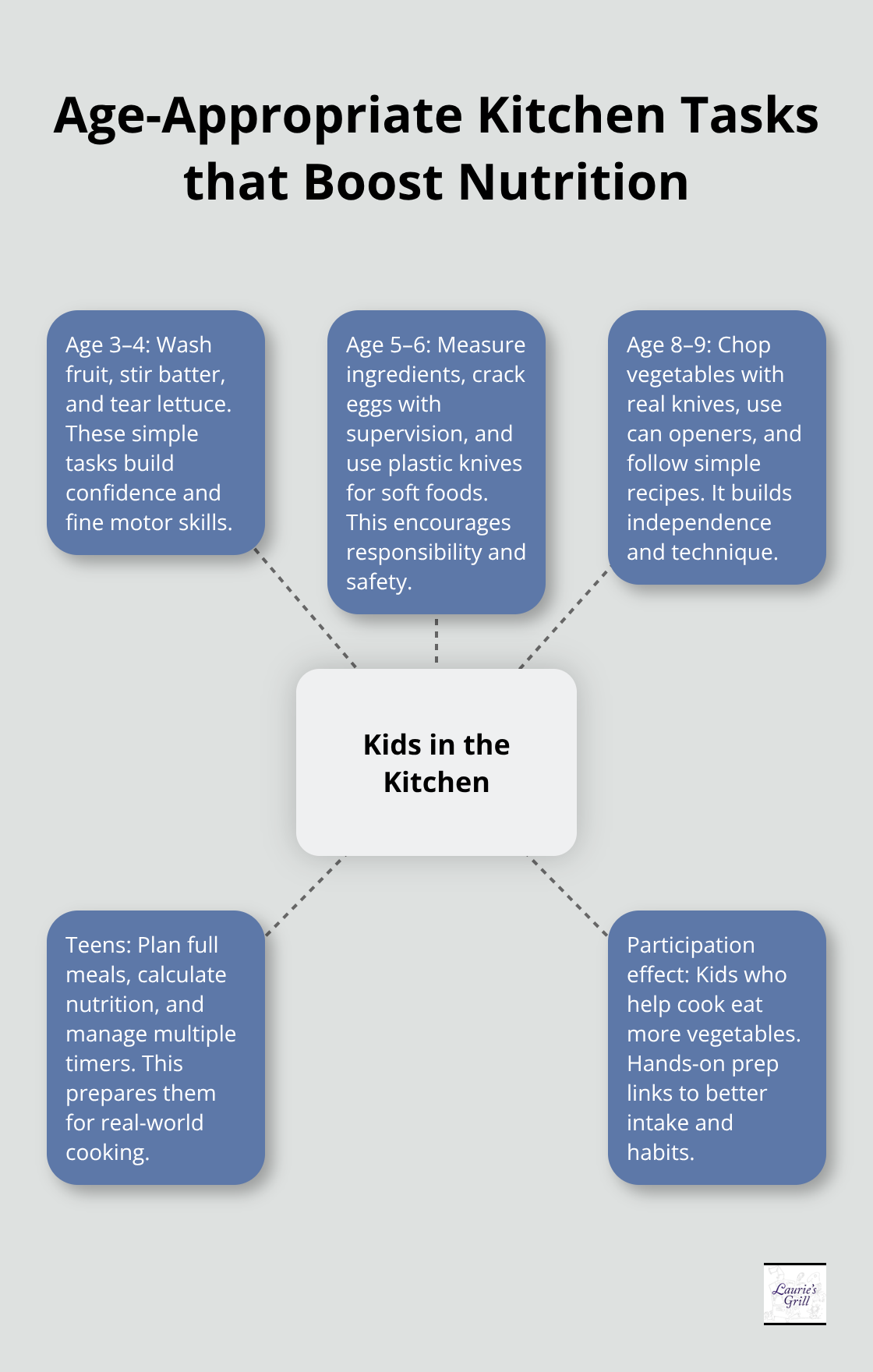
Children develop stronger preferences for foods they prepare themselves, and research shows kids eat 76% more vegetables when they participate in meal preparation. Start three-year-olds with simple tasks like fruit washing, batter stirring, and lettuce leaf tearing. Five-year-olds can measure ingredients, crack eggs with supervision, and use plastic knives to cut soft foods like bananas and mushrooms. Eight-year-olds handle real knives safely for vegetable chopping, operate can openers, and follow simple recipes independently. Teenagers can plan entire meals, calculate nutritional content, and manage multiple dish timers simultaneously.
Transform Kitchen Time Into Nutrition Education
Teach kids that orange and red vegetables contain beta-carotene for healthy eyes while they slice carrots and red peppers for stir-fry. Show them how protein helps build muscles when they measure chicken portions or mix beans into chili. Count fiber grams together when you add vegetables to pasta sauce – kids remember nutrition facts better when they connect them to hands-on activities. Research shows that children who cook with parents have increased fruit and vegetable intake compared to those who don’t participate in meal preparation.
Make Food Visually Exciting Without Extra Work
Cut sandwiches into fun shapes with cookie cutters, arrange vegetables into rainbow patterns on plates, and create faces on pancakes with berries and nuts. Thread vegetables and proteins onto skewers for interactive meals that keep hands busy. Serve deconstructed meals where kids assemble their own tacos, pizza bagels, or grain bowls from separate components. This approach lets picky eaters control their portions while they try new combinations naturally.
Build Confidence Through Age-Appropriate Tasks
Young children feel proud when they successfully complete simple kitchen jobs (washing produce counts as real cooking to a four-year-old). Middle schoolers can handle more complex recipes that require multiple steps and timing coordination. High schoolers benefit from full meal responsibility once per week, which teaches them practical life skills while you get a break from dinner duty. Children eat more food when they build their own plates compared to pre-assembled meals, and shared meals improve children’s eating habits according to research.
Final Thoughts
Healthy meals for family dinners become second nature when you focus on three core principles: smart plans, simple techniques, and active participation. Start with age-appropriate portions and build weekly menus around versatile proteins that stretch across multiple meals. Use quick methods like roasted vegetables and steamed proteins to preserve nutrients while you make food taste better.
Success comes from consistency rather than perfection. Some nights will feature elaborate home-cooked meals, while others might rely on frozen vegetables and pre-cooked proteins (both approaches work when you maintain focus on balanced nutrition and family connection). We at Laurie’s Grill understand that family dining experiences create lasting memories, whether at home or when you visit us.
The strategies you’ve learned here will evolve as your children grow and your family’s needs change. Keep experimenting with new recipes, involve kids in meal plans, and understand that healthy habits take time and patience. Your family will develop stronger food preferences through consistent exposure to nutritious options prepared together.

Recent Comments