
You’ve probably noticed it: that first sip of diner coffee hits different. The flavor is richer, the warmth more satisfying, and somehow it tastes fresher than what you brew at home.
At Laurie’s Grill, we know this isn’t luck or magic. Diner coffee tastes better because of specific choices diners make about water, beans, equipment, and technique. The gap between a great cup and a mediocre one comes down to details most home brewers overlook.
What Makes Diner Coffee Chemically Superior
Water Temperature Controls Extraction
Water temperature determines whether coffee extraction succeeds or fails. Optimal extraction happens between 195 and 205 degrees Fahrenheit-a range that commercial equipment maintains consistently. At these temperatures, the right balance of oils, acids, and flavor compounds dissolve into your cup. Home brewers struggle here because standard drip machines lack precise temperature control; water cools as it passes through grounds, leaving behind the compounds that create diner coffee’s full body. Diners brew larger batches, which keeps water hotter throughout the entire process.
Bean Selection and Roasting Chemistry
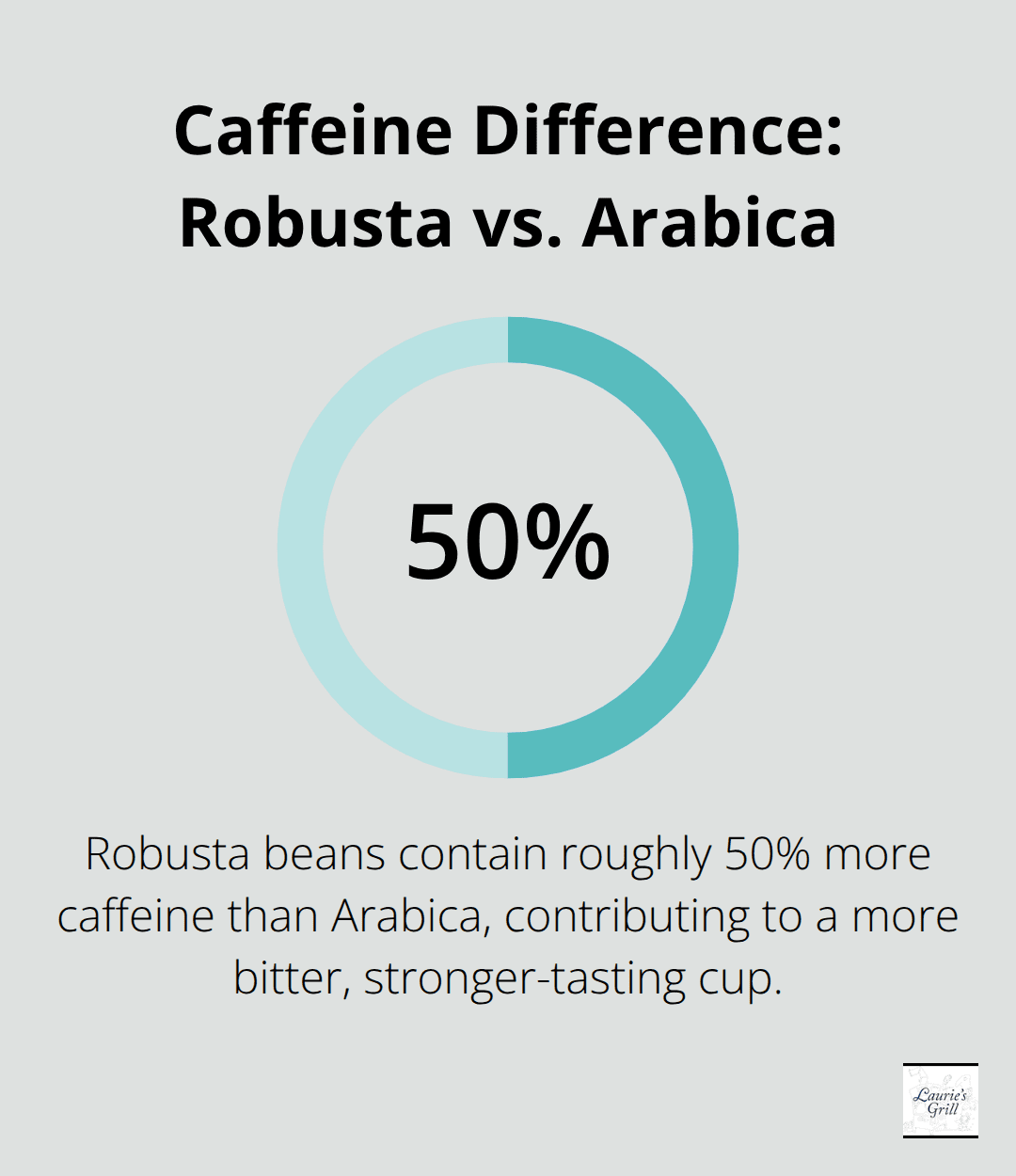
The beans themselves determine flavor profile dramatically. Arabica beans, which dominate diner menus at chains like Denny’s and Waffle House, produce a smoother, milder cup compared to Robusta beans, which taste noticeably more bitter and contain roughly 50% more caffeine. These roasting products activate the same bitter taste receptors that make diner coffee feel robust and satisfying. Roasting temperature and duration control the concentration of these compounds entirely-something diners manage precisely while home roasters typically cannot.
Equipment Quality and Water Chemistry
Commercial coffee makers maintain consistent water distribution across grounds, extract at optimal pressure, and hold coffee at serving temperature without prolonged heat damage. Home machines rarely achieve this consistency. Water quality compounds these advantages significantly. Since coffee is approximately 98% water, mineral content shapes aroma, body, and clarity. Diners use advanced filtration systems, including reverse osmosis options, to control water chemistry precisely. A simple test reveals this difference: brew two batches using your tap water and premium filtered bottled water side by side. The filtered water produces noticeably cleaner flavor and better aroma.
Maintenance Discipline Preserves Flavor
Diners maintain their equipment relentlessly-they clean machines daily, replace burrs regularly, and calibrate grinders to produce consistent particle size. This discipline prevents the flavor degradation that accumulates in neglected home equipment. Freshness also plays a role that most home brewers ignore. Beans lose brightness and aroma within two weeks of roasting, so buying smaller quantities more frequently preserves the aromatic complexity diners deliver. The result isn’t complicated chemistry; it’s disciplined execution across every variable that touches the final cup. Understanding these professional standards reveals what separates a mediocre home brew from a truly exceptional cup-and shows exactly where diners invest their effort.
How Diners Perfect Their Coffee Craft
Consistent Brewing Procedures Drive Quality
Diner coffee excellence stems from procedures repeated thousands of times until they become automatic. Diners measure water volume precisely, monitor brew time to the second, and start fresh pots on a strict schedule rather than letting coffee sit indefinitely. This consistency matters enormously. A cup served from a brand-new pot tastes noticeably fresher than one pulled from a warmer after two hours. Commercial brewers brew in larger volumes, which keeps water temperature higher throughout extraction, pulling optimal flavor compounds between 195 and 205 degrees Fahrenheit. Home brewers cannot replicate this because standard drip machines cool as water travels through grounds.
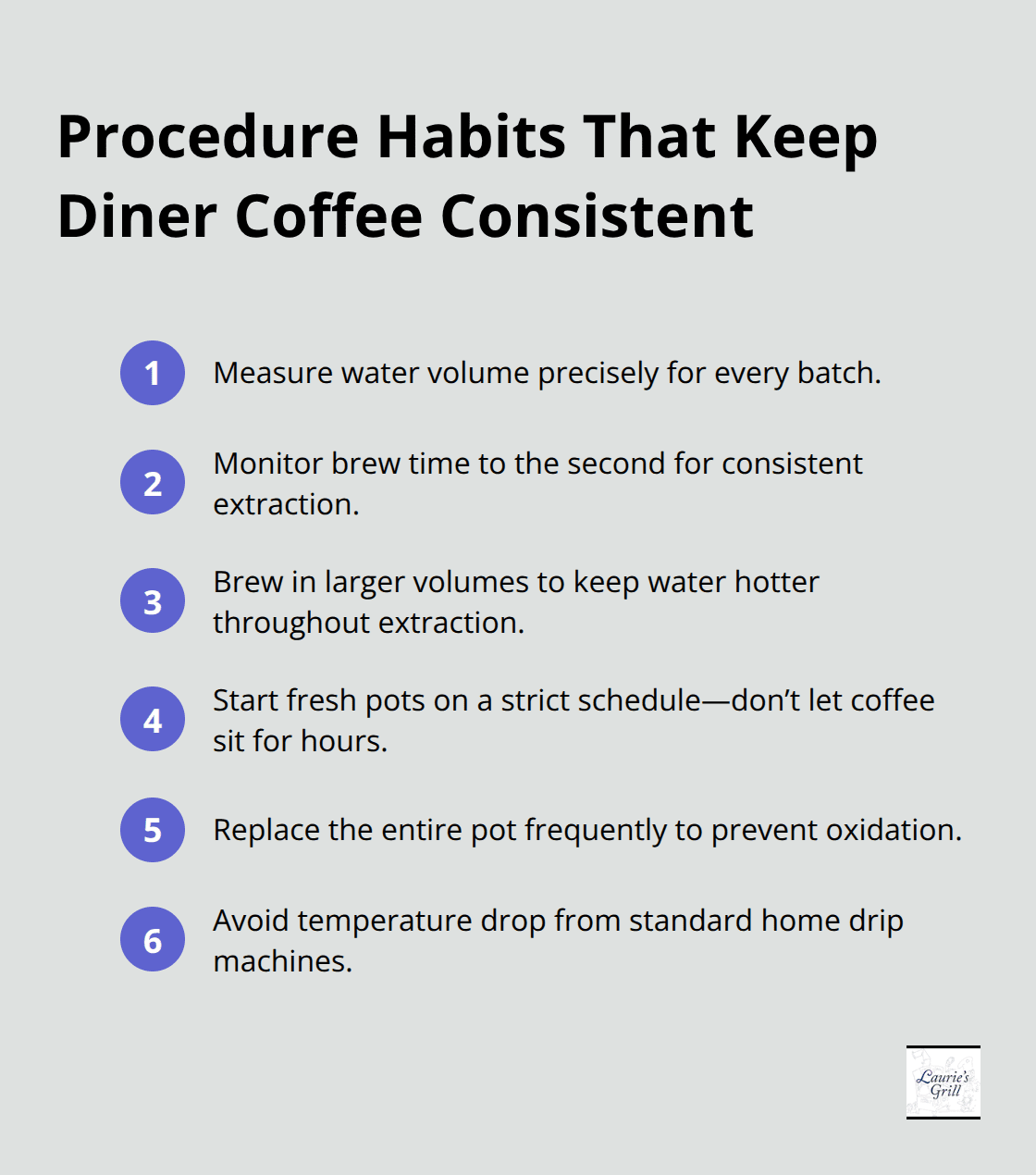
Diners replace their entire pot frequently-never allowing coffee to oxidize excessively on heat. This single discipline explains why diner coffee tastes brighter and more satisfying than what most people make at home.
Daily Maintenance Prevents Flavor Degradation
Equipment maintenance separates professional operations from casual home setups entirely. Diners clean their machines daily, removing mineral buildup and old coffee oils that degrade flavor. Grinder burrs get replaced regularly (typically every three to six months in high-volume settings) because worn burrs produce inconsistent particle sizes that sabotage extraction. Staff members calibrate these grinders to maintain uniform grind texture, something home brewers almost never do. Water filtration systems receive professional attention too. Diners invest in advanced filters, including reverse osmosis systems, because water quality shapes the final cup more than most variables.
Hands-On Familiarity Builds Intuition
When baristas handle these machines daily, they develop intuition about what works. They notice when water temperature drops, when a grinder needs adjustment, when beans have aged past their peak. This hands-on familiarity cannot be rushed or shortcut. Home brewers typically neglect these details until problems become obvious (and months of degraded coffee have already accumulated). Professionals treat coffee equipment like it matters, while home setups treat it like an appliance you use and forget about. This operational discipline-not secret ingredients or premium beans alone-creates the consistent excellence that keeps customers returning to their favorite diners. Understanding these professional standards reveals what separates a mediocre home brew from a truly exceptional cup. The question becomes: what specific investments can home brewers make to close this gap?
Closing the Gap Between Home and Diner
Start With Water Filtration
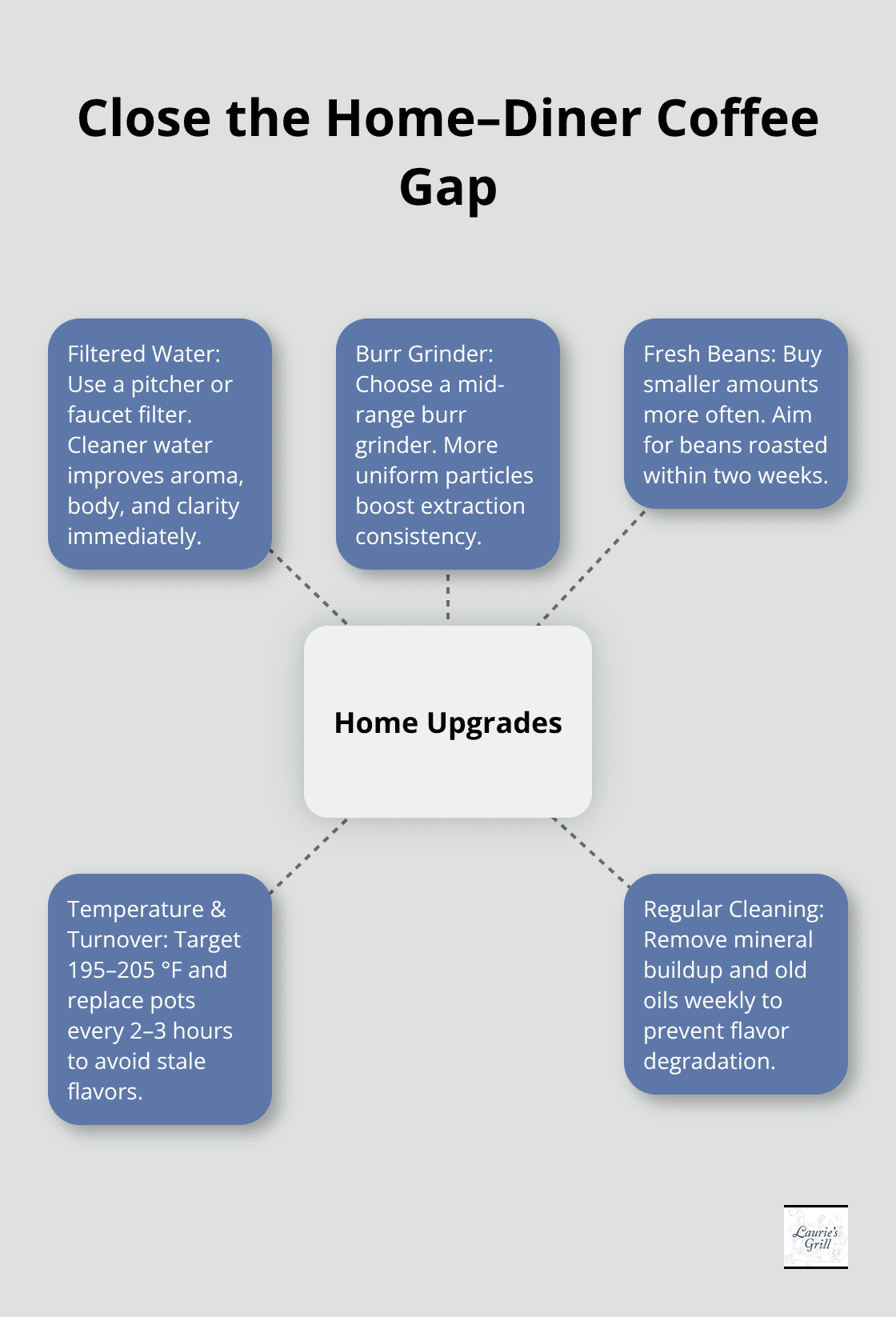
Water quality influences flavor more than anything else you can change. Since coffee is roughly 98% water, mineral content directly shapes aroma, body, and clarity. Test this yourself: brew one batch with your tap water and another with premium filtered bottled water (not distilled) side by side. The filtered version produces noticeably cleaner flavor and better aroma. Install a basic water filter pitcher or faucet filter immediately-this single change costs under thirty dollars and produces measurable improvement.
Upgrade Your Grinder Next
Your grinder controls particle size uniformity, which determines extraction consistency. Home grinders heat up during grinding and produce a mix of fine powder and larger chunks that sabotage extraction. Commercial grinders maintain consistent particle size because they run cooler and feature burrs that stay sharp. You don’t need a commercial-grade machine for home use, but avoid blade grinders entirely. A mid-range burr grinder in the $75 to $150 range will outperform cheaper alternatives dramatically. Grind beans immediately before brewing to preserve volatile aromatic compounds; these compounds degrade within minutes of grinding.
Prioritize Bean Freshness Over Bean Quality
Bean freshness matters more than bean quality for home brewers. Beans lose brightness and aroma within two weeks of roasting, so purchase smaller quantities more frequently rather than stockpiling. Look for roast dates on packaging (not just best-by dates) and prioritize beans roasted within the previous week. Store beans in an airtight container away from heat and light, not in the freezer as many assume.
Maintain Strict Discipline About Temperature and Schedule
Brew water between 195 and 205 degrees Fahrenheit-use a simple kitchen thermometer to verify your machine hits this range. Replace your entire pot every two to three hours rather than letting coffee sit indefinitely on a warmer, because prolonged heat exposure makes coffee taste bitter, burnt, or sour. Clean your brewing equipment weekly with hot water and a commercial coffee cleaner to remove mineral buildup and old oils that degrade flavor. These shifts-filtered water, better grinder, and consistent maintenance-eliminate the largest gaps between home and diner coffee. You won’t replicate café-level espresso without investing thousands in professional equipment, but you absolutely can brew coffee that rivals what most diners serve.
Final Thoughts
Diner coffee tastes better than home brew because diners treat every variable with intention. They control water temperature precisely, maintain equipment relentlessly, source fresh beans consistently, and follow procedures that eliminate guesswork. Home brewers can replicate most of this without spending thousands on commercial equipment.
The gap between your kitchen and a professional diner kitchen narrows dramatically when you prioritize water filtration, upgrade your grinder, and commit to regular maintenance. These three changes cost under two hundred dollars and produce measurable improvement in every cup you brew. The remaining difference comes from volume and discipline-diners brew larger batches that maintain optimal temperature throughout extraction, and they replace pots frequently rather than letting coffee oxidize on heat for hours.
What separates exceptional diner coffee from mediocre home brew isn’t secret ingredients or premium beans alone. It’s the accumulation of small decisions repeated consistently. Temperature control matters, equipment cleanliness matters, bean freshness matters, and water quality matters. When you execute all of these simultaneously, you’ll taste noticeably superior results compared to what most people make at home. Visit Laurie’s Grill in Bend, Oregon to experience diner coffee done right, where we serve home-style meals at affordable prices with breakfast available all day.
Recent Comments