

Eggs Benedict has dominated breakfast menus for over a century, but the classic version is just the beginning. At Laurie’s Grill, we’ve seen how Benedict styles have evolved far beyond the traditional ham and hollandaise combination.
From smoked salmon to caramelized onions to fully vegetarian takes, these variations prove that Benedict isn’t locked into one formula. Whether you’re cooking at home or running a restaurant, mastering these adaptations opens up serious possibilities for your breakfast service.
Why Eggs Benedict Never Goes Out of Style
The Origins and Staying Power of a Classic
Eggs Benedict emerged in the 1860s at Delmonico’s Restaurant in New York City, though the exact creator remains debated among culinary historians. What matters is that the dish solved a real problem: how to transform simple ingredients into something restaurant-worthy. The combination of poached eggs, Canadian bacon, English muffin, and hollandaise became so effective that it has barely changed in over 150 years. Diners order it consistently because it delivers richness without complexity, elegance without pretension.
Why Each Component Matters
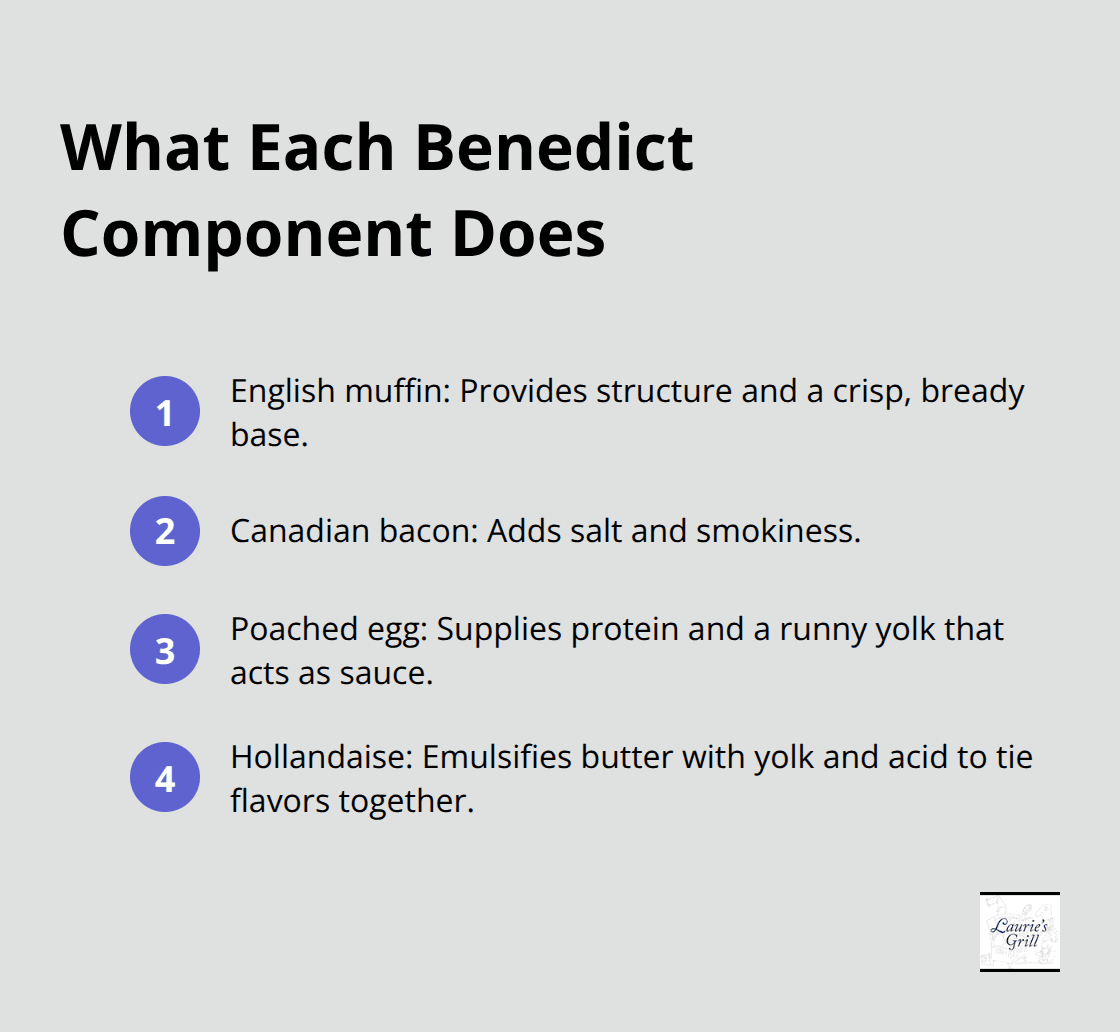
The dish works because each component serves a purpose. The English muffin provides structure and texture contrast. Canadian bacon adds salt and smokiness. The poached egg contributes protein and a runny yolk that acts as sauce. Hollandaise ties everything together with emulsified butter, egg yolk, and acid.
This formula is so solid that restaurants across America still charge premium prices for it, often marking it up 200 to 300 percent from ingredient cost.
Mastering the Fundamentals
What makes Eggs Benedict truly resilient is how forgiving the dish is once you understand the fundamentals. Most home cooks struggle with poaching eggs, but the reality is simpler than the reputation suggests. You need water at a bare simmer, white vinegar to help the egg white coagulate, and fresh eggs where the white clings tightly to the yolk. Hollandaise intimidates people because it can break, but the science is straightforward: you emulsify fat into egg yolk using heat and acid. If it breaks, you can rescue it by starting with a fresh egg yolk in a clean bowl and whisking in the broken sauce slowly.
Why Restaurants Keep Selling It
Restaurants keep ordering Benedict because customers return for it week after week. The dish appeals to weekend brunchers who want indulgence, health-conscious diners who appreciate the protein, and traditionalists who value consistency. Once you master the fundamentals of Eggs Benedict, you build credibility in the kitchen and establish customer loyalty that lasts. This foundation of technique and customer appeal makes Benedict the perfect platform for the creative variations that follow.
Beyond Ham and Hollandaise
Smoked Salmon and Avocado: A Premium Upgrade
Smoked salmon transforms Eggs Benedict into something that feels restaurant-exclusive, but it requires less technique than the traditional version. The richness of the salmon pairs perfectly with hollandaise because both are fat-forward, so the sauce feels intentional rather than heavy. Add sliced avocado between the English muffin and salmon, and you’ve created a dish that commands a higher price point. Restaurants typically charge 35 to 50 percent more for salmon Benedict than the classic version, and customers expect to pay it.

Quality smoked salmon makes the difference here. Atlantic or Pacific salmon works equally well, but cold-smoked salmon holds its texture better than hot-smoked varieties. Layer the avocado directly on the muffin before adding salmon so the creamy texture creates a buffer between the bread and fish. The salmon’s salt content means you should taste your hollandaise before adding extra salt-many home cooks oversalt this variation without realizing the salmon already contributes significant sodium.
Caramelized Onions: Sweet Depth for Serious Brunches
Caramelized onions introduce sweetness and depth that most breakfast dishes ignore, which is exactly why this variation stands out. Cook sliced yellow onions low and slow in butter until they transform from translucent to deep golden brown. The natural sugars concentrate and create a savory-sweet foundation that pairs surprisingly well with crispy bacon and a runny yolk.
Layer the caramelized onions on the English muffin, add your bacon and poached egg, then finish with hollandaise. This combination appeals to diners tired of the same brunch menu because it tastes refined without requiring special ingredients.
Plant-Based Benedict: Serious Alternatives for Vegetarians and Vegans
Vegetarian and vegan takes on Benedict have moved beyond token options into serious territory. Medium-firm tofu, marinated overnight in kala namak, turmeric, garlic powder, black pepper, and nutritional yeast, then pan-fried until golden, mimics poached egg texture and appearance convincingly. Tempeh bacon provides the smoky, meaty component that makes the dish satisfying rather than virtuous.
A plant-based hollandaise made from vegan butter, flour, plant milk, kala namak, nutritional yeast, turmeric, and lemon juice takes roughly ten minutes and costs significantly less than traditional hollandaise while tasting equally rich. The total cost for two servings runs approximately $11.50 CAD compared to $6.75 for traditional eggs Benedict, but it remains cheaper than ordering brunch at most establishments and delivers the same level of indulgence. These variations prove that Benedict adapts to any dietary preference without sacrificing the richness and elegance that made the dish famous in the first place.
Hollandaise at Home
Understanding the Science Behind the Sauce
Hollandaise intimidates home cooks because it has a reputation for breaking, but the reality is that this sauce follows predictable rules once you understand what’s happening chemically. You emulsify fat into egg yolk using heat and acid, which means the temperature matters far more than most recipes suggest. The yolk proteins act as an emulsifier, allowing them to suspend tiny fat droplets throughout the sauce. This chemical process is straightforward once you respect its requirements.
The Step-by-Step Method That Works
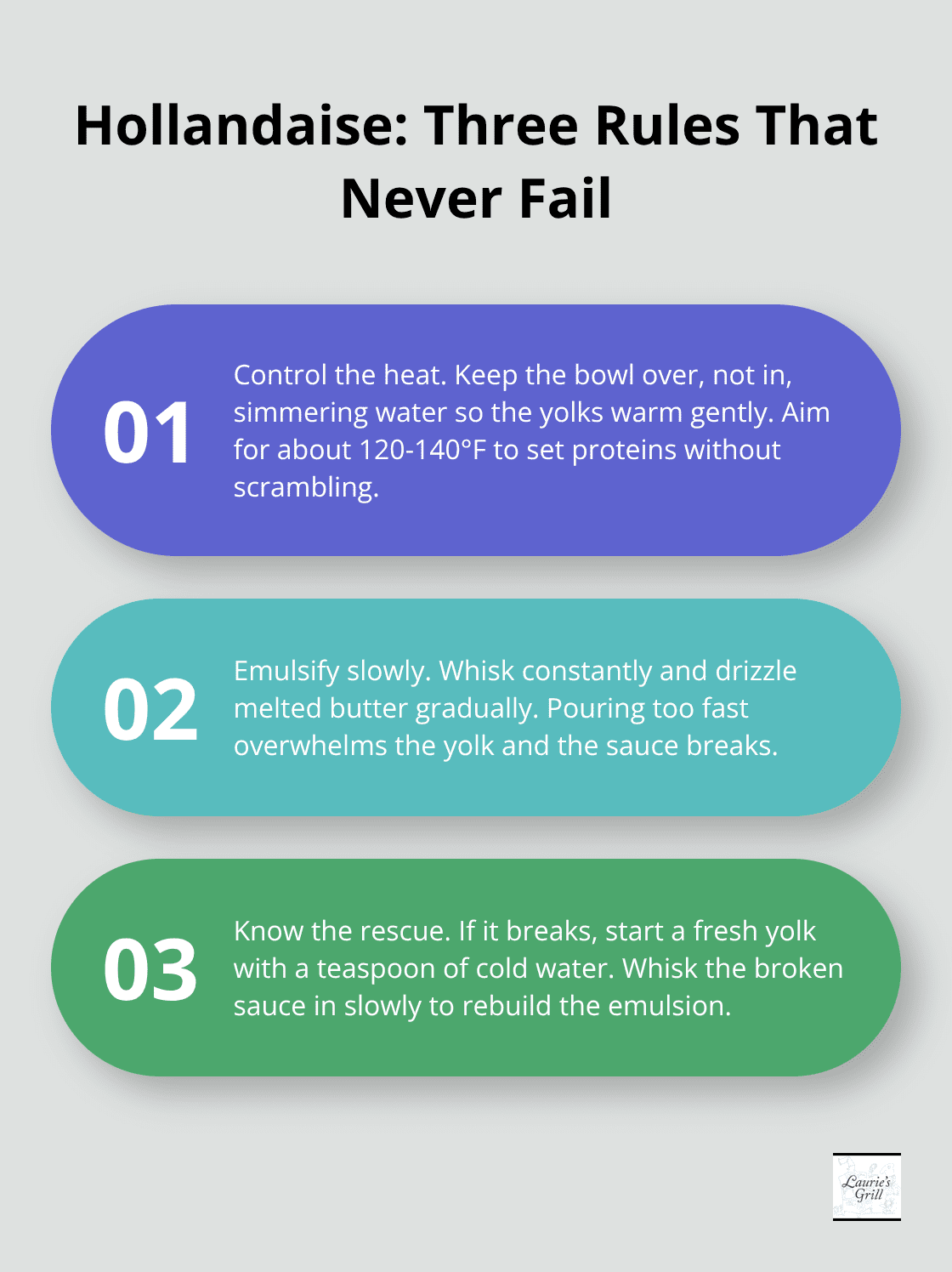
Start with one egg yolk in a heatproof bowl and whisk in a tablespoon of water or lemon juice. Place the bowl over simmering water without letting the bottom touch the water directly. Whisk constantly and slowly drizzle in melted butter, roughly three tablespoons per yolk. If you pour the butter too fast, the yolk cannot absorb it and the sauce breaks. The water bath keeps the temperature around 120-140 degrees Fahrenheit, which is hot enough to cook the yolk safely but cool enough that the proteins won’t scramble.
Once the sauce reaches the consistency you want, remove it from heat immediately and finish with lemon juice and cayenne pepper. A properly made hollandaise should be thick enough to coat the back of a spoon but still pourable.
Fixing Broken Hollandaise
Most failures happen because cooks either pour butter too quickly or let the temperature climb too high. If your hollandaise breaks and looks grainy or separated, it is salvageable. Start with a fresh egg yolk in a clean bowl, add a teaspoon of cold water, then whisk the broken sauce into this new yolk very slowly, treating it like you are starting from scratch. This technique works because you rebuild the emulsion gradually. The patience required here pays off immediately once the sauce comes back together.
Preparing Hollandaise Ahead of Time
For ahead-of-time preparation, make your hollandaise up to two hours before service and hold it in a warm spot, around 120 degrees Fahrenheit. If it thickens while sitting, thin it with a splash of warm water or lemon juice and whisk gently until smooth. Never refrigerate hollandaise and try to reheat it because the cold breaks the emulsion permanently. Some cooks make a stabilized version by whisking a teaspoon of cornstarch or arrowroot powder into the yolk before adding butter, which gives you extra insurance against breaking, though it changes the texture slightly toward something thicker and less silky (the traditional approach works better if you respect the temperature and pour speed). Practice twice before you need the sauce for brunch service, and you will master this fundamental technique.
Final Thoughts
Benedict styles adapt to what your customers actually want to eat, which is why the dish remains profitable across every breakfast menu. A traditional ham and hollandaise appeals to purists, smoked salmon attracts diners willing to spend more, caramelized onions draw people tired of predictable brunch options, and plant-based versions serve the growing segment of vegetarians and vegans who refuse to settle for mediocre breakfast. This range lets you build a Benedict section that speaks to multiple customer preferences without requiring completely different techniques or ingredients.
Plating transforms how customers perceive what you serve, and proper presentation takes only seconds once you develop the habit. A properly poached egg with a runny yolk sitting on top of the muffin signals quality immediately, the hollandaise should coat the egg generously but not drown it, and fresh herbs like chives or tarragon add visual interest without extra work. Serve the plate warm on a heated dish-the temperature difference between a properly heated plate and a cold one changes how the hollandaise tastes and how long the egg stays at the right temperature.
Restaurants make serious money on Benedict orders because the markup justifies the technique required, with traditional Eggs Benedict costing roughly three to four dollars in ingredients but selling for twelve to eighteen dollars depending on your location. Salmon variations command even higher prices, and this margin exists because customers understand they pay for technique and quality ingredients, not just food. We at Laurie’s Grill know that mastering fundamentals like Eggs Benedict builds customer loyalty and establishes your restaurant as a place where breakfast matters.

Recent Comments