
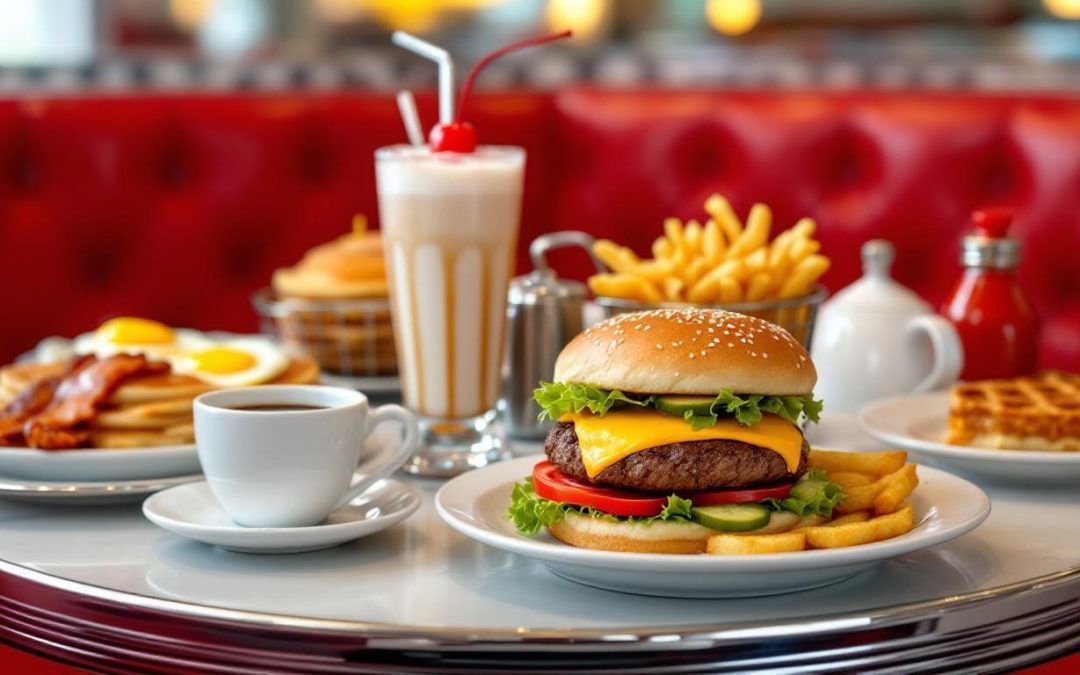
American diners have served the same comfort food for over a century, and there’s a reason these classic diner dishes never go out of style. They’re affordable, satisfying, and made with straightforward ingredients that taste like home.
At Laurie’s Grill, we understand why people keep coming back to these timeless meals. Whether it’s a perfectly cooked burger or French toast that reminds you of Sunday mornings, classic diner food connects us to something real and genuine.
How American Diners Started and Why They Mattered
The Birth of a Movement
Lunch wagons rolled onto American streets in the late 1800s and transformed how people ate. These mobile food stands served quick, affordable meals to workers and travelers who had no time for sit-down restaurants. New Jersey became the epicenter of diner manufacturing in the 1920s through 1940s, with makers like Jerry O’Mahony producing thousands of prefabricated units that spread across the country. The design evolved from narrow, railcar-like structures into larger establishments with chrome exteriors, barrel-vault roofs, and neon signage that became iconic symbols of American roadside culture. These weren’t fancy establishments-they were practical spaces built for speed and accessibility.
Expansion and Cultural Significance
The Interstate Highway System after World War II accelerated diner growth exponentially, placing these establishments at roadside stops where travelers expected a hot meal at any hour. Fast-food chains began eroding diner traffic in the 1970s, but the strongest independent diners survived because they offered something mass production couldn’t match: customization, community connection, and food that tasted homemade. Diners became cultural anchors in their neighborhoods because they operated around the clock and welcomed everyone equally. A factory worker, a traveling salesman, and a local businessperson could sit at the same counter and receive the same quality meal.
Immigrant Influence and Menu Evolution
Greek immigrants, Polish families, and Italian owners shaped regional menus by adding their own culinary traditions to the basic diner template, creating dishes that reflected both American practicality and immigrant heritage. The blue plate special emerged as the diner’s signature offering-a generous meal with meat, multiple sides, bread, and a drink at a fixed low price that made eating out accessible to working families. Menu staples evolved not from culinary trends but from what sold consistently: fried chicken, meatloaf, pot roast, and hamburgers required minimal equipment beyond the flattop grill and deep fryer that defined diner kitchens.
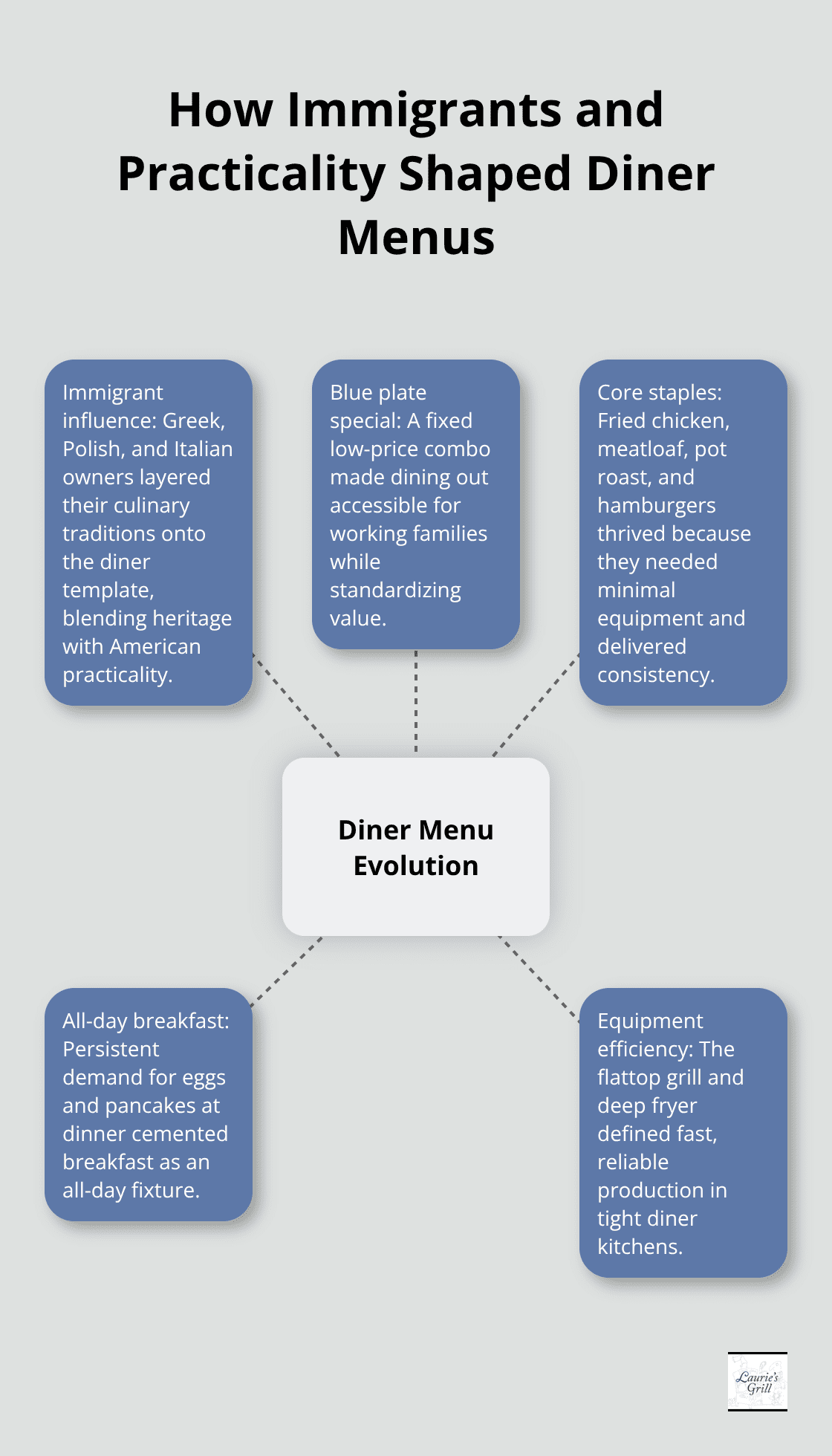
French toast and breakfast items became all-day fixtures because diners discovered customers wanted eggs and pancakes at 6 p.m., not just 6 a.m.
Why These Dishes Endure
The club sandwich, burgers with simple toppings, and creamy milkshakes became permanent fixtures because they delivered satisfaction without pretension. Google Trends data shows IHOP ranks as the most-searched diner chain in 17 states, while First Watch ranks second overall, signaling that Americans still actively seek the diner experience despite modern alternatives. Milkshakes remain the top-searched diner item across nine states, and French toast and grilled cheese tie for second place, proving these dishes endure because they deliver genuine comfort rather than novelty. This sustained demand reveals what truly matters to diners: meals that connect to memory and tradition rather than passing fads.
The Dishes That Built Diner Loyalty
The Triple Decker Club: Precision in Simplicity
The club sandwich stands as a cornerstone of diner menus because it solves a fundamental problem: how to deliver maximum satisfaction with minimal complexity. Three layers of bread hold turkey, bacon, and tomato in perfect balance-nothing fancy, nothing wasted. The key lies in toasting the bread properly so it holds weight without soaking through, using quality deli meat that doesn’t dry out, and cutting the sandwich at a 45-degree angle so it’s actually graspable. This formula has remained unchanged for decades because it works. At Laurie’s Grill, our Triple Decker Club respects this proven approach, delivering the exact experience diners expect when they order this classic.
French Toast: Transforming the Ordinary
French toast succeeds for entirely different reasons than the club sandwich. It transforms day-old bread into something better than fresh bread could ever be, which explains why diners have served it all day since the 1950s. The technique matters enormously: soak the bread in a custard of eggs, milk, and vanilla for exactly 20 seconds per side, then cook on a flattop at medium-high heat until the exterior caramelizes while the interior stays creamy. According to Google Trends data, French toast ties for the second-most-popular diner dish nationwide.
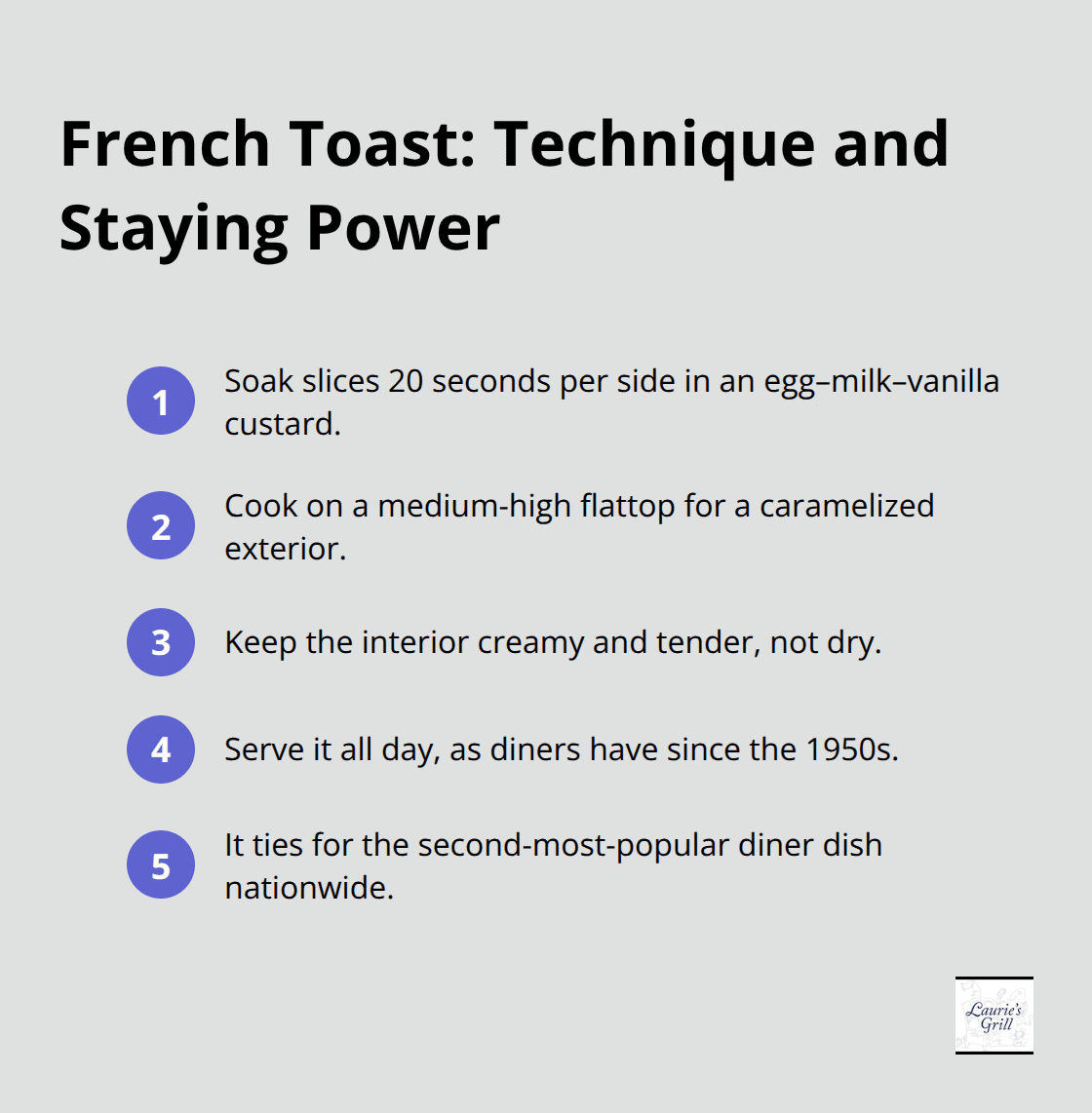
This ranking reveals that Americans crave this specific texture and flavor combination with genuine consistency. The dish proves that diner success doesn’t require innovation-it requires mastery of fundamentals.
The Burger: Democratic Simplicity
Burgers represent the diner’s democratic core because they require only beef, heat, and restraint. The best diner burgers use 80/20 ground beef that handlers minimize-overworking the meat creates density instead of tenderness. Form patties slightly larger than your bun because they shrink during cooking, make a small indent in the center with your thumb so the burger stays flat instead of puffing up, and cook on a hot flattop for three minutes per side without pressing down (which squeezes out moisture and flavor). Season aggressively with salt and pepper only, add cheese in the last 30 seconds of cooking so it melts from residual heat, and serve on a lightly buttered, toasted bun. These burgers demand nothing more than quality ingredients and proper technique.
Why These Dishes Endure
The club sandwich, burgers, and French toast dominate diner culture not because they’re trendy but because they’ve proven their staying power across decades of changing food fashions. They require no explanation, no apology, and no pretense-qualities that explain why milkshakes, French toast, and grilled cheese consistently rank among the top-searched diner items across multiple states. These three dishes form the foundation that separates true diners from casual restaurants. Yet the diner experience extends far beyond these three classics. Regional specialties and lesser-known menu items reveal how diners adapted to local tastes and immigrant influences, creating a diverse landscape of comfort food that varies dramatically from one region to another.
Why Diner Food Still Wins
Comfort Food Solves Real Problems
Comfort food isn’t nostalgia dressed up as a meal-it’s a practical choice that solves real problems in how Americans eat. According to research published in the International Journal of Gastronomy and Food Science, 68 percent of Americans turn to comfort food during stressful periods, which explains why diner traffic spikes during economic uncertainty and personal difficulty. A 2024 YouGov survey found that nearly half of U.S. adults would choose a traditional American comfort dish over a novel or trendy recipe, revealing that this preference isn’t sentimental-it’s deliberate.
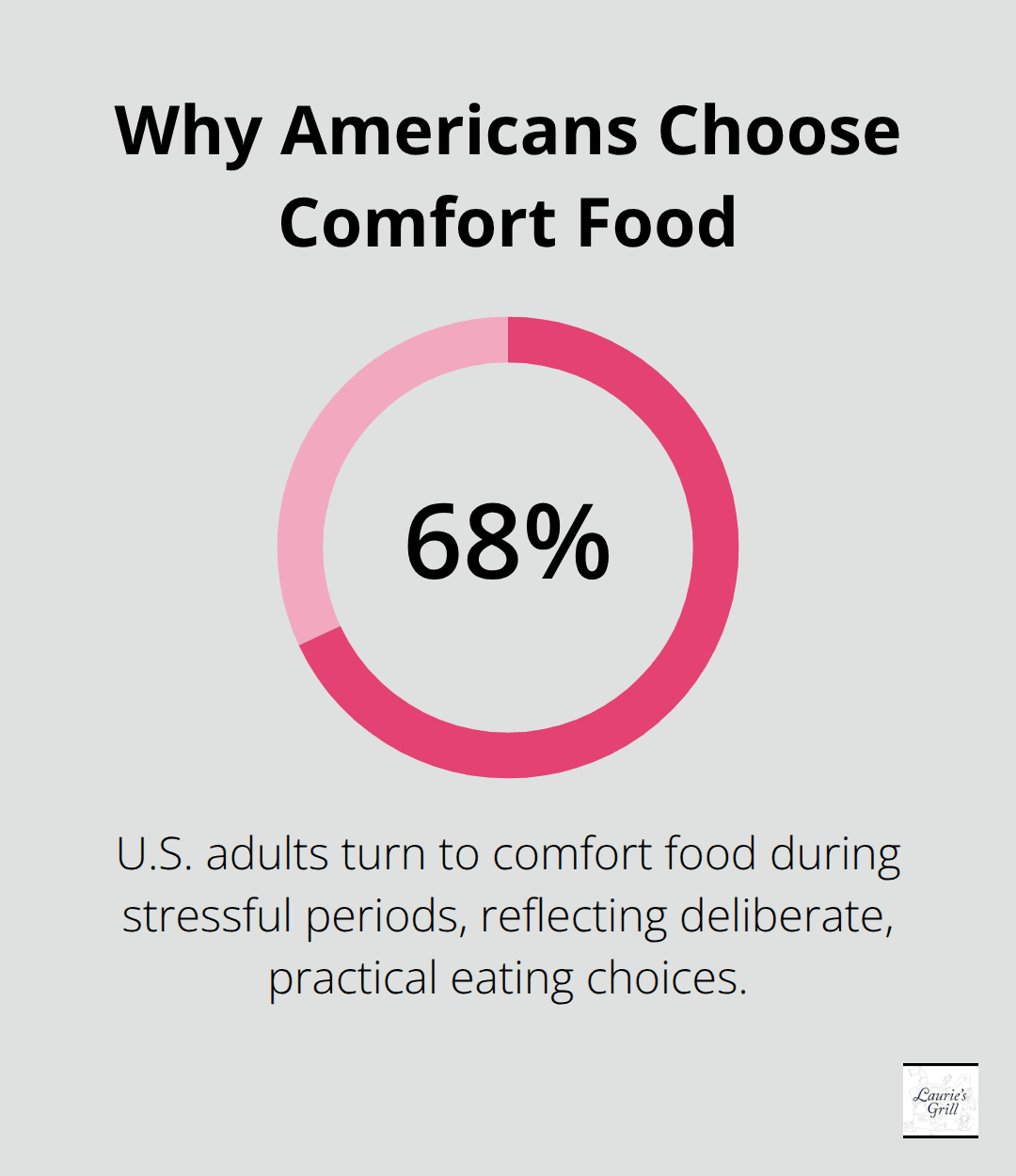
People know what they want, and diner food delivers it consistently.
Affordability That Doesn’t Sacrifice Quality
The cost advantage matters enormously in today’s economy. The blue plate special model that defined diners for decades-a complete meal with protein, multiple sides, bread, and a drink at a fixed price-remains the most efficient way to feed yourself without sacrificing quality. Modern diner chains like IHOP use value-driven promotions such as the $7 Happy Plate and $6 value menus to maintain this tradition, and their dominance across 17 states in Google search rankings proves that affordability combined with reliability still drives customer behavior.
Superior Techniques That Time Can’t Replace
The technical preparation methods that made diners successful a century ago remain superior to shortcuts that modern food production introduced. Searing meat before long braising creates the depth of flavor that pot roasts and braised dishes depend on-a technique that factories cannot replicate through assembly-line cooking. Buttermilk fried chicken gains its distinctive tang and tenderness from marinating and buttermilk soak that tenderizes the meat while building flavor, not from industrial breading systems designed for speed. Meatloaf’s moisture comes from finely diced vegetables integrated throughout the mixture, handled gently to preserve tenderness-a process that requires attention rather than automation.
Why Diners Refuse to Compromise
These methods take time, but time is exactly what creates the difference between food that tastes like home and food that tastes like it came from a factory. The rotating pie case displaying apple, cherry, and cheesecake varieties isn’t decorative-it signals that desserts were actually baked on-site, not delivered frozen. Diners succeeded because they refused to separate quality from affordability, proving that both could exist in the same meal. This combination of practical economics, proven technique, and genuine ingredient quality explains why Americans still seek out diners instead of accepting faster or cheaper alternatives that compromise on taste.
Final Thoughts
Classic diner dishes endure because they solve problems that never disappear. People need affordable meals that taste genuinely good, and they need spaces where they belong. Diners deliver both without apology or pretense, proving that quality and simplicity never go out of style.
Diners preserve American culinary traditions by refusing to separate technique from affordability. The buttermilk marinade that tenderizes fried chicken, the seared meat that builds depth in pot roast, and the gentle hand that keeps meatloaf tender all require attention and time. Factories cannot replicate what happens when someone actually cares about the result.
Visit Laurie’s Grill in Bend, Oregon to experience why classic diner dishes remain the most reliable comfort food in America. The experience you’ll find there isn’t manufactured or trendy-it’s genuine, it’s affordable, and it tastes like home.
Recent Comments