
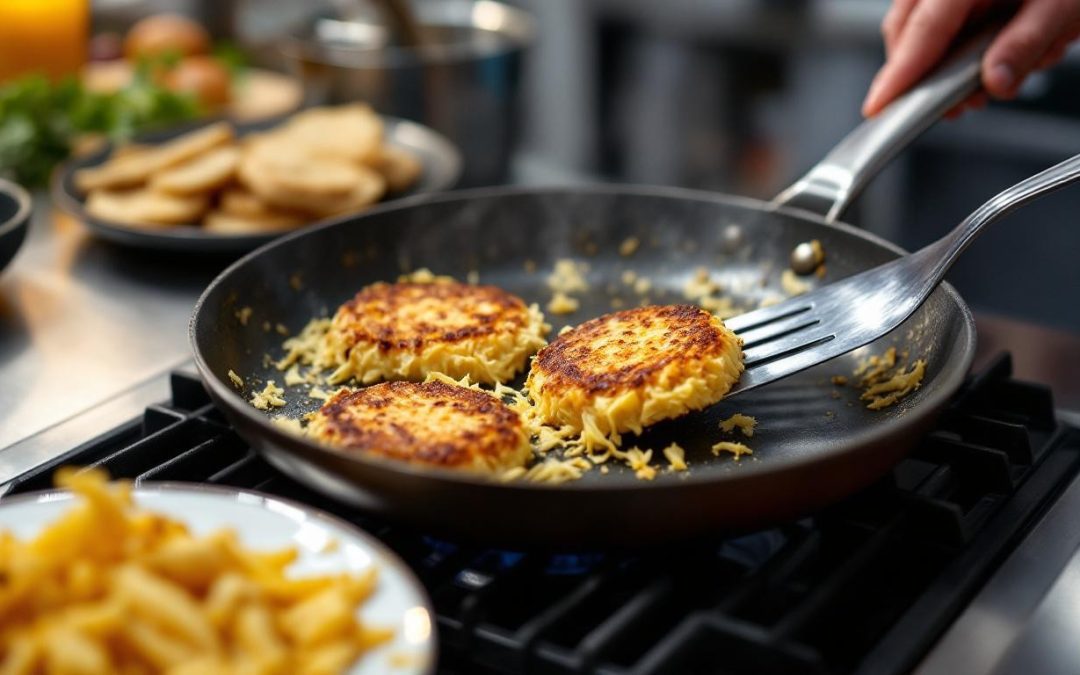
Hash browns are either a breakfast triumph or a greasy disappointment-there’s rarely a middle ground. Most home cooks end up with soggy, pale results because they skip the fundamentals that separate restaurant-quality hash browns from mediocre ones.
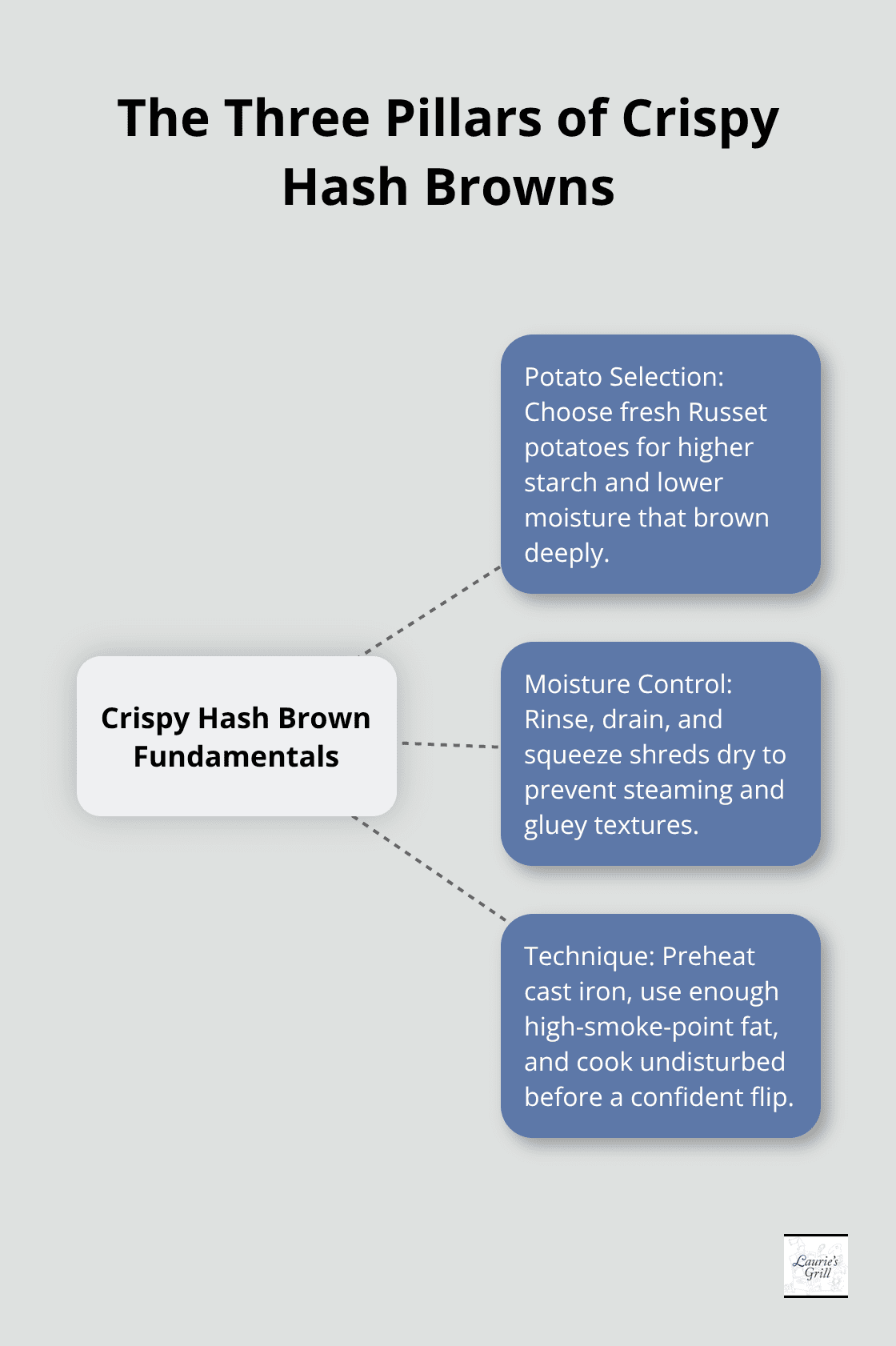
At Laurie’s Grill, we’ve learned that crispy hash browns come down to three things: potato selection, moisture control, and technique. This guide walks you through exactly what professional chefs do differently.
Selecting and Preparing Your Potatoes
Russet Potatoes Are Your Only Real Choice
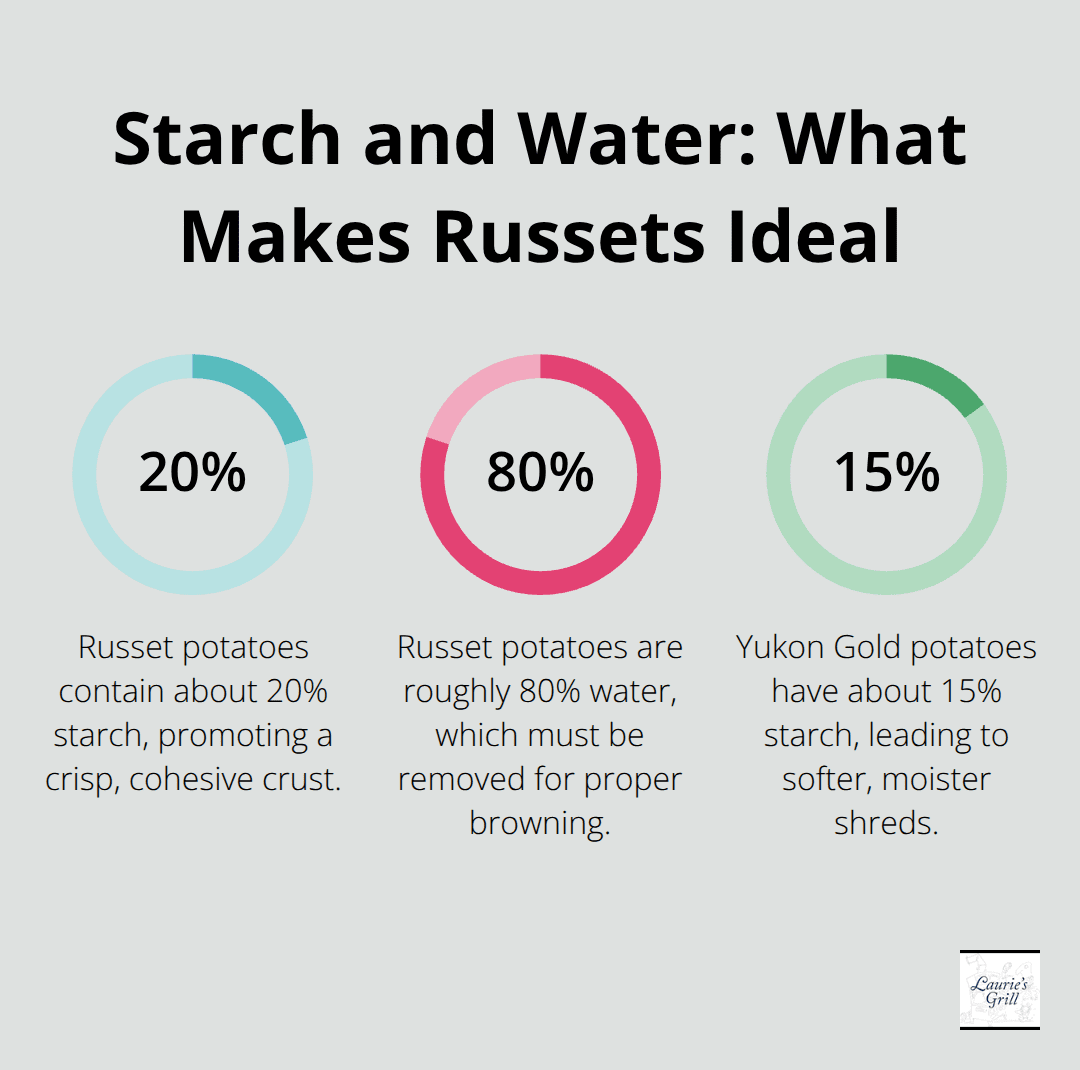
Russet potatoes are non-negotiable for crispy hash browns. They contain roughly 20% starch and 80% water, which gives you the chemical foundation that professional chefs depend on. Waxy varieties like Yukon Gold have only 15% starch and higher moisture content, making them fundamentally unsuitable regardless of technique. Avoid green or sprouted potatoes entirely-they contain solanine, a compound that develops during storage and light exposure.
Fresh potatoes matter too. According to Serious Eats, starch converts to sugar during storage, and sugar browns differently than starch, preventing the deep golden crust that separates restaurant hash browns from mediocre ones. Buy Russets within a few days of cooking when possible.
Washing and Peeling Creates Your Starting Point
Scrub your potatoes under cold running water to remove soil, then peel them immediately with a sharp paring knife. Some cooks boil potatoes first to soften the skin, which works if you plan to shred them after cooling completely-this approach takes extra time but gives you slightly more control over thickness. Most professionals skip boiling and peel raw potatoes instead, which is faster and gives you finer shreds.
Shred your potatoes using the largest holes on a box grater or a food processor shredding disc. Uniform shreds cook evenly; inconsistent sizes leave you with some burnt pieces and some pale ones.
Moisture Removal Determines Your Results
Rinse your shredded potatoes in cold water to remove surface starch that can cause a gluey or mushy texture. Serious Eats testing confirms this step as non-negotiable. Drain the potatoes thoroughly, then spread them on clean kitchen towels and pat them dry. Squeeze the towels to extract as much liquid as possible-this step separates good hash browns from great ones.
Let the dried shreds rest on the towels for another five to ten minutes. They’ll release additional moisture as they sit. Some chefs dust the potatoes with cornstarch or flour before cooking, which America’s Test Kitchen confirms accelerates browning by absorbing any remaining surface moisture.
Moisture is your enemy. Soggy hash browns come from wet potatoes, period. With your potatoes properly prepared, you’re ready to master the professional technique that transforms them into golden, crispy results.
The Professional Technique for Crispy Hash Browns
Cast Iron Holds Heat Better Than Any Alternative
Cast iron distributes heat evenly across the entire surface and retains temperature when cold potatoes hit the pan, preventing the temperature drop that causes steaming instead of frying. Preheat your skillet for at least three to five minutes on medium-high heat until a drop of water sizzles immediately on contact. Stainless steel works if cast iron isn’t available, but avoid non-stick pans entirely-they can’t handle the high heat required for proper browning.
Oil Selection Determines Flavor and Texture
High smoke-point fats like avocado oil, refined vegetable oil, or ghee prevent the bitter, burnt flavors that olive oil produces at frying temperatures. Add enough oil so the shredded potatoes sit roughly halfway submerged, which accelerates browning and prevents a greasy texture. Too little oil produces pale, dry results; too much transforms the potatoes into a soggy mess.
Shape and Press Your Potatoes Into a Compact Cake
Spread your shreds into a single, compact cake about half an inch thick rather than loose piles. Press down gently with your spatula to form a cohesive sheet that browns evenly. This method works far better than breaking the potatoes into small chunks, which expose too much surface area and dry out before browning properly.
Cook Without Moving-Patience Separates Professionals From Amateurs
Cook undisturbed for five to seven minutes on the first side. Resist the urge to flip early or stir. A deep golden crust signals you’re ready to flip. Use a thin, sturdy spatula like a fish spatula to slide underneath the entire cake, then flip in one confident motion. Cook the second side for another four to five minutes until it matches the first side’s color. The total cooking time lands between ten and twelve minutes, making hash browns a relatively quick dish despite the upfront prep work.
Maintain Temperature and Season at the End
If the pan dries during cooking, add more fat to maintain crispness without burning. Temperature control matters-too low heat yields greasy, limp results while too high heat blackens the exterior before the interior cooks through. Maintain medium-high heat throughout and adjust if the bottom browns too quickly or too slowly. Salt and pepper only after cooking or at plating to prevent drawing moisture that undermines crispness. Serve immediately; hash browns soften within minutes as steam escapes and they cool.
With your hash browns golden and crispy, you’re ready to learn what mistakes most home cooks make that ruin their results before they even start cooking.
Common Mistakes That Ruin Hash Browns
Overcrowding the Pan Causes Steam Instead of Frying
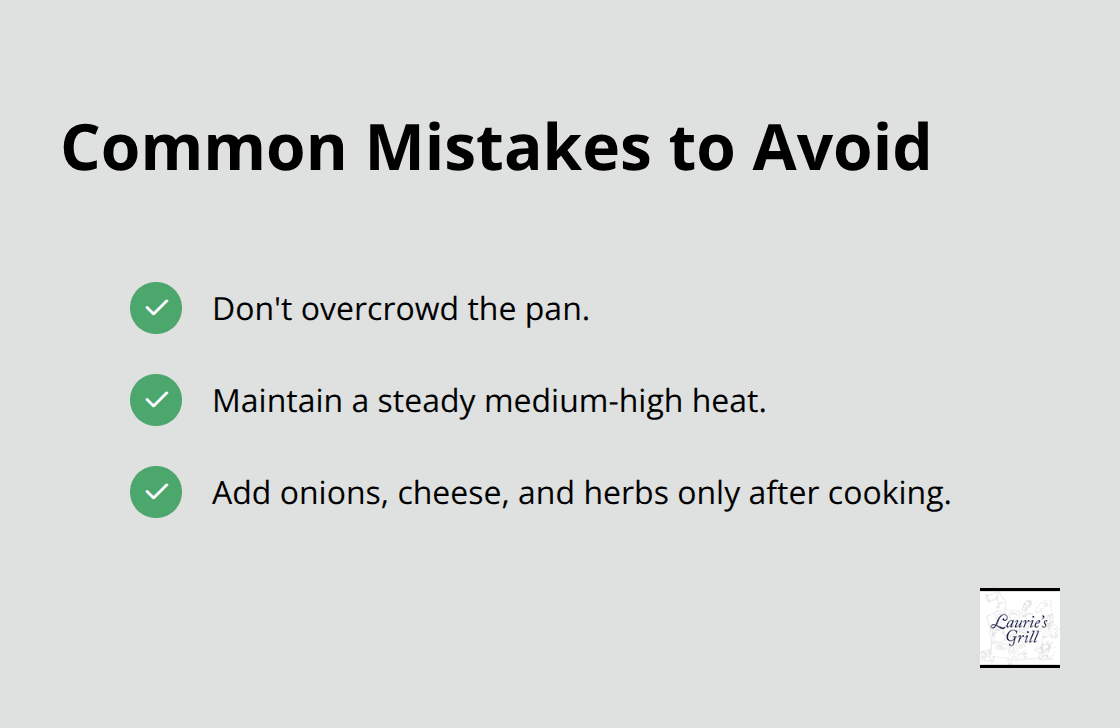
Most home cooks fail at hash browns because they violate one fundamental rule: hash browns need direct, sustained heat to fry properly. The moment you crowd the pan, you’ve already lost. When potatoes touch each other too tightly or the pan is overstuffed, the moisture trapped between them turns into steam, and steam cooks potatoes instead of frying them.
Cook in batches instead. A single layer of shredded potatoes in an eight-inch cast iron skillet represents the correct portion, not a heaping mound that covers every inch of cooking surface. If you’re cooking for four people, make four separate batches. Yes, this takes longer.
Yes, it’s worth it. One batch takes ten to twelve minutes, and you can keep finished hash browns warm in a 200-degree oven without losing crispness.
Temperature Control Demands Constant Attention
Too low and your potatoes absorb oil instead of browning, leaving you with a greasy, limp result that tastes more like a confit than a crispy breakfast side. Too high and the exterior blackens within three minutes while the interior remains pale and undercooked. Try medium-high heat as your target, but your specific stove may run hot or cool, so watch the first batch carefully.
If browning happens faster than five to seven minutes on the first side, reduce heat slightly. If after seven minutes you see only pale edges, increase heat. You’re looking for a deep golden crust, almost caramelized in appearance. This constant adjustment separates professionals from home cooks who wonder why their hash browns never crisp properly.
Adding Ingredients Early Introduces Moisture and Steam
Onions, cheese, or herbs introduce moisture and create steam pockets that sabotage browning. Salt and pepper go on after cooking. Fresh herbs and toppings belong on the finished plate, not in the pan. This discipline separates professionals from home cooks who compromise their results before the potatoes even hit the heat.
Final Thoughts
Crispy hash browns require you to master three fundamentals: select high-starch Russet potatoes, remove every drop of moisture before cooking, and maintain consistent medium-high heat without moving the potatoes around. Skip any of these steps and you’ll end up with soggy, pale results that taste nothing like what you get at a professional diner. Your first batch will teach you how your specific stove behaves, and dialing in the right temperature for your kitchen takes practice.
One compact cake per batch in an eight-inch cast iron skillet, medium-high heat, five to seven minutes per side without touching them, and salt only after cooking-this discipline produces results that match what you’d order at a diner. Hash browns deserve better than the rushed, crowded-pan approach most home cooks use (they’re a centerpiece that demands your attention, not a quick side dish thrown together while you make eggs). Visit Laurie’s Grill to experience how these fundamentals taste when executed by professionals who’ve been perfecting them for years.

Recent Comments