
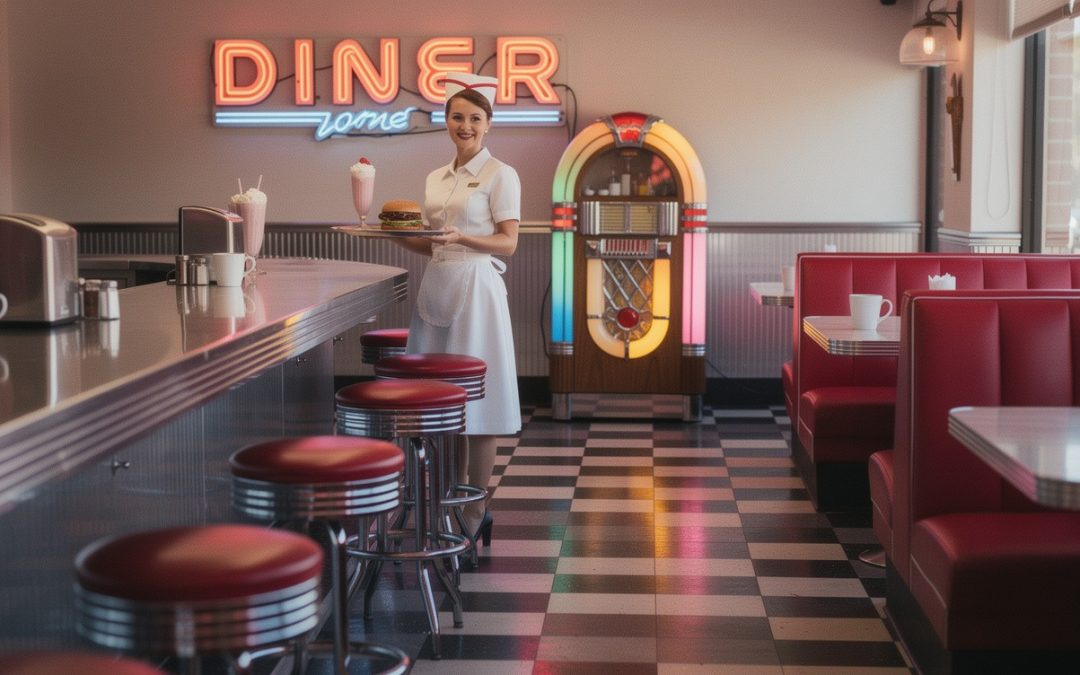
There’s something magical about walking into a classic American diner in Bend and feeling like you’ve stepped back in time. The red vinyl booths, the sizzling griddle, the aroma of fresh coffee-it all speaks to a simpler era when meals brought people together.
At Laurie’s Grill, we believe these timeless establishments deserve celebration. They’re more than just places to eat; they’re the heart of our community, serving up comfort and connection one plate at a time.
Why Diners Matter in American Culture
The Birth of an American Institution
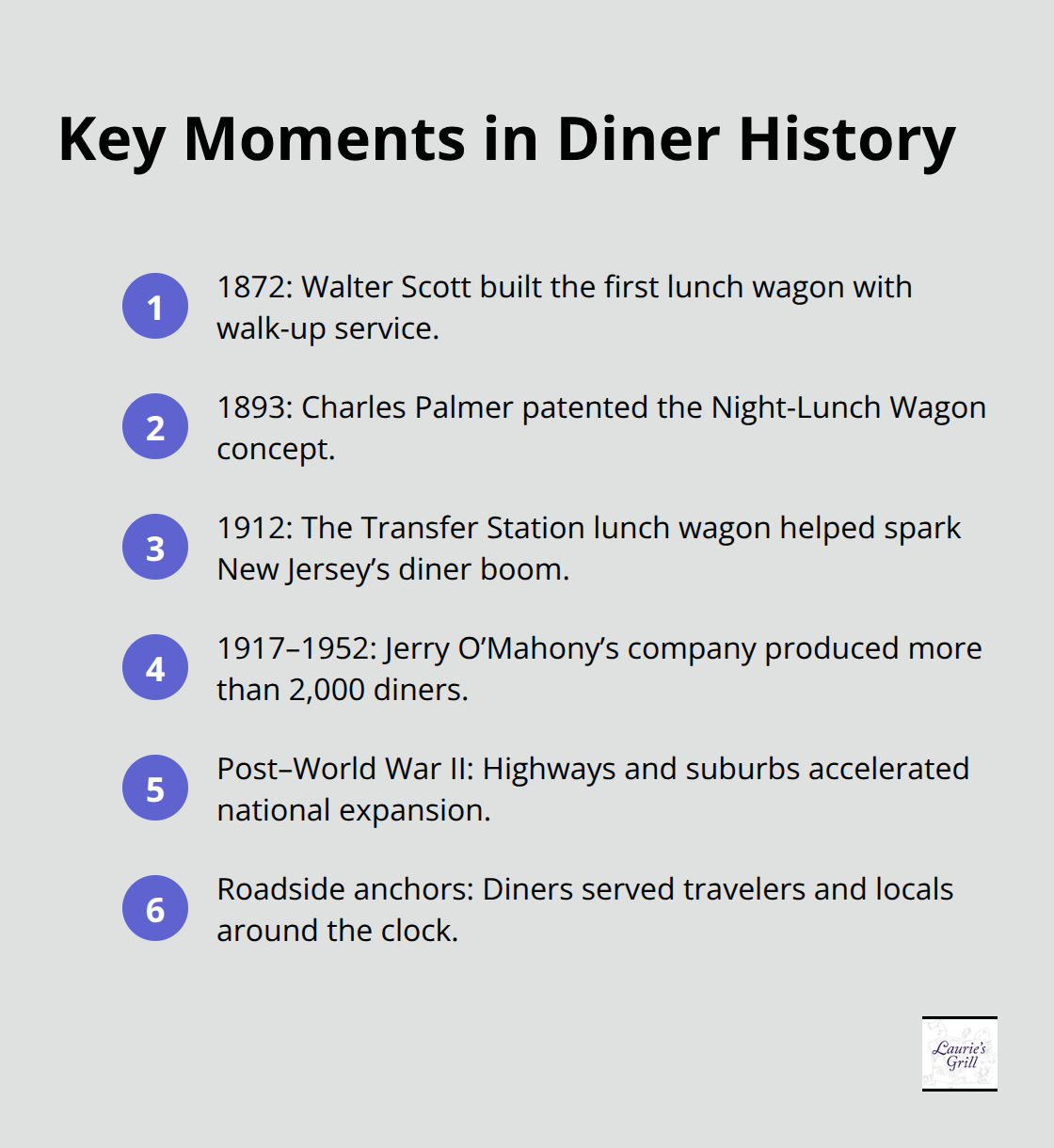
Walter Scott built the first lunch wagon in 1872 and offered walk-up service, a revolutionary concept that changed food service forever. Charles Palmer’s 1893 patent for the Night-Lunch Wagon sparked massive interest, and the 1912 Transfer Station lunch wagon ignited New Jersey’s diner manufacturing boom. Jerry O’Mahony’s company produced more than 2,000 diners from 1917 to 1952, though only about 20 of those originals survive today. The Interstate Highway System and post-World War II suburban expansion sent diners spreading across the country, transforming them into roadside anchors where travelers and locals alike could grab affordable, hot meals at any hour.
Design Built for Purpose
Diners weren’t designed to be fancy. The narrow counter with a central grill, the booths lining the walls, the stainless steel exterior, and the neon signs all served a practical purpose: speed, accessibility, and comfort. These spaces operated as egalitarian establishments by nature, staying open late to serve night shift workers and travelers who needed food when nowhere else was open. Every element reflected a commitment to serving working people quickly and fairly, without pretense or unnecessary frills.
Community Anchors That Last
What makes diners stick in our memory isn’t just the food, though that matters tremendously. Independent diners reflect the people who built them and the neighborhoods they serve, unlike chain restaurants that feel identical everywhere. Diners have hosted first dates, job interviews, late-night conversations, and family traditions for over a century. Regulars know the server’s name, and servers know their usual orders. Edward Hopper’s Nighthawks painting and Norman Rockwell’s The Runaway cemented the diner as a symbol of American resilience and everyday life, and that cultural weight still resonates today.
Why Nostalgia Runs Deep
When people walk into a classic diner in Bend, they seek more than a meal; they seek that feeling of belonging to something real and rooted. The comfort food served at these establishments triggers genuine nostalgia because diners represent a time when meals came from careful preparation, servers saw customers as more than transactions, and spaces prioritized human connection over maximum turnover. This authenticity explains why diners continue to thrive while countless chain restaurants fade away. The next section explores the specific menu items that have made diners legendary across America.
What to Order at a Classic Diner
Breakfast That Works Around Your Schedule
The menu at a classic American diner tells the story of working-class America better than any history book. Breakfast dominates for good reason-eggs cooked to order, hash browns crispy on the outside and tender inside, pancakes and waffles that arrive hot and golden.
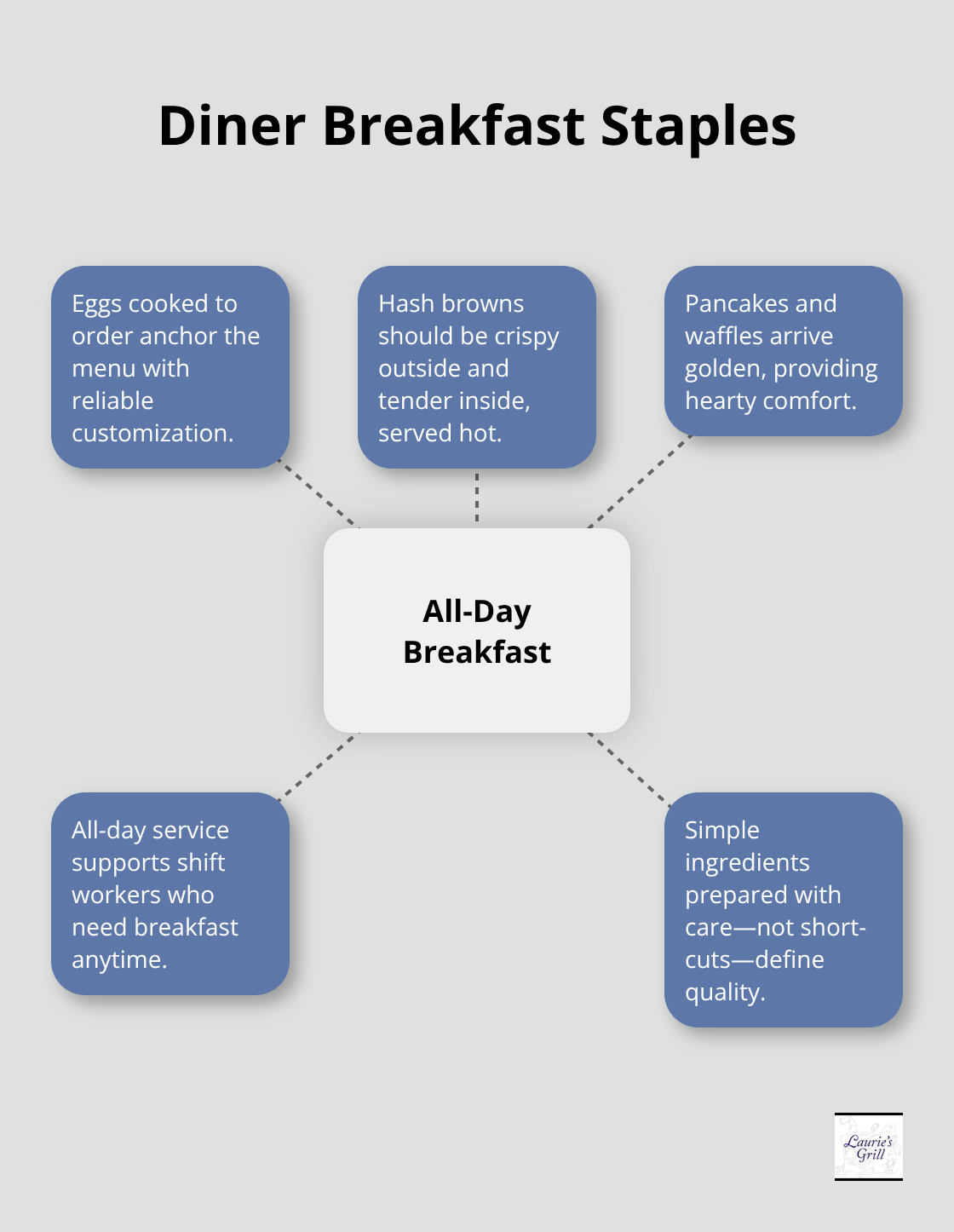
The all-day breakfast menu exists because diners understood that someone working a night shift needs eggs at midnight just as much as someone needs them at seven in the morning. This isn’t nostalgia for its own sake; it’s practical service designed around real people’s lives. Monagon’s Famous French Toast at Laurie’s Grill represents exactly what made diners legendary: simple ingredients prepared with care, not shortcuts.
Sandwiches and Burgers Built on Reputation
Sandwiches and burgers form the backbone of lunch and dinner orders. The best diners build their reputation on a signature sandwich that regulars order without thinking-Primanti Brothers in Pittsburgh, founded in 1933, was named an America’s Classic restaurant by the James Beard Foundation. The Triple Decker Club at Laurie’s Grill carries that same philosophy: quality ingredients stacked properly, served without pretension. A proper burger at a diner means fresh meat on a griddle, cooked to order, not a frozen patty dropped into a fryer. The fries matter too-they should be cut thick enough to hold their shape but soft inside, cooked in oil that’s changed regularly.
Desserts That Seal the Experience
Desserts separate memorable diners from forgettable ones. Pie cases weren’t decorative elements; they were sales tools because diners knew people craved something sweet after a meal. Milkshakes rank high on that list-Skyline in Oregon built genuine loyalty around theirs, and for good reason. A proper milkshake requires real ice cream, real milk, and someone who knows how to blend them without overworking the mixture. Sundaes, floats, and cakes round out the selection at diners across the country, but the pie case remains the symbol.
Sides That Matter More Than You’d Think
Sides matter more than chains ever understood-hash browns, home fries, toast cooked golden, beans, and coleslaw aren’t afterthoughts but essential components of the meal. McKay Cottage Restaurant and Ariana Restaurant both earn 4.7 out of 5 stars on Tripadvisor from hundreds of reviews, suggesting Bend understands that comfort food done right creates loyal customers. The Lemon Tree scores 4.8 out of 5 from roughly 115 reviews, showing that breakfast and brunch spots thrive when they nail the fundamentals. When you walk into a diner in Bend, order what sounds good without overthinking it, because the best diners excel at execution rather than innovation. The warmth of a diner kitchen comes through in every plate that leaves it, which is exactly why the people who serve that food matter just as much as the food itself.
What Makes a Diner Feel Like Home
Staff Consistency Creates Real Connection
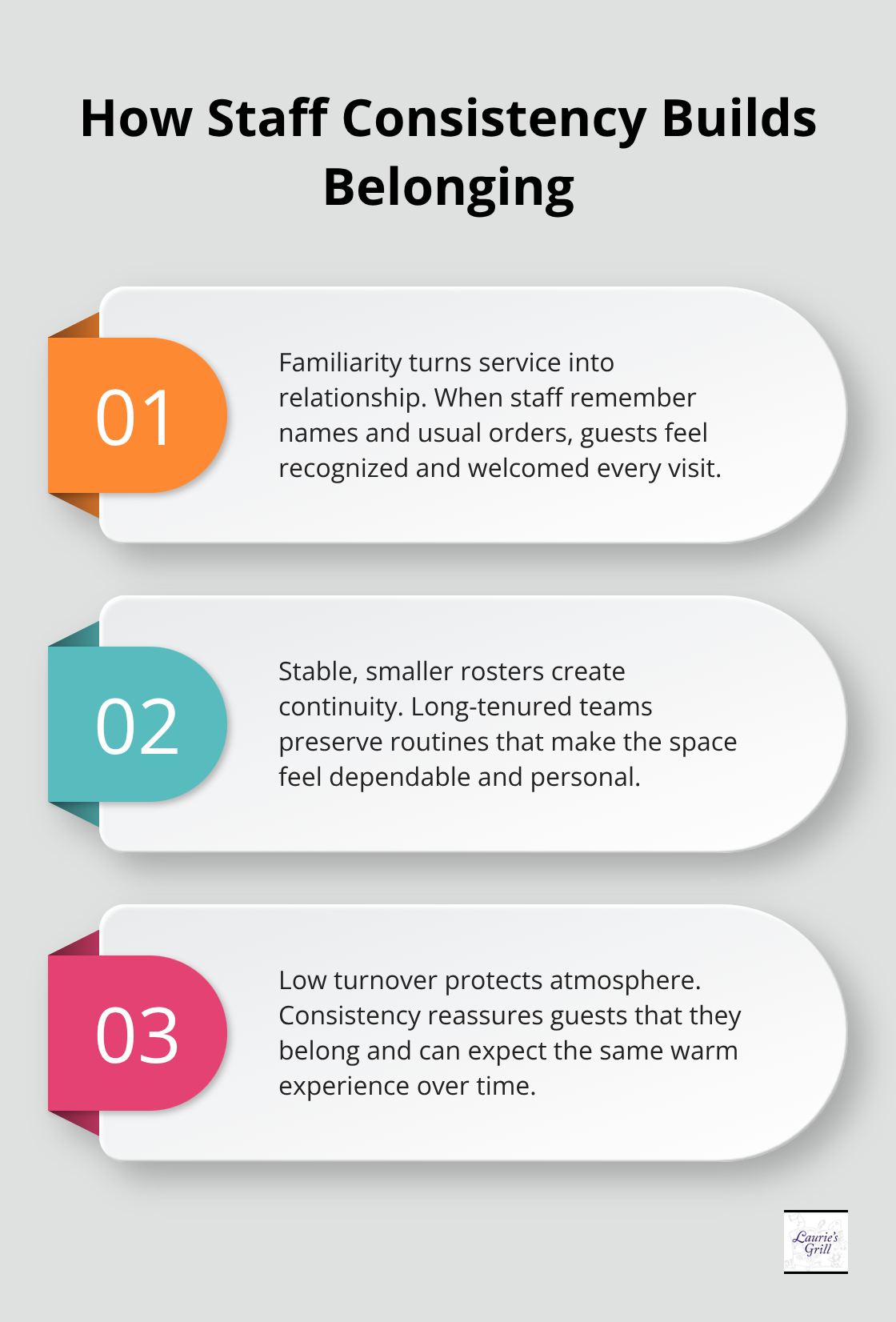
The physical space matters far less than what happens inside it. A diner’s atmosphere comes from deliberate choices about how staff treat customers and how management builds routines that make people want to return. The booths and counter seating serve a practical purpose beyond nostalgia: they position staff close enough to remember regulars’ names and orders, creating genuine connection rather than transactional service. When a server knows that you always order coffee black and your usual sandwich without tomato, that recognition signals you belong there. This happens because diners maintain smaller, stable staff rosters where people work for years, not months. High turnover destroys atmosphere instantly because customers lose the continuity that makes them feel known.
The servers at successful diners succeed because they treat each customer interaction as part of an ongoing relationship rather than a one-time transaction. The physical warmth matters too: a diner should feel like someone’s kitchen, not a corporate dining room. Open griddles where customers see their food being prepared, visible pie cases where desserts catch your eye, and coffee that arrives within minutes of sitting down all reinforce the message that the kitchen cares about speed without sacrificing quality.
Proximity Builds Informal Social Networks
Diners function as gathering places where the same faces appear regularly, creating informal social networks that strengthen neighborhood bonds. The best diners recognize this by hosting regulars who occupy the same booth weekly, remembering their preferences without asking, and creating an environment where strangers become friends through proximity and shared experience. This happens naturally when management prioritizes long-term relationships over maximizing table turnover. The atmosphere a diner creates should feel earned, not performed.
Customers detect the difference between genuine hospitality and trained politeness instantly. When staff members actually care about the people they serve because they’ve worked alongside the same owner for years and share genuine investment in the restaurant’s success, that authenticity becomes the real draw. This explains why diners survive while chain restaurants struggle: people can feel whether they matter or exist only as revenue units. The warmth of a diner atmosphere requires that owners and staff view customers as part of their extended family rather than as inventory to be processed efficiently.
Final Thoughts
Classic diners endure because they solve a problem that money alone cannot fix: the human need to feel known and valued. Chain restaurants cannot replicate this because consistency requires standardization, and standardization erases the personal touches that make people feel at home. A classic American diner in Bend succeeds by rejecting the corporate playbook entirely, prioritizing relationships over quarterly earnings reports.
Supporting family-owned diners means investing in spaces where owners and staff share genuine stakes in their community’s wellbeing. When you walk through the door of an independent diner, your money goes directly to people who live nearby, who see you again next week, and who care whether you return. This creates accountability that corporate structures eliminate through layers of management and distant decision-makers.
Visit Laurie’s Grill to experience what a classic American diner Bend experience should feel like, where we serve home-style cooked meals at affordable prices with breakfast available all day. Our menu features beloved classics like the Triple Decker Club and Monagon’s Famous French Toast, built on the same principles that made diners legendary across America. We also offer a full banquet room perfect for parties, weddings, and reunions-spaces where your community gathers and creates memories.
Recent Comments