
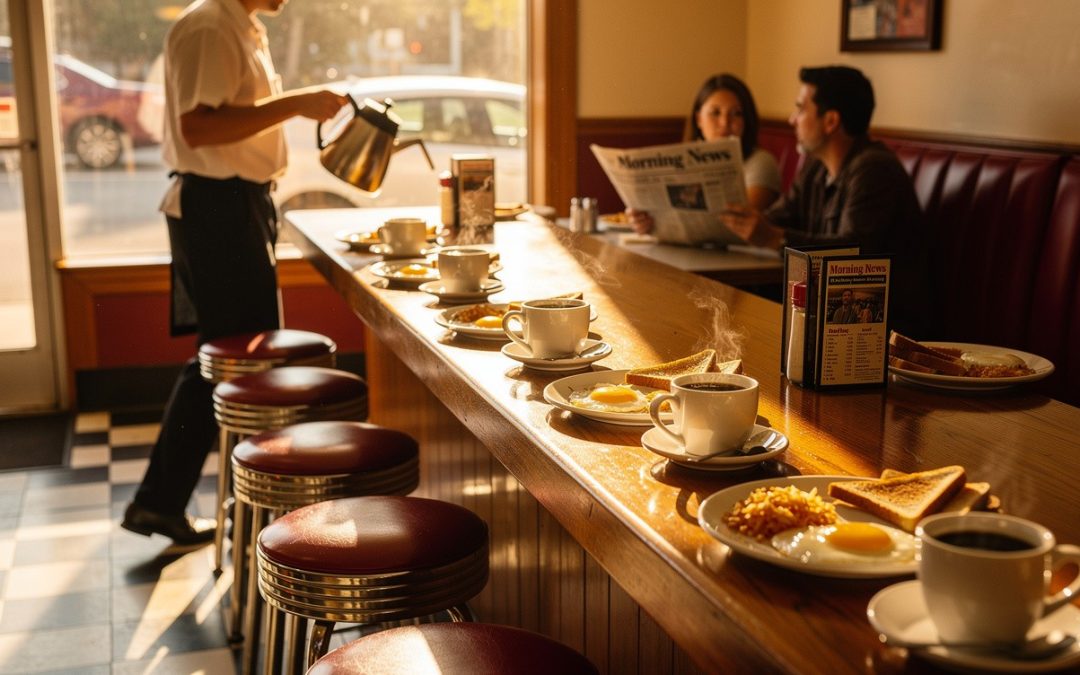
Morning coffee at Bend diners hits different. There’s something about walking into a local spot, ordering a hot cup, and settling into a booth that’s been welcoming regulars for decades.
At Laurie’s Grill, we know that Bend’s diner culture isn’t just about food and caffeine. It’s about community, affordability, and the kind of hospitality you can’t find anywhere else.
Why Bend Diners Matter for Your Morning
The Regulars Know What They’re After
Walk into any Bend diner on a weekday morning and you’ll spot the same faces at the same tables, nursing coffee that’s been kept hot since 5 a.m. This isn’t accident. Bend diners have built something that chain cafés can’t replicate: a space where regulars feel ownership, where the server knows your order before you sit down, and where the coffee tastes better because someone actually cares if you come back tomorrow. The community keeps these places alive because owners have made it clear they’re here for their customers, not just for transactions.
Affordability That Lets Families Eat Out Weekly
A full breakfast plate at a Bend diner runs between $8 and $14. That difference matters. Families can afford to eat out weekly instead of monthly. Retirees on fixed incomes can still have their social breakfast ritual. Working people can grab a real meal before their shift without guilt. This pricing structure reflects how local owners operate-they prioritize steady customers over maximum profit margins.
Coffee and Food Work Together by Design
Bend diners serve straightforward coffee, and that’s their strength. No foam art, no temperature debates, just dark roast that’s been sitting on the burner since opening. A typical cup contains 80 to 135 milligrams of caffeine according to standard brew measurements, enough to hit you properly without the pretense. The breakfast food pairs intentionally with this coffee. Eggs, bacon, hash browns, and toast absorb caffeine’s edge and stabilize your blood sugar for the next four hours of work. Health research shows that pairing carbohydrates with protein at breakfast improves cognitive performance and steadies energy through mid-morning, which is exactly what you need before noon. Bend diners nail this formula because they’ve served it the same way for 30, 40, sometimes 50 years.
Family Owners Who Eat in Their Own Restaurants
Family-owned Bend diners operate differently than franchise locations. Owners eat in their own restaurants. They know when the eggs came in, whether the toast is too dark, and which regular just lost their job and needs a free cup of coffee this week. This isn’t charity-it’s the economics of small business. When you own the place, you invest in relationships because those relationships become your customer base. Bend’s diner owners have watched their towns grow and decided to stay anyway, keeping prices stable and portions generous even as rent climbs. That commitment shows up in every plate that leaves the kitchen, and it’s what separates local spots from everywhere else.
What to Order at Bend Diners for the Best Morning Meal
Fresh Ingredients Make the Difference
Bend diners excel at the fundamentals, and that’s precisely why their breakfast dishes outperform anything you’ll find at chains. The eggs arrive cooked to your specification, not pre-made in a heat lamp. Hash browns come sliced fresh from potatoes, not frozen shreds that turn to mush. Toast comes from bread that arrived yesterday, not from a delivery truck two weeks ago. This commitment to fresh ingredients means you taste the difference in every bite.
Signature Dishes Worth Ordering
Local diners perfect a small number of breakfast staples and execute them flawlessly. Laurie’s Grill serves the Triple Decker Club and Monagon’s Famous French Toast-dishes that represent what happens when owners commit to doing one thing exceptionally well instead of chasing trends. The French toast uses real bread soaked in egg batter, then griddle-cooked until the exterior crisps while the interior stays custardy. Pair this with black coffee and you’ve got a breakfast that actually sustains you. Most Bend diners charge between $8 and $14 for these plates, which means you’re getting restaurant-quality food at prices that don’t require justification.
All-Day Breakfast Fits Your Schedule
The real advantage of Bend diner breakfast is all-day breakfast availability. It’s a recognition that people work different shifts and eat on different schedules. A nurse finishing a night shift at 8 a.m. orders eggs and bacon. A construction worker taking a late lunch at 2 p.m. orders hash browns and sausage. A retiree meeting friends at 4 p.m. orders French toast and coffee. This flexibility exists because family owners understand that rigid menus serve restaurant schedules, not customer reality.
Skip the Trends, Order What Works
Skip the Instagram-worthy acai bowls and overpriced avocado toast. Order what Bend diners have perfected: simple proteins, carbohydrates that actually fill you, and coffee strong enough to taste like someone cares about the result. This straightforward approach to breakfast has sustained these restaurants through decades of changing food fads, and it continues to draw customers who value substance over style. When you sit down at a Bend diner counter, you’re choosing a meal built on reliability rather than novelty-and that choice shapes what happens next when you explore the community atmosphere that makes these spaces truly special.
Why Bend Diners Stay in Families for Generations
Owners Who Taste Their Own Coffee
When a restaurant owner eats breakfast in their own restaurant three times a week, the operation runs differently. At family-owned Bend diners, this isn’t a slogan-it’s how decisions get made. An owner tastes yesterday’s coffee quality and adjusts the roast. They notice when a regular hasn’t shown up in two weeks and ask around. They know the dishwasher’s kid just started college and slip an extra $20 into their paycheck. This level of attention emerges only when someone’s name is on the lease and their reputation is tied to every plate leaving the kitchen. Family ownership in Bend means the restaurant becomes an extension of personal values, not a profit center to extract money from.
Long-Term Thinking Changes Everything
Many Bend diners have operated under the same family for 30, 40, or even 50 years-a timeframe that forces owners to think about whether their grandchildren will want to run the place. That perspective changes everything about pricing, service standards, and how conflicts get resolved. When a customer can’t afford breakfast one week, the owner remembers. When a supplier raises prices, the owner absorbs the increase rather than cutting portions. This isn’t sentimentality; it’s the economics of long-term thinking applied to small business.
Staff Who Build Real Relationships
The warmth people experience at Bend diners traces directly to this ownership structure. Staff members stay in their jobs for years because owners treat them like team members rather than interchangeable labor. A server who’s worked the morning shift for a decade knows 200 regulars by name and their preferred tables. She knows Mrs. Chen takes her eggs over easy and always orders wheat toast. She knows the construction crew from the job site three blocks away arrives at 6:15 a.m. sharp and needs coffee poured before they sit down. This institutional knowledge can’t be replicated through training manuals or corporate standards. It emerges only when someone works in one place long enough to build relationships.
Money Stays Local and Multiplies
Bend’s local business economy strengthens because money stays in circulation. When you spend $12 on breakfast at a family diner, roughly 60 percent of that revenue stays local-going toward staff wages, local food suppliers, rent paid to local landlords, and utilities billed by community providers. A corporate chain captures that same $12 but routes most of it to distant headquarters.
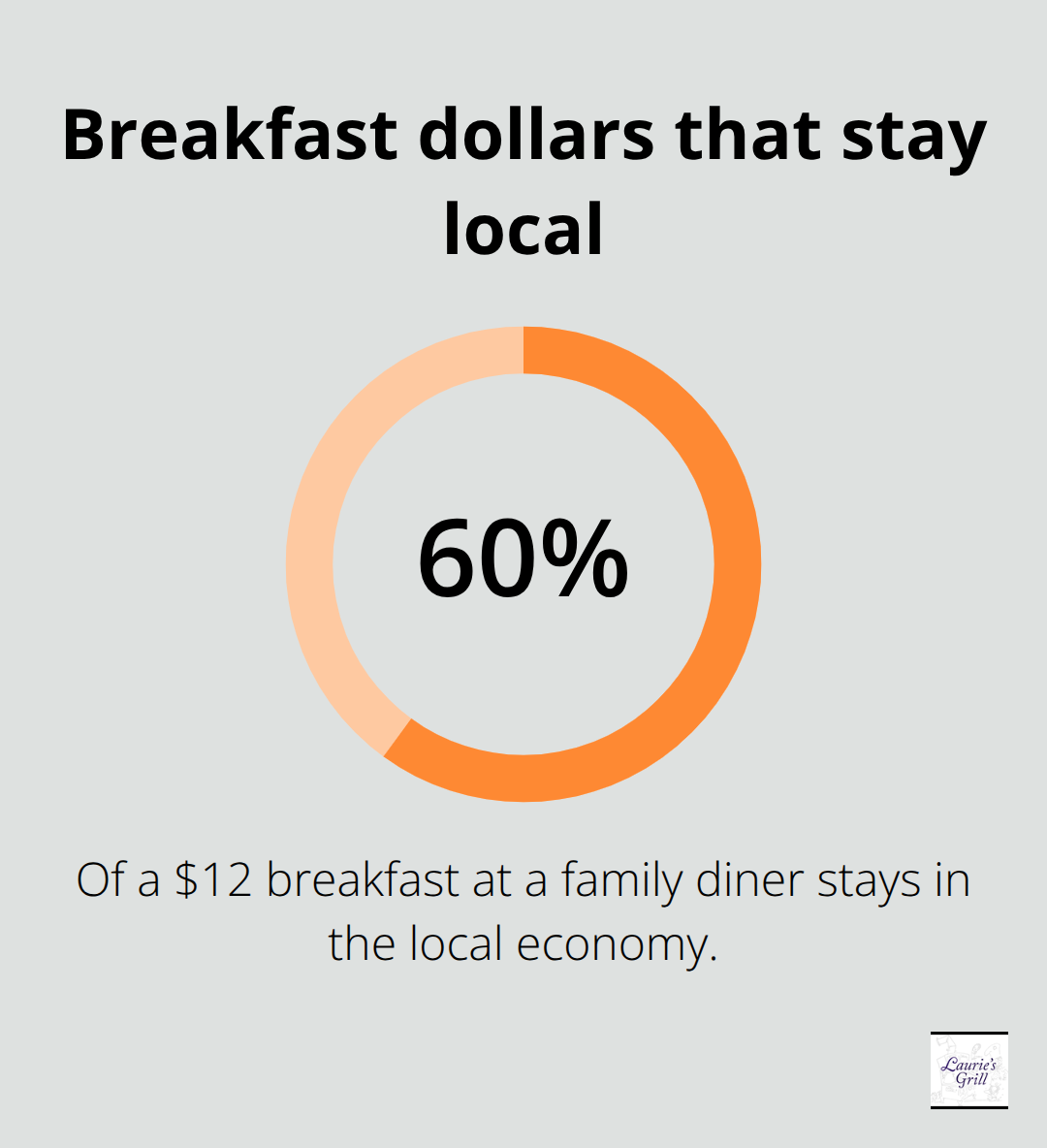
Over a year, a family diner spending $500,000 on local food sourcing directly supports multiple local farms and suppliers who then spend money elsewhere in Bend. This multiplier effect means diner customers aren’t just buying breakfast; they’re funding the economic foundation that keeps Bend functioning as a real community rather than a collection of franchise locations.
Final Thoughts
Bend diners remain community gathering spots because they operate on a principle that chains abandoned decades ago: people matter more than profit margins. When you walk into morning coffee at Bend diners, you enter a space where the owner knows your name, where staff members have worked the same shift for years, and where regulars have claimed their tables through decades of loyalty. This consistency creates something irreplaceable-the booth you sit in has held hundreds of conversations between neighbors, and the coffee cup has warmed the hands of people who watched Bend grow while these restaurants stayed exactly the same.
The best time to visit is early morning between 6 and 8 a.m., when the energy peaks and you see the real rhythm of community life. Construction crews arrive together, retirees settle in for their daily ritual, and the kitchen runs at full speed. If you prefer a quieter experience, mid-morning between 9 and 11 a.m. offers a calmer atmosphere with the same quality.
Visit Laurie’s Grill and experience what community-centered dining actually means. Sit at the counter, order coffee that tastes like someone cares, and join the people who made Bend diners the heart of this town.
Recent Comments