
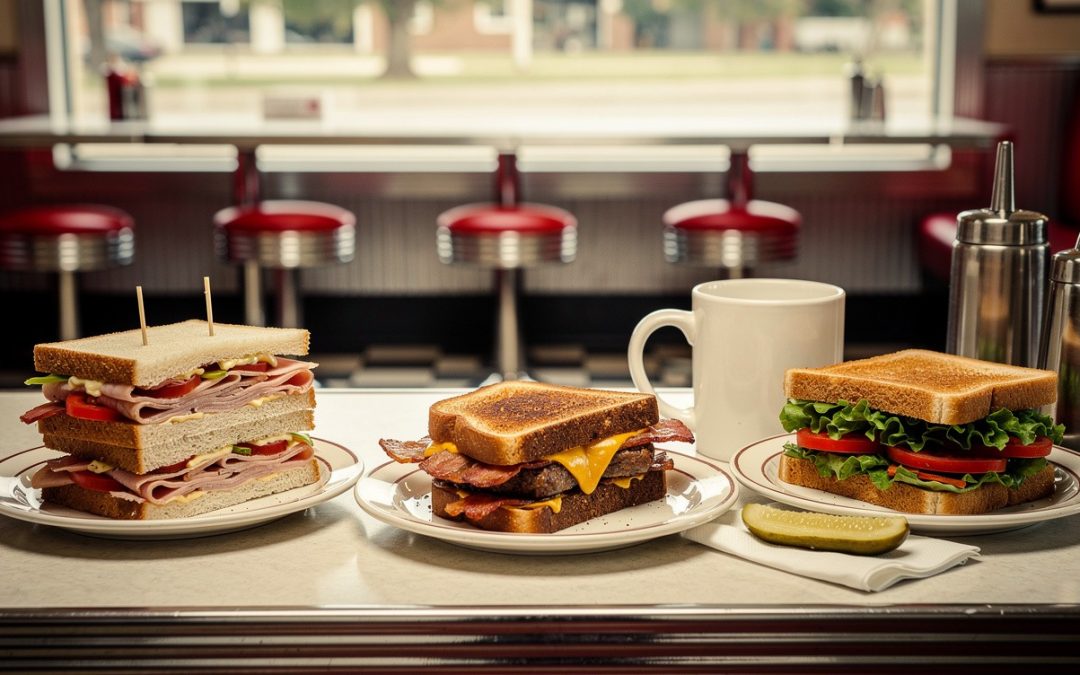
Diner sandwich favorites in Bend aren’t just meals-they’re pieces of local history served on a plate. We at Laurie’s Grill know that the best sandwiches come from understanding what makes each layer matter, from bread quality to ingredient freshness.
These classics have stayed popular for decades because they deliver real flavor and real value. This post breaks down what makes a diner sandwich worth craving, and why Bend’s sandwich culture stands apart.
What Makes the Triple Decker Club an American Icon
The Architecture of a Three-Layer Masterpiece
The Triple Decker Club sandwich stands as one of America’s most enduring sandwich achievements. The sandwich emerged in the early 1900s as restaurants sought to create something more substantial than simple two-slice constructions. Three slices of toasted bread, layered with turkey, bacon, lettuce, tomato, and mayo, deliver a meal that feels complete and satisfying. Each layer of bread acts as a structural support and flavor anchor, preventing the fillings from collapsing and creating distinct textural experiences with every bite.
The turkey provides lean protein, the bacon adds salt and smokiness, and the fresh vegetables contribute crunch and acidity that cuts through the richness of mayo and toasted bread. This isn’t accident or theory-it’s engineering that works because diners understood portion psychology. A customer receives visible abundance without waste, and the price point stays reasonable because the sandwich uses accessible ingredients prepared with straightforward technique.
Why Three Slices Beat Two
Layered sandwiches became diner staples precisely because they solved real problems that single-layer constructions couldn’t address. Temperature retention improved dramatically with three bread slices acting as insulation, meaning your sandwich stays warm longer during the meal. Structural integrity means diners can actually eat the sandwich without it falling apart mid-bite, a critical factor in a busy restaurant setting.
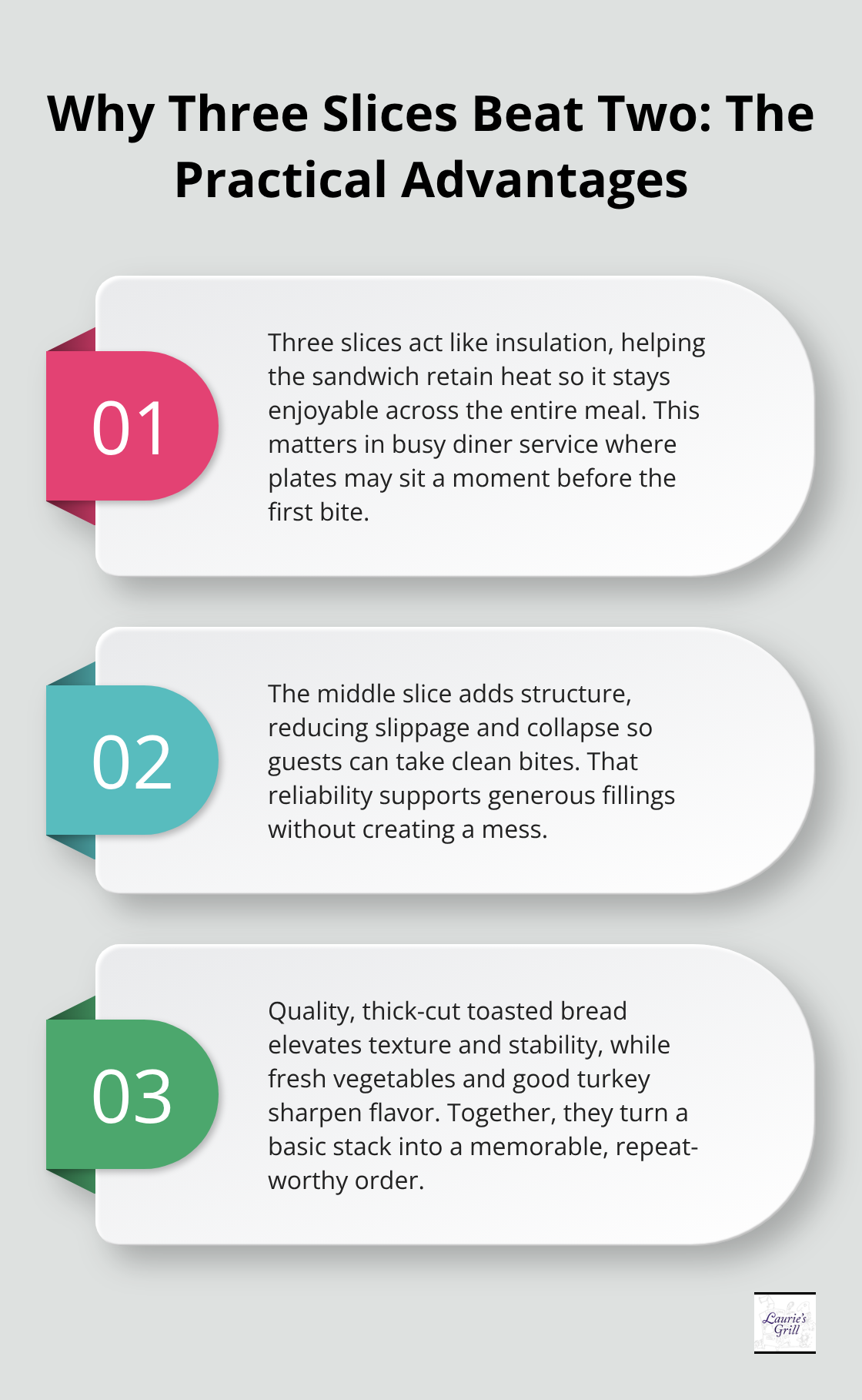
Quality bread transforms everything. Thick-cut, properly toasted slices provide the foundation that separates a memorable sandwich from a forgettable one. Fresh ingredients aren’t optional; they’re foundational. Ripe tomatoes, crisp lettuce, and quality turkey make the difference between a sandwich worth ordering again and one you forget immediately.
The Balance That Matters Most
The proportion between fillings and bread matters enormously. Too much filling overwhelms the bread structure and creates an unbalanced eating experience. Too little bread, and you’ve essentially created a ratio that fails both structurally and flavor-wise. The best approach keeps these elements in conversation with each other rather than competing for dominance (think of it as a conversation where every voice gets heard, not shouted over).
This balance extends to how each ingredient interacts with the others. The mayo binds flavors together, the bacon provides textural contrast, and the vegetables add freshness that prevents the sandwich from feeling heavy. When these components work in proportion, they transform a simple stack of ingredients into something that restaurants have served for over a century for good reason.
What Separates Good from Forgettable
The difference between a sandwich worth ordering again and one you forget immediately comes down to execution. Toasting the bread properly matters-it needs to be crisp enough to provide structure yet tender enough to avoid toughness. The turkey should be sliced fresh, not pre-packaged and thin. The bacon must be cooked to a point where it adds smokiness without overwhelming the other flavors.
These details explain why the Triple Decker Club has remained a staple on diner menus across America and why it continues to draw customers who understand what a well-made sandwich can deliver. The sandwich works because every component serves a purpose, and every purpose connects to the overall experience.
How Bend’s Diner Culture Shaped Sandwich Traditions
Oregon’s Different Approach to Sandwich Building
Oregon’s sandwich culture reflects something fundamentally different than the East Coast traditions that dominated early American diner menus. Bend diners adapted classic sandwich architecture to match what local customers actually wanted and what regional ingredients could deliver. The Triple Decker Club works everywhere, but in Bend it evolved into something distinctly local. Bread quality from local bakeries affects sandwich structure, which means the sandwich’s structural integrity changes based on what’s available within fifty miles. Properly toasted thick-cut bread from regional sources creates a different eating experience than standardized commercial bread. The tomatoes come from regional suppliers during season, which means they have actual flavor rather than the watery versions that travel across the country.
How Local Sourcing Changes Everything
Turkey gets sourced differently in Oregon too. The state’s food network emphasizes quality over volume, which translates directly into sandwich construction. A sandwich built with ingredients from within the state tastes materially different because every component has been selected for taste rather than shipping durability. This commitment to ingredient quality affects every layer and distinguishes local diners from national chains. National chains standardize their sandwiches across hundreds of locations, which means they optimize for consistency rather than flavor. A Triple Decker Club at a national chain in Bend tastes identical to one in Ohio, which is precisely the problem. Local diners compete by refusing that approach.
What Sets Bend Diners Apart
Bend’s diner culture survived the chain-restaurant explosion precisely because it offered something genuinely better, not just different branding around identical products. Local establishments source bread from regional bakeries, turkey from suppliers who prioritize quality over price, and vegetables from producers who understand that peak ripeness matters more than shelf life. This creates sandwiches that taste distinctly local because they are local. The cost difference proves minimal when you’re buying fresh ingredients in reasonable volume, but the flavor difference is massive. Customers notice immediately and return because they taste the difference between a sandwich built for profit margins and one built for actual eating experience.
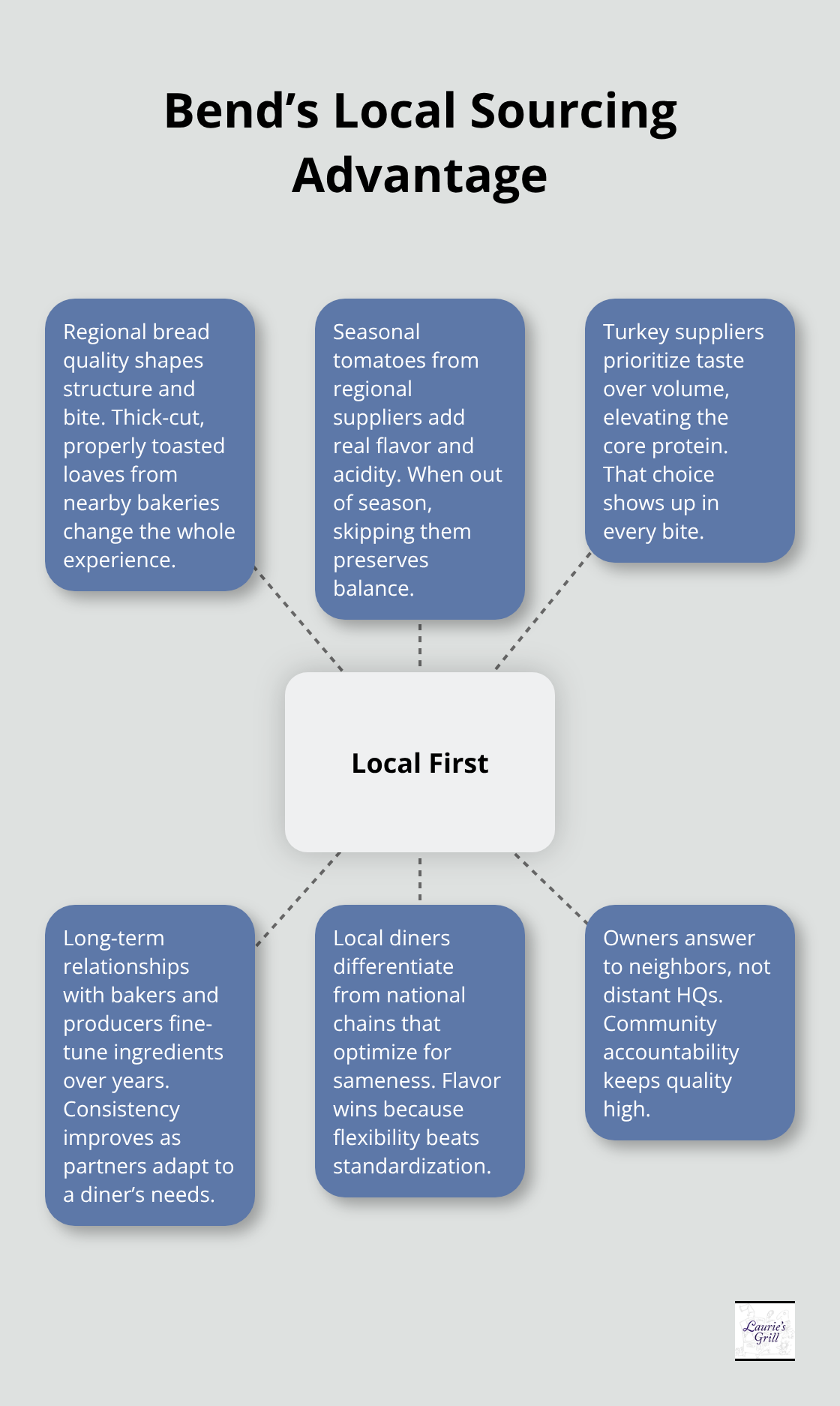
What sets Oregon diners apart isn’t nostalgia or marketing-it’s a genuine commitment to ingredient quality that affects every component on the plate.
The Real Competitive Advantage
The sandwich you order at a local Bend diner reflects decisions made by people who understand their community’s tastes and their region’s agricultural calendar. These decisions compound over time. A diner that sources from the same turkey supplier for five years develops a relationship that affects quality. A bakery that works with the same diner for a decade adjusts its bread recipe to match that specific restaurant’s needs. National chains cannot replicate this because their structure demands standardization across markets. The result stands obvious: Bend’s diner sandwiches taste better because they’re built by people who live here, source here, and answer to customers they see regularly. This foundation explains why the next layer of sandwich excellence-understanding how to actually construct these sandwiches with precision-matters so much to the final product.
The Art of Building the Perfect Diner Sandwich
Foundation Matters: Why Bread Quality Determines Success
The difference between a sandwich that falls apart halfway through and one that holds firm comes down to assembly order and proportion. Start with bread as your foundation, not your afterthought. Toast it properly at medium-high heat for 90 to 120 seconds per side, which creates a surface that’s crisp enough to support weight without becoming brittle. Bread quality determines success because moisture from fillings seeps into bread and compromises integrity. Spread a thin layer of mayo on the first slice, which acts as a moisture barrier and prevents the bread from getting soggy. This isn’t about flavor preference; it’s structural engineering.
The Sequence That Prevents Collapse
Layer your protein next, then vegetables, then more mayo on the second slice before adding your top layer. The protein goes down first because it’s the heaviest component and needs direct contact with the structural bread layer. Vegetables stack next because their moisture content is higher, and they sit better on top of protein than directly against bread. The filling-to-bread ratio matters more than most people realize.
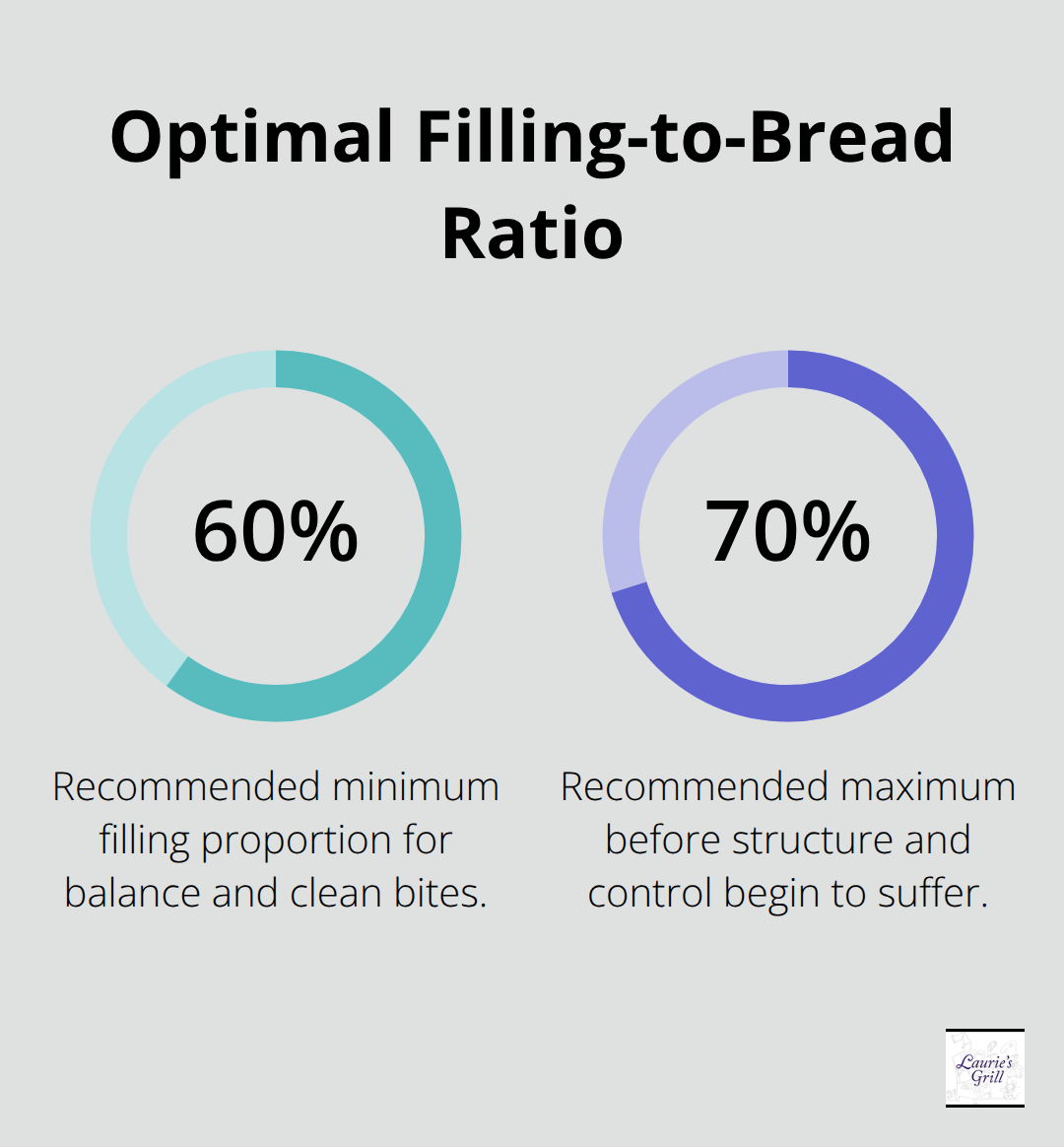
A proper ratio keeps fillings at roughly 60 to 70 percent of the total sandwich height. Too much filling makes the sandwich impossible to bite through without ingredients sliding out the sides. Too little, and you’re essentially eating bread with a garnish.
Timing and Temperature Transform Flavor
Temperature timing affects everything. Assemble your sandwich immediately after toasting bread while it still radiates heat, which allows mayo to soften slightly and helps flavors integrate. If you wait more than two minutes after toasting, the bread begins cooling and loses its ability to meld with other components. Cold sandwiches assembled from room-temperature ingredients don’t develop the same flavor cohesion that a properly timed warm assembly creates.
Topping Combinations That Actually Work
Choosing which toppings work together requires understanding flavor contrast and textural balance. Turkey provides neutral protein, so it pairs well with acidic vegetables like tomato and tangy condiments like mayo. Bacon adds salt and smokiness, which means it demands fresh vegetables that cut through richness; this is why bacon sandwiches always need tomato or lettuce to work. Lettuce contributes crunch and mild flavor, making it the textural anchor that prevents the sandwich from becoming one-dimensional. Tomato adds acidity and moisture, but only if it’s actually ripe and flavorful; a pale supermarket tomato adds nothing except water. Quality matters here more than inclusion.
During peak season, fresh local tomatoes from regional suppliers deliver the best flavor and value. Outside peak season, skip tomato entirely rather than adding a flavorless substitute. This philosophy separates good diners from mediocre ones. A Triple Decker Club works because every layer has a job. The bacon provides contrast to the turkey’s mild flavor. The tomato and lettuce provide freshness and crunch that prevent the sandwich from feeling heavy. The mayo binds these elements and adds richness that makes the whole thing taste intentional rather than assembled. Remove any one component, and the sandwich becomes noticeably less interesting. Add random ingredients hoping to improve it, and you destroy the balance that makes the original work.
Why Diner Sandwich Favorites in Bend Stand the Test of Time
Diner sandwich favorites in Bend endure because they solve a problem that trendy food trends cannot address: genuine satisfaction built on decades of proven execution. A Triple Decker Club tastes the same way it did fifty years ago because the formula works, and that consistency matters enormously in a world where restaurants constantly chase novelty. You receive visible portions, quality ingredients, and a meal that fills you up rather than leaving you hungry an hour later, which explains why diners remain packed while trendy restaurants cycle through ownership changes every few years.
Classic sandwiches connect to memory in ways that matter deeply, transforming a meal into an experience that transcends simple hunger. The sandwich you order today tastes like the sandwich your parent ordered twenty years ago, which creates continuity across generations and links you to something larger than yourself. Food carries memory more powerfully than almost anything else, and when you bite into a well-made club sandwich, you participate in a tradition that your community has maintained through decades of change.
We at Laurie’s Grill built our reputation on this exact principle: a sandwich that works because every component serves a purpose, prepared with care by people who live in this community. Our Triple Decker Club represents what happens when commitment to classic execution meets affordable pricing and a warm atmosphere, which explains why people return again and again. Classic sandwiches never fade because they rest on something more fundamental than trends-they rest on what actually tastes good and what actually matters to the people who eat them.
Recent Comments