
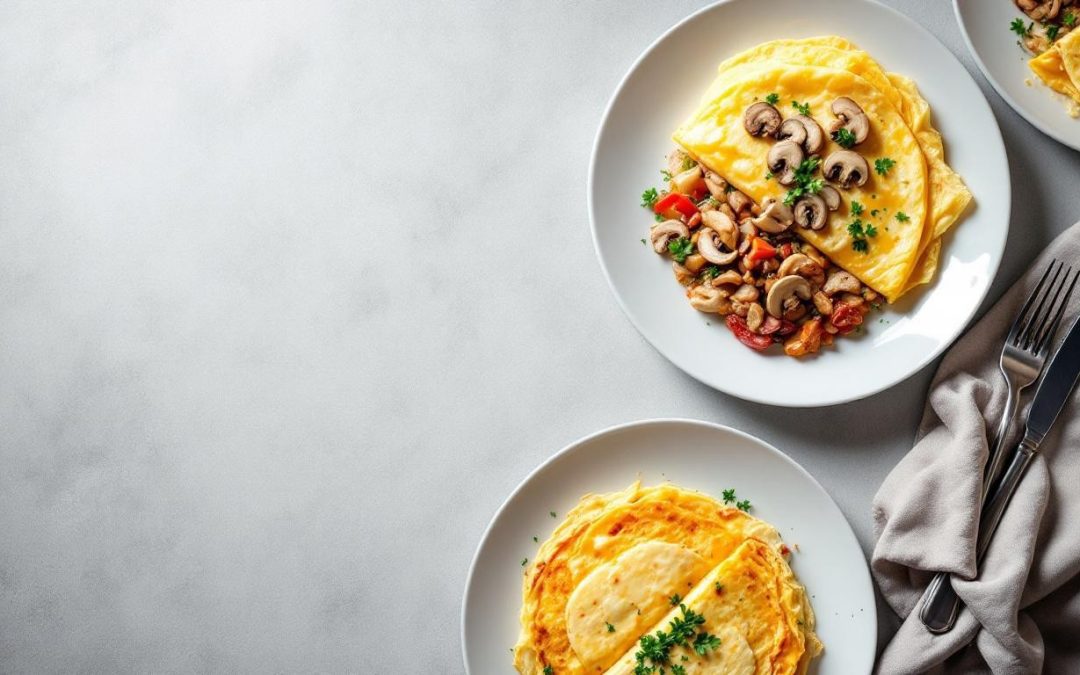
Omelets are one of the most versatile dishes you can master in your kitchen, yet most home cooks stick to the same basic recipe. We at Laurie’s Grill believe that exploring different omelet variations opens up endless possibilities for breakfast, lunch, or dinner.
From classic French techniques to bold international flavors, there’s far more to omelets than you might think. This guide walks you through proven methods, smart filling combinations, and the mistakes that hold most cooks back.
Three Omelet Techniques That Actually Make a Difference
The French Omelet: Low, Slow, and Creamy
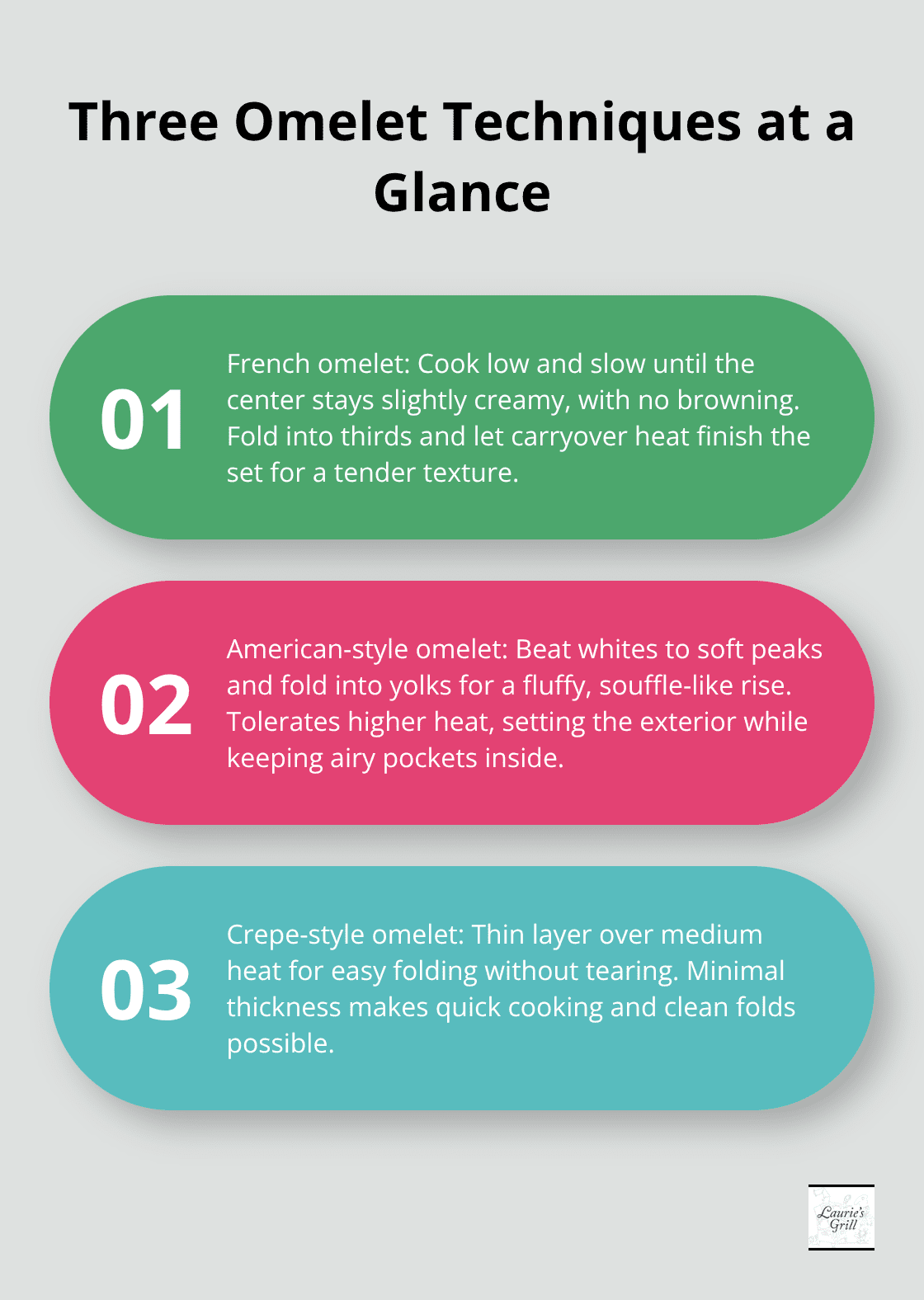
The French omelet sits at one end of the spectrum and demands respect. Cook it low and slow until the center remains slightly creamy, then fold it into thirds without any browning on the exterior. This technique takes about two minutes of active cooking and requires whisking eggs with a splash of water or milk until foamy-Peggy Woodward, a registered dietitian nutritionist, recommends this step for achieving that signature tender texture. The acid matters here. Bee Wilson’s research in The Secrets of Cooking shows that whisking in Dijon mustard before cooking acts as both an emulsifier and flavor enhancer, creating a noticeably lighter result.
Use a seven to eight inch nonstick pan heated to medium, add foaming butter without letting it brown, then pour in your beaten eggs. As the edges set, lift them inward to let uncooked egg flow underneath. This method produces roughly 15–30 minutes of prep and cooking combined, though the actual pan time hovers closer to two minutes once you master the technique.
The American-Style Omelet: Thick, Fluffy, and Forgiving
The American-style omelet takes the opposite approach-it’s thicker, fluffier, and cooked hotter. Separate your eggs and beat the whites to soft peaks, then fold them into the yolks for a souffle-like texture that puffs up visibly in the pan. This variation tolerates higher heat better and actually benefits from it, creating a set exterior while maintaining air pockets inside. The crepe-style omelet falls somewhere between these two, cooked thin over medium heat so you can fold it without tearing.
Pour a thin layer of beaten egg into the hot pan, let it set briefly, add your fillings to the center, then fold in thirds. All three methods start with the same foundation-one to two eggs per person beaten with a teaspoon or two of water, proper pan temperature, and restraint with fillings.
The Critical Mistakes That Ruin Your Omelet
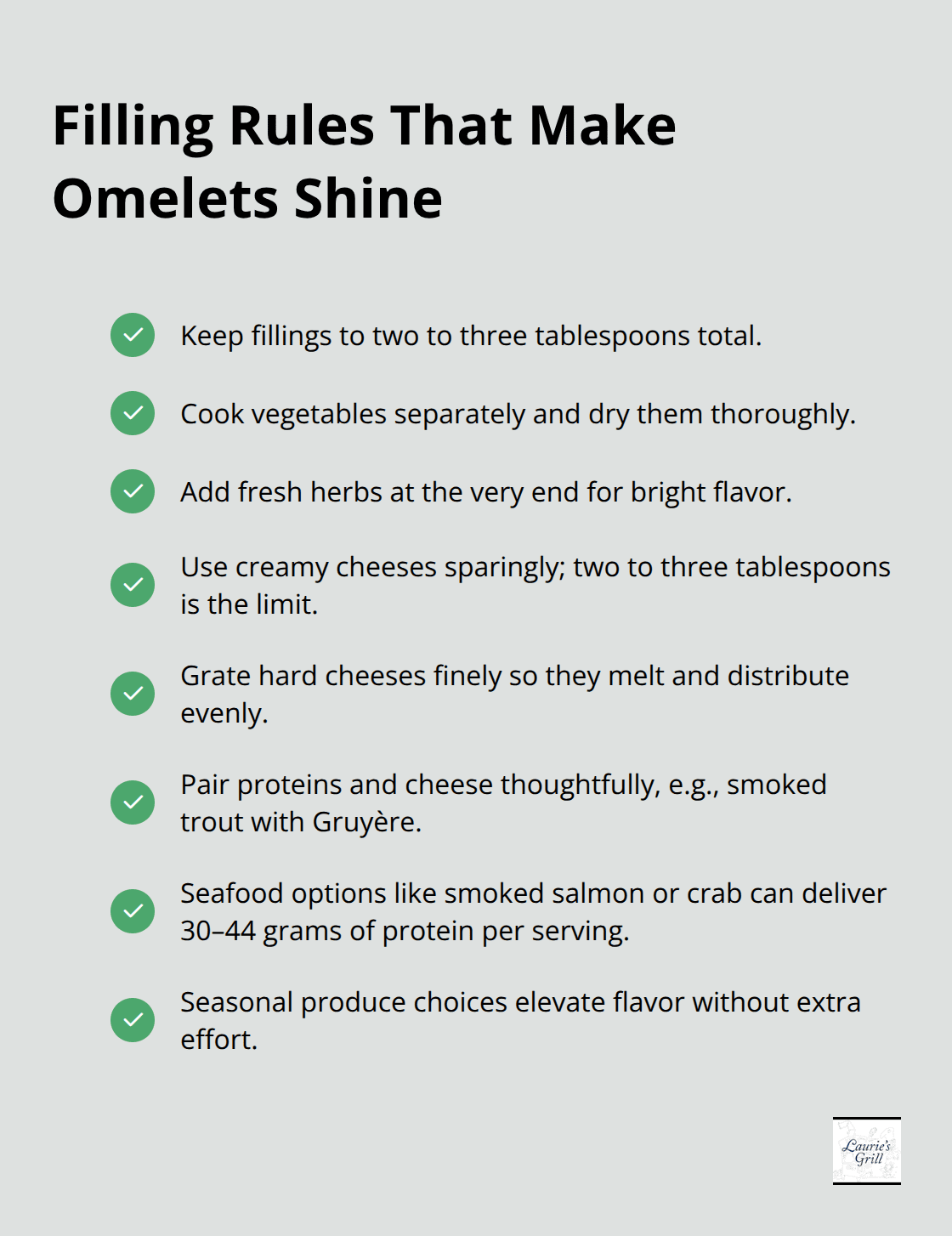
Most home cooks fail because they either cook too hot and brown the exterior, or they overstuff the omelet and lose the ability to fold cleanly. Keep fillings to two to three tablespoons total and make sure any vegetables are pre-cooked and completely dry to prevent moisture from making the eggs tough. Once you nail these three techniques, you’ll find that filling combinations become your real playground-and that’s where your creativity truly shines.
What Fillings Transform a Basic Omelet Into Something Special
Cook Your Vegetables Separately for Perfect Texture
The difference between a forgettable omelet and one worth repeating comes down to how you build your fillings. The best omelets start with ingredients that are already cooked, seasoned, and completely dry before they hit the pan. Moisture ruins eggs and prevents proper folding, so sauté your vegetables separately until they release their water, then cool them on a paper towel.
Mushrooms demand extra attention because they hold onto moisture stubbornly. Cook them longer than feels necessary and watch them shrink as the liquid evaporates. Asparagus feels especially luxurious in spring when it peaks, and roasting concentrates flavor far more than raw preparation. Courgette, spinach, peppers, and onions form the backbone of vegetable-based fillings, but cooking each one separately gives you control over texture and moisture rather than creating a soggy mess.
Fresh Herbs and Seasonal Produce Add Real Character
Fresh herbs added at the very end preserve their bright flavor and texture. Dill, parsley, tarragon, and chives work exceptionally well because they add complexity without requiring cooking. Seasonal produce matters more than most cooks realize-tomatoes in summer, roasted butternut squash in autumn, and fresh spring onions when they appear give your omelets genuine character that transcends the basic formula.
Cheese and Protein Create Satisfying Combinations
Cheese transforms an omelet from simple to indulgent, but restraint matters enormously. Gruyère, goat cheese, sharp cheddar, and taleggio all work beautifully, yet two to three tablespoons total is your limit. Creamy cheeses like ricotta and goat cheese pair brilliantly with mushrooms or roasted vegetables because they add richness without overwhelming the eggs. Hard cheeses like Gruyère and parmesan work better when grated finely so they distribute evenly and melt completely.
Combining cheese with protein creates fillings that work for lunch or dinner, not just breakfast. Smoked trout with Gruyère, chorizo with tomatoes and peppers, or ham with sharp cheddar all deliver substantial flavor without needing excessive quantity. Seafood options like smoked salmon or crab deliver roughly 30–44 grams of protein per serving depending on quantity, making them worthy centerpieces for your filling strategy.
Global Flavors Push Beyond the Familiar
International flavor combinations work beautifully across cuisines. Masala omelets with ginger and chilli, Persian herb-packed kuku sabzi with potatoes, and Spanish tortillas with caramelized onions and red peppers show that eggs transcend cultural boundaries. Kimchi added at the very end provides probiotic fermented flavor that contrasts sharply with creamy fillings. A simple red pepper-walnut spread elevates basic two-egg omelets into something memorable.
These aren’t theoretical ideas-they’re practical combinations that deliver real results when you respect the two to three tablespoon filling limit and cook everything thoroughly beforehand. Once you master these filling strategies, the real challenge becomes deciding which combination to try first.
Why Your Omelets Turn Rubbery and How to Fix It
Stop Cooking Before You Think You Should
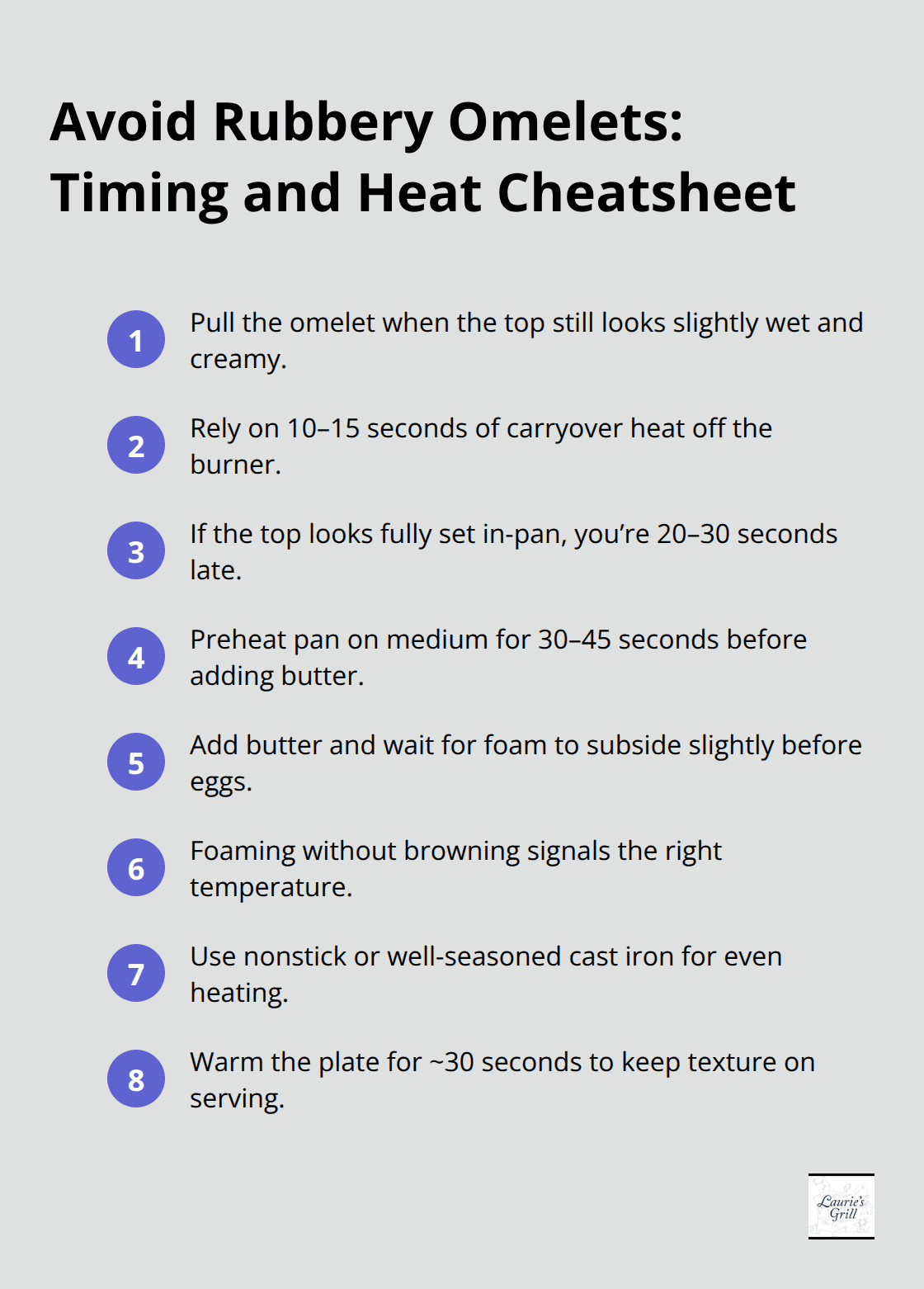
The moment you stop watching your omelet, it hardens. Most home cooks leave their eggs on the heat for far too long, waiting for what they imagine should be a fully set top. The truth is this: you need to pull your omelet off the heat when the top still looks slightly wet and creamy. The residual heat from the pan continues cooking those eggs for another 10–15 seconds after you remove it, which is exactly what you want.
If you wait until the top appears completely set in the pan, you’ve already overshot the mark by 20–30 seconds, and that’s the difference between tender and rubbery. The French omelet technique proves this point perfectly-it finishes cooking on the plate, not in the pan. Carryover cooking is non-negotiable if you want results worth eating.
Temperature Control Separates Good Cooks from Great Ones
Medium heat matters far more than most recipes suggest. When butter foams in your pan without browning, you’ve hit the right temperature. Brown butter means your pan is too hot, and you’ll scramble the edges before the center has time to set properly. High heat creates uneven cooking where the exterior browns while the center remains runny, which forces you to cook longer and lose that creamy texture entirely.
The pan itself matters tremendously. A nonstick or well-seasoned cast iron pan heats more evenly than larger skillets, and even heat distribution prevents hot spots that cook portions faster than others. A brand-new pan sometimes performs worse than a well-used one because the surface hasn’t developed the same heat-conducting properties. Preheat your pan for 30–45 seconds on medium heat, add your butter, then wait for the foam to subside slightly before pouring in eggs. This timing prevents temperature shock that causes uneven setting.
Fold With Confidence and Restraint
Folding separates clean, professional-looking omelets from mangled messes that slide onto your plate in chunks. The biggest mistake is overstuffing-those two to three tablespoons of filling represent your actual limit, not a suggestion. Excess filling prevents the omelet from folding without tearing because the weight of the filling pulls the eggs apart.
Once your eggs are nearly set, tilt your pan at a 45-degree angle and use your spatula to fold one-third of the omelet toward the center, then fold the opposite side over top. This creates a neat three-part fold that looks intentional and holds together during plating. Hesitation kills good folding. Commit to the motion in one smooth action rather than tentatively nudging the eggs around. A rubber spatula works better than a metal one because it won’t catch or tear delicate eggs.
If rolling feels intimidating, fold your omelet like a taco instead-a reliable approach that works every single time. Slide your omelet onto a warm plate rather than a cold one, which stops the cooking process and prevents that slight additional firmness that ruins texture. A warm plate keeps your omelet at the right temperature through plating and presentation, and it takes just 30 seconds to run hot water over your plate beforehand.
Final Thoughts
Mastering omelet variations transforms breakfast from routine into something you actually look forward to. The three core techniques-French, American, and crepe-style-give you a foundation that works across every filling combination you’ll encounter. Once you understand how temperature, timing, and restraint work together, you stop fighting your pan and start creating omelets that taste intentional. Eggs cost pennies compared to restaurant meals, which means you can afford to practice until your technique becomes automatic.
The filling combinations we’ve covered barely scratch the surface of what you can create. Seasonal vegetables, international spice profiles, cheese pairings, and seafood options represent your actual playground once the technique clicks. Start with combinations that excite you rather than what sounds safe-masala with ginger and chilli, smoked trout with Gruyère, roasted butternut squash with fresh herbs. These aren’t fancy restaurant ideas; they’re practical combinations that work in your kitchen right now.
Visit Laurie’s Grill in Bend, Oregon to experience how classic American diner cooking celebrates simple, well-executed food. Their approach mirrors what you’re building at home-respect for fundamentals and genuine care in execution. Your next omelet doesn’t need to be perfect; it needs to be better than the last one.

Recent Comments