
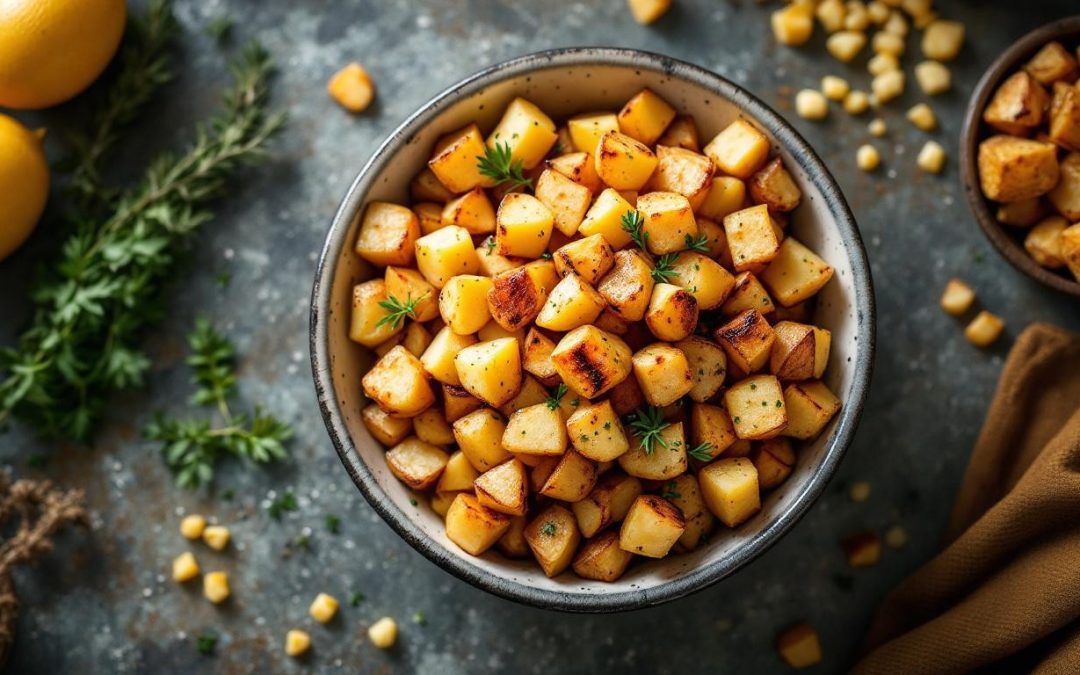
Breakfast potatoes are the foundation of a satisfying morning meal. They’re crispy on the outside, tender inside, and packed with potassium and vitamin C that your body needs.
We at Laurie’s Grill have perfected this simple dish through years of kitchen experience. The technique is straightforward, but a few key steps separate mediocre results from restaurant-quality breakfast potatoes.
Why Breakfast Potatoes Matter
Breakfast potatoes deliver more than comfort-they’re a nutritional powerhouse that sets the tone for your entire day. According to USDA nutrition data, a single serving of potatoes provides substantial potassium, essential for heart health and muscle function, plus vitamin C for immune support. This isn’t filler on your plate; it’s functional food that keeps you satisfied longer than refined carbohydrates alone. The starch in potatoes also triggers serotonin production, which explains why a plate of crispy breakfast potatoes genuinely improves your mood in ways toast or pastries simply cannot match.
A Breakfast That Works Every Time
The real power of breakfast potatoes lies in their reliability. Unlike eggs that can overcook in seconds or toast that burns unpredictably, potatoes respond consistently to proper technique. Once you master the method, you control the outcome completely. This consistency matters in professional kitchens-they depend on potatoes because they perform the same way whether you’re cooking for yourself or feeding a crowd. You can count on the same crispy, perfectly cooked potatoes every single visit when technique stays constant.
Versatility That Justifies Daily Rotation
Breakfast potatoes adapt to whatever else lands on your plate. Serve them with eggs, bacon, and fresh fruit for a traditional breakfast. Pair them with sausage and pancakes for something heartier. Mix them into breakfast burritos with cheese and peppers. Top them with avocado and salsa for a lighter approach. The same base recipe works with every breakfast protein and style imaginable, which means you’re not locked into repetitive meals. This adaptability makes potatoes the foundation that transforms breakfast from boring necessity into something you actually plan your morning around.
What Makes the Difference
The gap between mediocre and exceptional breakfast potatoes comes down to technique, not ingredients. Most home cooks skip the par-boiling step that reduces cooking time and creates a fluffier interior. Others crowd the pan, which prevents proper browning and leaves you with steamed rather than crispy potatoes. The right equipment matters too-cast iron and stainless steel distribute heat far more evenly than nonstick surfaces.
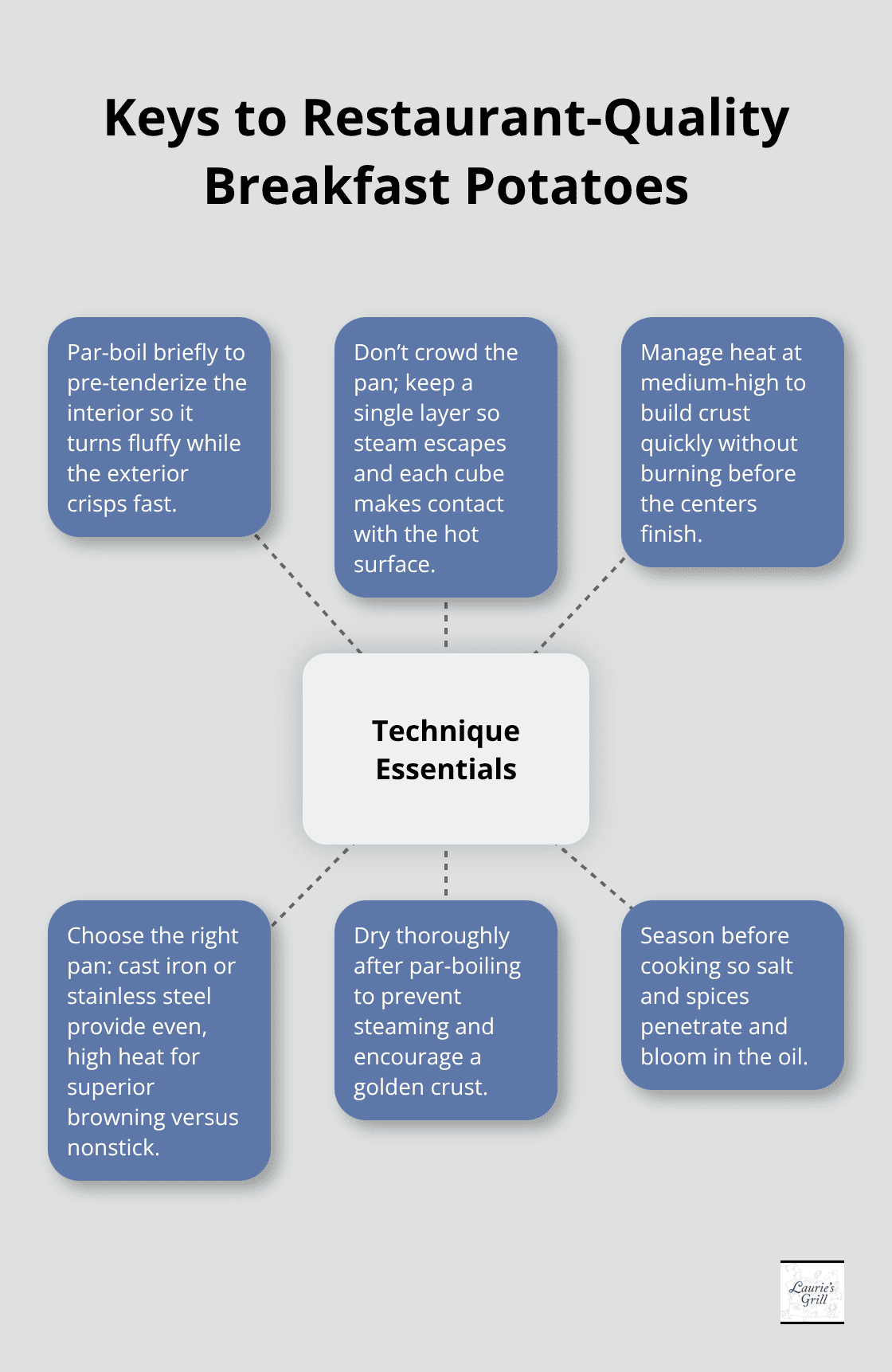
These details (par-boiling, proper pan spacing, correct heat) separate what you make at home from what restaurants serve. Understanding these fundamentals prepares you to execute the method that transforms ordinary potatoes into the crispy, golden breakfast centerpiece that makes mornings worth waking up for.
How to Make Perfect Breakfast Potatoes
Select the Right Potato Variety
Russet potatoes contain higher starch and lower moisture than Yukon Gold or red varieties-this matters because starch creates that crispy exterior you’re after. Cut them into half-inch cubes for even cooking; smaller pieces cook faster but lose interior creaminess, while larger chunks stay soft inside. Half-inch cubes strike the balance between speed and texture.
Par-Boil for Fluffier Results
Par-boil the cubes in salted water for a few minutes, which partially cooks the interior and creates a fluffier texture that contrasts beautifully with the crispy outside. This step isn’t optional if you want restaurant results-it cuts total cooking time from 20 minutes to around 10-12 minutes and guarantees the inside reaches proper tenderness. After par-boiling, drain thoroughly and pat the potatoes completely dry with paper towels, since any remaining moisture prevents browning and creates steam instead of that golden crust.
Season Before Cooking
Season generously with salt and pepper before the potatoes hit the pan, then add garlic powder, onion powder, and smoked paprika for depth. This seasoning timing matters: salt applied after cooking sits on top rather than penetrating the potato flesh. The spices meld with the potato surface during cooking, creating layers of flavor throughout.
Cook in a Single Layer
Heat your cast iron or stainless steel skillet over medium-high heat and add enough oil to coat the bottom lightly-avocado oil or refined canola oil work best because they have high smoke points that won’t break down during cooking. Spread the potatoes in a single layer without crowding, leaving space between pieces so steam escapes and each cube contacts the hot surface. Cook undisturbed for 3-4 minutes to develop the first crust, then stir every 2-3 minutes for the next 8 minutes, scraping up any browned bits stuck to the pan.
Those browned bits contain concentrated potato flavor and caramelized starch-they belong in your finished dish, not abandoned at the bottom. The total cook time from pan to plate runs 10-12 minutes after par-boiling. You’ll know they’re finished when the exterior turns deep golden brown and a fork pierces the center with minimal resistance.
Finish With Fresh Toppings
Finish with flaky sea salt and fresh chopped parsley or chives right before serving to add brightness and prevent the salt from dissolving into the potatoes. This final step elevates the dish from simple to restaurant-quality. With perfect breakfast potatoes ready, you can now explore how to serve them alongside complementary dishes that round out your morning meal.
Equipment That Actually Matters for Crispy Potatoes
Cast Iron and Stainless Steel Outperform Nonstick
Cast iron and stainless steel conduct and retain heat far more effectively than nonstick cookware. Cast iron retains heat more efficiently than stainless steel or aluminum, making it ideal for high-heat searing and slow cooking. Stainless steel distributes heat evenly across the pan bottom without hot spots that burn some potatoes while leaving others pale. Nonstick surfaces max out around 300-350°F before the coating degrades, and they don’t develop the same aggressive crust because the surface is designed to prevent sticking rather than encourage browning.
A 12-inch cast iron skillet provides enough surface area for potatoes to spread in a single layer without crowding. If you lack cast iron, stainless steel works equally well and requires less seasoning maintenance.
Heat Control Determines Your Results
Medium-high heat translates to around 375-400°F on most home stoves. Too low and your potatoes steam rather than fry, emerging soft and pale instead of crispy and golden. Too high and the exterior burns before the interior finishes cooking, leaving you with charred edges and an undercooked center.
The stir timing matters equally: every 2-3 minutes prevents the bottom layer from sticking while allowing each surface to contact the hot pan long enough to develop color. Constant stirring breaks apart the crust before it sets. Those browned bits that stick to the pan contain the most concentrated flavor, so scrape them up with each stir and distribute them throughout the batch.
Timing and Technique Work Together
If potatoes stick aggressively, add a small amount of additional oil rather than scraping harder, which destroys the texture. Total cook time after par-boiling runs 10-12 minutes, so stir roughly four times before checking for doneness. The potatoes are finished when they turn deep golden brown on multiple sides and a fork slides through the center with just slight resistance.
Final Thoughts
Mastering breakfast potatoes transforms your mornings from routine to genuinely satisfying. The technique we’ve covered-par-boiling, proper seasoning, single-layer cooking, and consistent stirring-produces results that match what you’d order at a professional restaurant. This isn’t complicated cooking; it’s straightforward method applied with attention to detail.
The beauty of breakfast potatoes lies in their simplicity paired with their impact. A plate of perfectly cooked potatoes elevates eggs, bacon, and toast from adequate to memorable. They work equally well in breakfast burritos, alongside pancakes, or topped with avocado and salsa (the same base recipe adapts to whatever else you’re serving).
Visit Laurie’s Grill in Bend, Oregon, where we serve breakfast all day and prepare breakfast potatoes that match what you’ll create at home. Our commitment to home-style cooking at affordable prices means you can enjoy restaurant-quality results without the restaurant price tag.

Recent Comments