
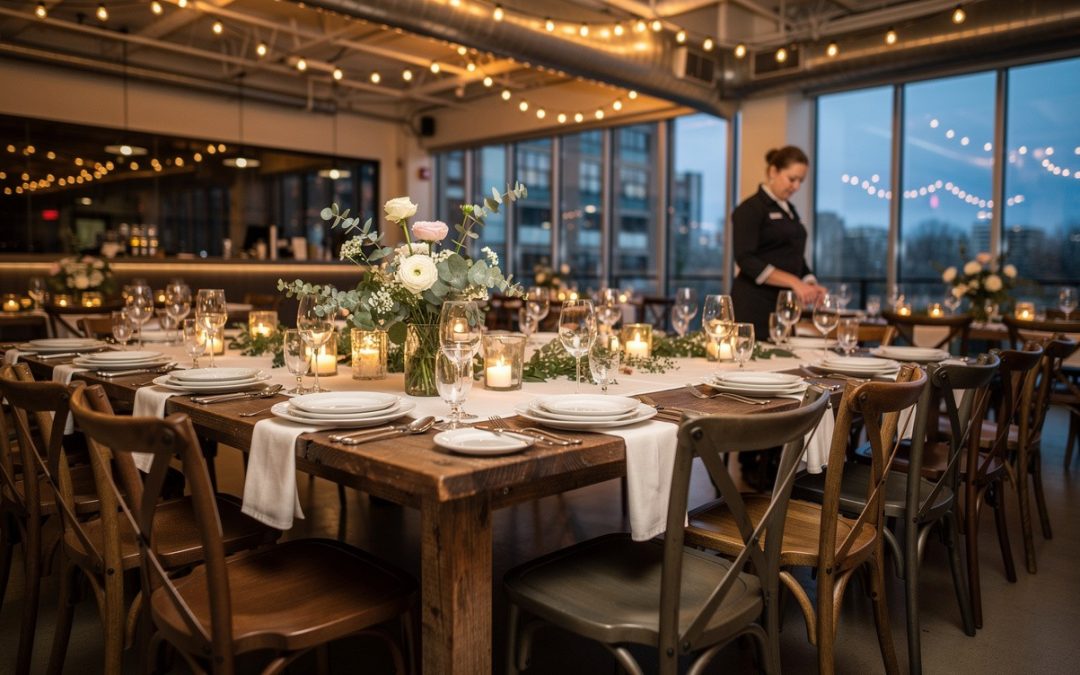
Planning a wedding in Bend comes with tough choices about where to celebrate. Many couples overlook restaurants as wedding venues, assuming they’re only for casual dining.
At Laurie’s Grill, we’ve hosted countless receptions and seen firsthand how restaurants deliver what traditional venues can’t. Lower costs, better food, and less stress make this option worth serious consideration.
Why Restaurants Make Ideal Wedding Venues
Restaurants outperform dedicated wedding venues in three concrete ways that matter to Bend couples. First, you access a professional kitchen already equipped with industrial equipment, trained staff, and established food safety protocols. Traditional banquet halls either lack kitchens entirely or operate with limited facilities, forcing you to hire external caterers and pay markup fees on top of their base rates. Second, restaurants offer genuine flexibility with room sizes and layouts. A restaurant’s banquet space accommodates 20 guests or 150 depending on your needs, and staff adjust table configurations, lighting, and setup without charging premium fees for customization. Dedicated wedding venues typically lock you into fixed room dimensions and charge extra for any modifications. Third, restaurants provide authentic atmosphere without the sterile, generic feel of most banquet halls. Wood finishes, established décor, and the inherent character of a working restaurant create a backdrop that photographs well and feels personal.
Space That Actually Fits Your Guest List
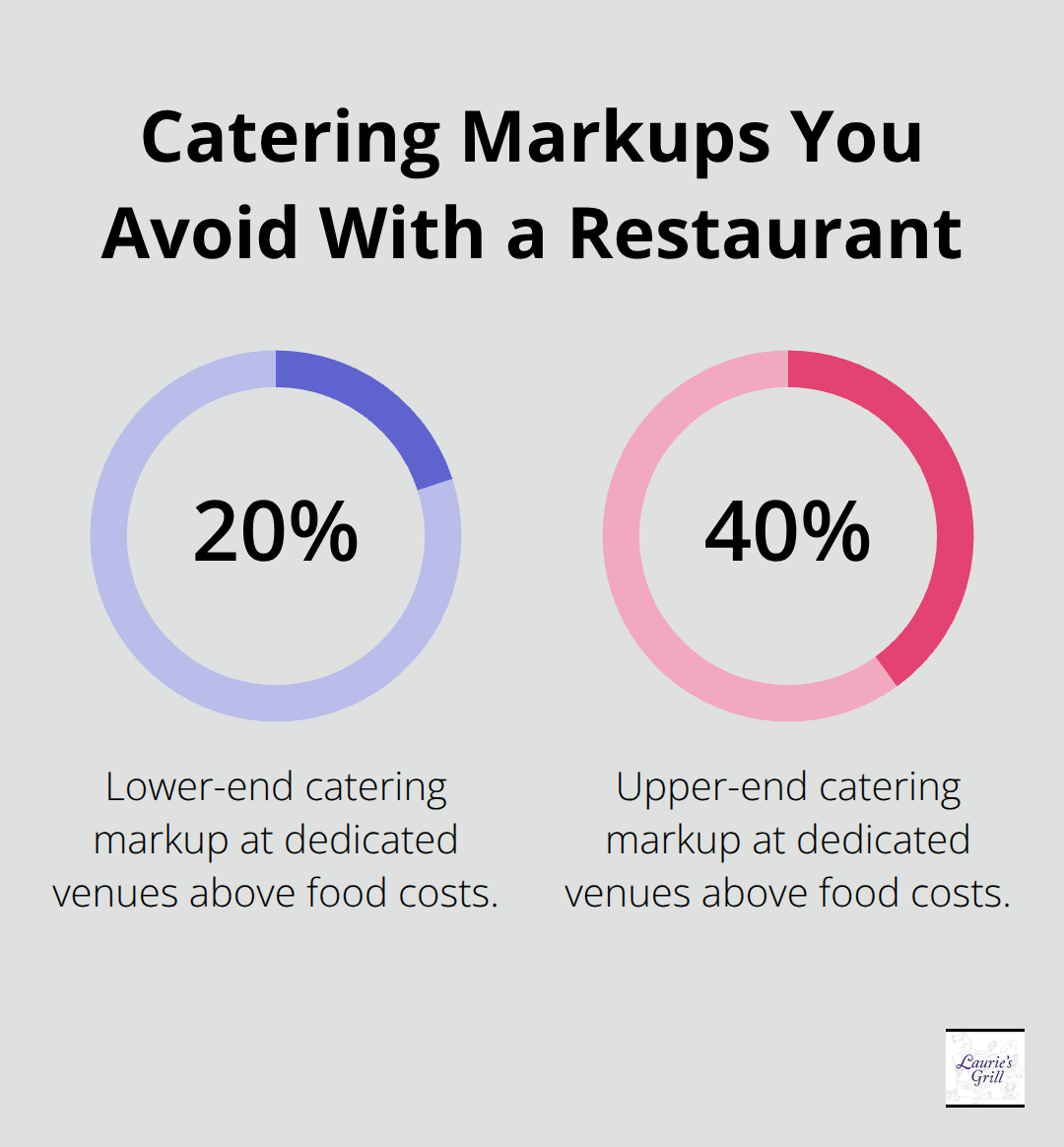
Restaurant banquet rooms work because they’re designed for real events, not just weddings. Unlike dedicated venues that charge per-person minimums regardless of actual attendance, restaurants typically charge a flat rental fee or require a food and beverage minimum that you’ll spend anyway. This pricing structure favors smaller weddings especially. A couple with 40 guests pays significantly less at a restaurant than at a traditional venue requiring a 75-person minimum spend. You also avoid the venue’s demand for exclusive catering contracts, which inflate costs by 20 to 40 percent above normal restaurant pricing. The kitchen staff already present means no external caterer markup, no coordination between two food service teams, and no risk of miscommunication on timing or food quality.
Built-In Expertise and Equipment
Restaurants operate commercial kitchens daily, which means your wedding food comes from the same equipment and hands that serve regular customers. No special event surcharge, no premium pricing for wedding service, no inflated costs for things like plate presentation. The kitchen team understands food volume, timing, and quality control because they do it constantly. Your wedding reception benefits from that operational experience. Additionally, restaurant staff handle setup, service, and breakdown as part of their normal workflow. A dedicated banquet hall charges separately for each of these services, multiplying your costs. Experienced restaurant staff manage the entire event with the same attention they give to daily service, eliminating the coordinator fees and vendor juggling that traditional venues require.
Why This Matters for Your Bend Wedding
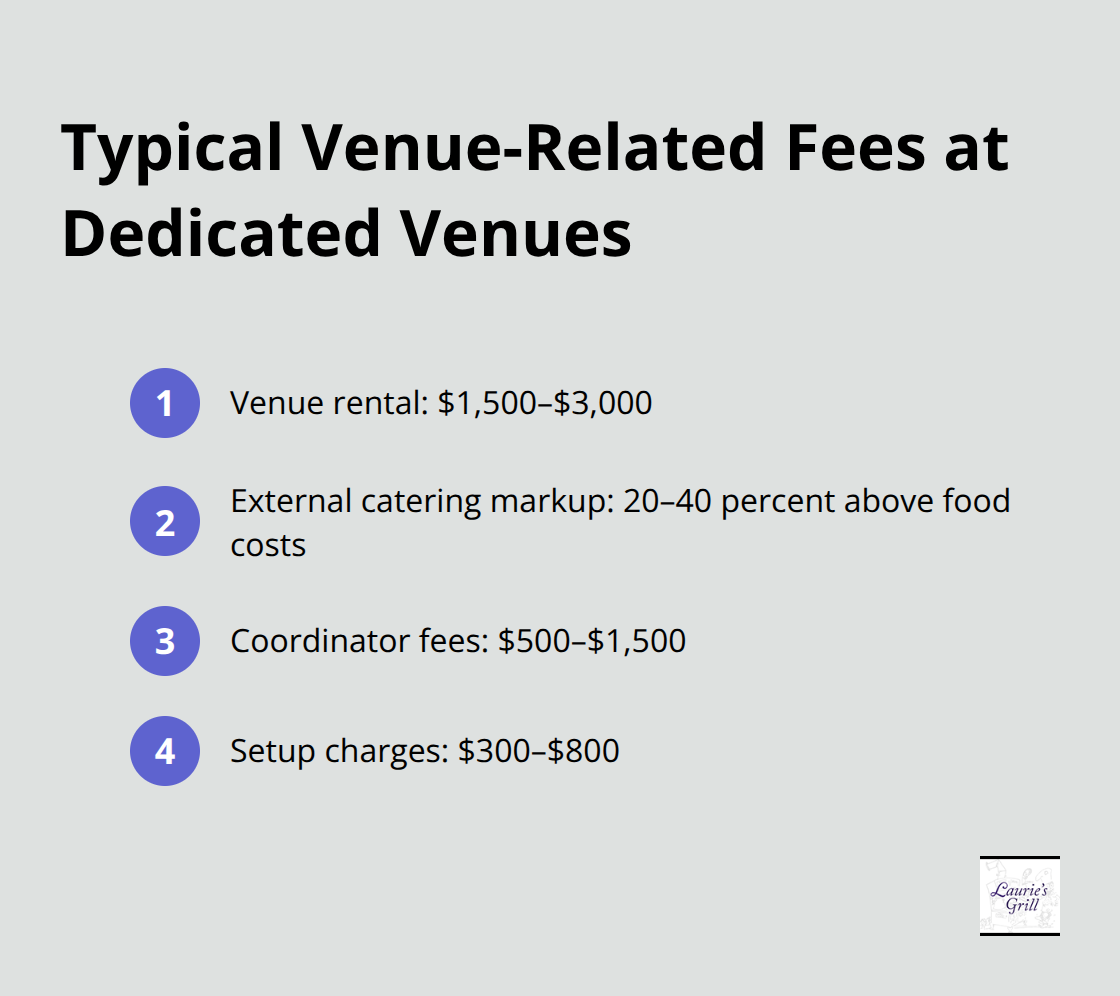
The financial advantage compounds when you compare total costs. Traditional venues charge venue rental (often $1,500–$3,000), external catering markup (20–40 percent above food costs), coordinator fees ($500–$1,500), and setup charges ($300–$800). A restaurant reception consolidates these expenses into food and beverage costs plus a modest room fee. You control your budget more effectively because you see exactly what you’re paying for.
The stress reduction matters equally-one point of contact, one kitchen, one team managing your entire event instead of coordinating multiple vendors across different timelines and expectations.
How Much Can You Actually Save With a Restaurant Reception
The financial reality of restaurant receptions versus dedicated wedding venues is stark, and the numbers favor restaurants decisively. A typical Bend wedding venue charges $1,500 to $3,000 just for the room rental, then requires you to hire an external caterer who adds 20 to 40 percent markup on top of food costs. Add coordinator fees ($500–$1,500) and setup charges ($300–$800), and you’re looking at $2,300–$5,300 in venue-related expenses before a single plate of food reaches your guests. A restaurant reception eliminates most of these line items. You pay a modest room fee or food and beverage minimum that you’d spend anyway, avoiding the stacked fees that traditional venues impose. One Bend couple hosting 60 guests at a dedicated venue spent $2,800 on venue rental alone, then paid an additional $4,200 catering markup on their $12,000 food budget. The same reception at a restaurant with comparable food quality would have cost roughly $13,500 total-a savings of $3,500 just from removing venue markups and coordinator fees. This isn’t theoretical math; it’s the actual cost structure embedded in how dedicated venues operate versus how restaurants price events.
One team manages your entire event
Coordinating multiple vendors for a traditional venue reception creates hidden costs that couples rarely anticipate. You manage separate contracts with the venue, caterer, bartender, and event coordinator. Communication breakdowns between teams lead to timing issues, food quality problems, or setup delays. A restaurant consolidates all these functions under one roof with one team accountable for the entire event. The kitchen staff who prepare your food also work with service staff and management on timing, ensuring appetizers arrive when guests expect them and the main course comes out hot and on schedule. There’s no coordination tax, no miscommunication between two separate food service operations, and no need to hire an external event coordinator to manage vendor relationships.
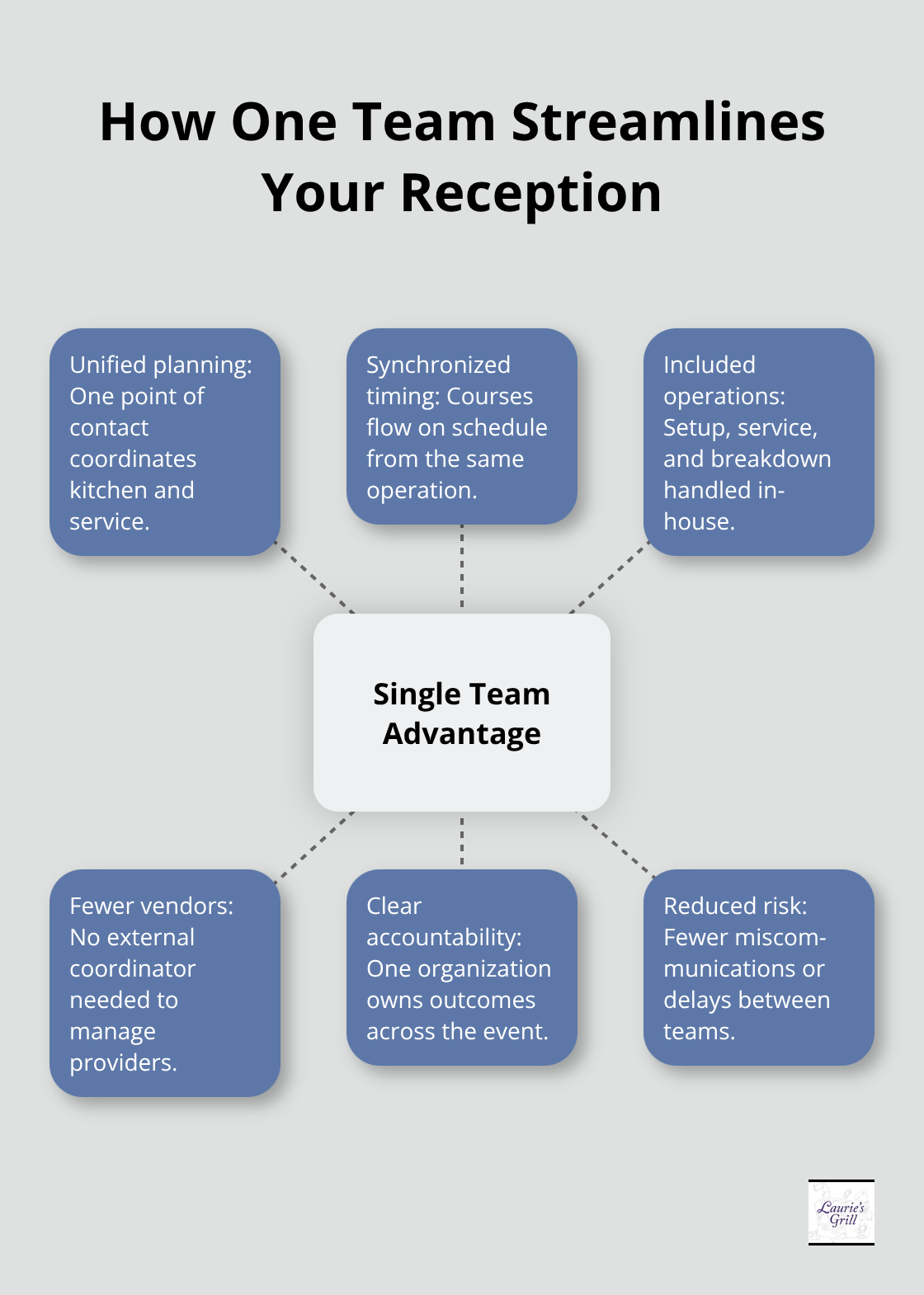
The restaurant’s existing staff handles setup, service, and breakdown as part of their standard operations, eliminating coordinator fees entirely. This operational simplicity reduces stress and prevents the budget creep that happens when couples hire additional vendors to manage other vendors.
One Conversation Replaces Multiple Vendor Negotiations
Restaurant receptions move faster from initial inquiry to final booking because the venue and catering are one conversation instead of two. You meet with the restaurant’s event staff, discuss your guest count and menu preferences, confirm the room setup, and you’re essentially done with major planning decisions. A dedicated venue requires you to source and vet a separate caterer, negotiate contracts with different parties, and coordinate multiple service timelines. The restaurant already has food service expertise, established relationships with suppliers, and proven execution experience from daily operations. You’re not betting on whether a caterer can deliver under pressure; you’re working with a team that executes at volume consistently. Our full banquet room at Laurie’s Grill handles the complete event experience within one organization, meaning no lost details between vendor handoffs and no confusion about who’s responsible for what. Your wedding day runs smoothly because one team has prepared and executed the plan together.
What This Means for Your Budget and Timeline
The financial advantage compounds when you eliminate vendor coordination costs. Traditional venues charge separately for each service layer (venue, catering, coordination, setup), and each vendor adds their own profit margin to the total. A restaurant operates differently-the kitchen, service staff, and management all work for the same business, so there’s no markup stacking. You see exactly what you pay for food and beverages, plus a modest room fee. The timeline advantage matters equally. Instead of managing multiple vendor schedules and communication chains, you work with one point of contact who controls the entire operation. Setup happens on the restaurant’s schedule, service flows from the kitchen to your guests without handoff delays, and breakdown happens with the same staff who prepared the space. This efficiency translates directly to lower stress and fewer surprises on your wedding day. When you’re ready to explore how a restaurant reception fits your Bend wedding, the next step is understanding what to look for in a venue that can actually deliver on these promises.
Selecting a Restaurant That Delivers for Your Wedding
Not every restaurant can handle a wedding reception, and picking the wrong one creates the same coordination headaches you’re trying to avoid. The difference between a restaurant that occasionally hosts events and one built for them shows up immediately on your wedding day.
Evaluate the Banquet Room Setup
Start by asking direct questions about their banquet room. Does the space have separate entrance and exit routes so guests don’t flow through the main dining area? Can they adjust lighting independently from the rest of the restaurant? What table configuration flexibility do they offer, and do they charge extra for non-standard layouts? A restaurant that hesitates on these details probably hasn’t invested in event infrastructure. Your reception should happen on your terms, not squeezed around the restaurant’s regular operations.
Ask about their specific experience hosting events at your guest count. A restaurant comfortable with 40-person dinners might struggle with 120 guests, even if their room is physically large enough. Request references from couples who held receptions there in the past six months. Call those couples and ask three specific questions: Did food arrive hot and on time? Did the staff anticipate problems before they happened? Would you book there again? Honest answers reveal whether the restaurant treats events as genuine priorities or side work.
Assess Menu Customization and Food Quality
Menu customization separates serious event restaurants from places just renting their space. Demand the ability to create a custom menu instead of selecting from preset packages. This flexibility typically costs less because you avoid paying for options you don’t want, and the kitchen focuses on executing fewer dishes at higher quality.
Discuss their approach to timing and pacing. How long do they plan between courses? Can they adjust this based on your preferences? Ask whether they offer passed appetizers, plated service, or buffet options, and understand the labor and cost differences. A kitchen that regularly handles events knows exactly how long it takes to plate 80 dinners and communicates realistic timelines.
Food quality matters most, so taste their regular menu offerings before committing. Order actual dishes from their daily service and evaluate quality, portion size, and consistency. This shows you what your guests will experience. Confirm their sourcing practices and whether they work with local suppliers. Bend’s restaurant community increasingly partners with local farms and producers, which affects both quality and cost.
Verify Beverage and Staffing Operations
Ask about their beverage program. Can they work with your preferred alcohol selections, or do they require exclusive arrangements? Do they charge corkage fees, and are those fees reasonable? Understanding their bar operation prevents surprises when the final bill arrives.
The kitchen staff executing your event should be the same people who cook regular service. Restaurants that maintain consistent, in-house staff deliver better food because those people understand the kitchen’s systems and quality standards. This consistency matters far more than hiring outside help for a single day.
Final Thoughts
Restaurant receptions deliver what traditional wedding venues promise but rarely execute. You save thousands by eliminating venue markups, coordinator fees, and catering surcharges. One team manages your entire event instead of juggling multiple vendors across different timelines, and your food arrives hot and on time because the same people who cook daily service execute your reception.
Bend’s restaurant community understands what couples actually need. Local restaurants provide authentic atmosphere without the sterile feel of dedicated banquet halls, and the character of a working restaurant creates a backdrop that photographs beautifully and feels genuinely personal. Staff who work in the restaurant daily bring real expertise to your event, not just rented expertise for a single night.
The practical advantages compound when you consider the full picture: lower costs, simplified planning, better food, and less stress. If you’re ready to explore how a restaurant reception works for your wedding, visit Laurie’s Grill, a family-owned restaurant in Bend with a full banquet room designed for weddings, parties, and reunions.

Recent Comments