
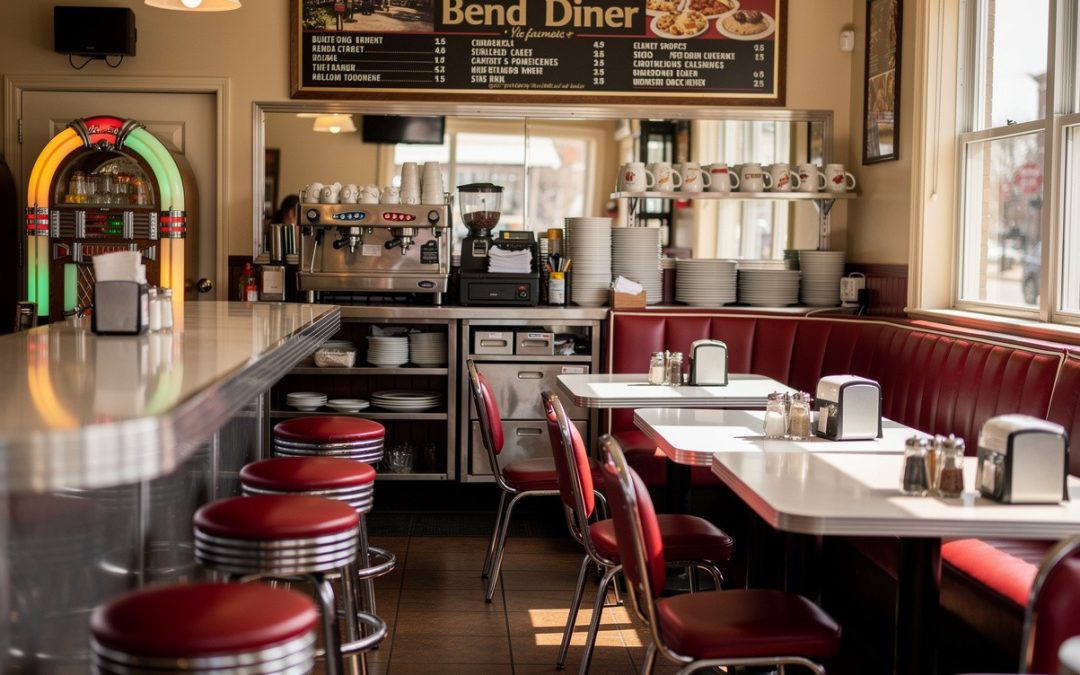
There’s something special about walking into an old-fashioned diner in Bend and feeling like you’ve stepped back in time. The vinyl booths, the checkered floors, the smell of fresh coffee and home cooking-these details matter because they connect us to something real and genuine.
At Laurie’s Grill, we believe diners are more than just places to eat. They’re where communities gather, where traditions live on, and where every meal tells a story.
Where American Diner Culture Began and Why It Matters
The Origins of a Working-Class Institution
The American diner did not emerge from high-end culinary ambition. Walter Scott converted a horse-drawn lunch wagon into a mobile food service for late-night workers in 1872, and the Jerry O’Mahony Diner Company introduced the design elements we recognize today in 1913: the long counter, round stools, and distinctive signage that became the blueprint for diners nationwide. What makes this history significant is that diners were built for efficiency and accessibility, not prestige. A 1950s quarter-pounder burger cost around 44 cents, and a bacon roll with a drink ran about 30 cents, making hearty meals affordable for working people. This was no accident.
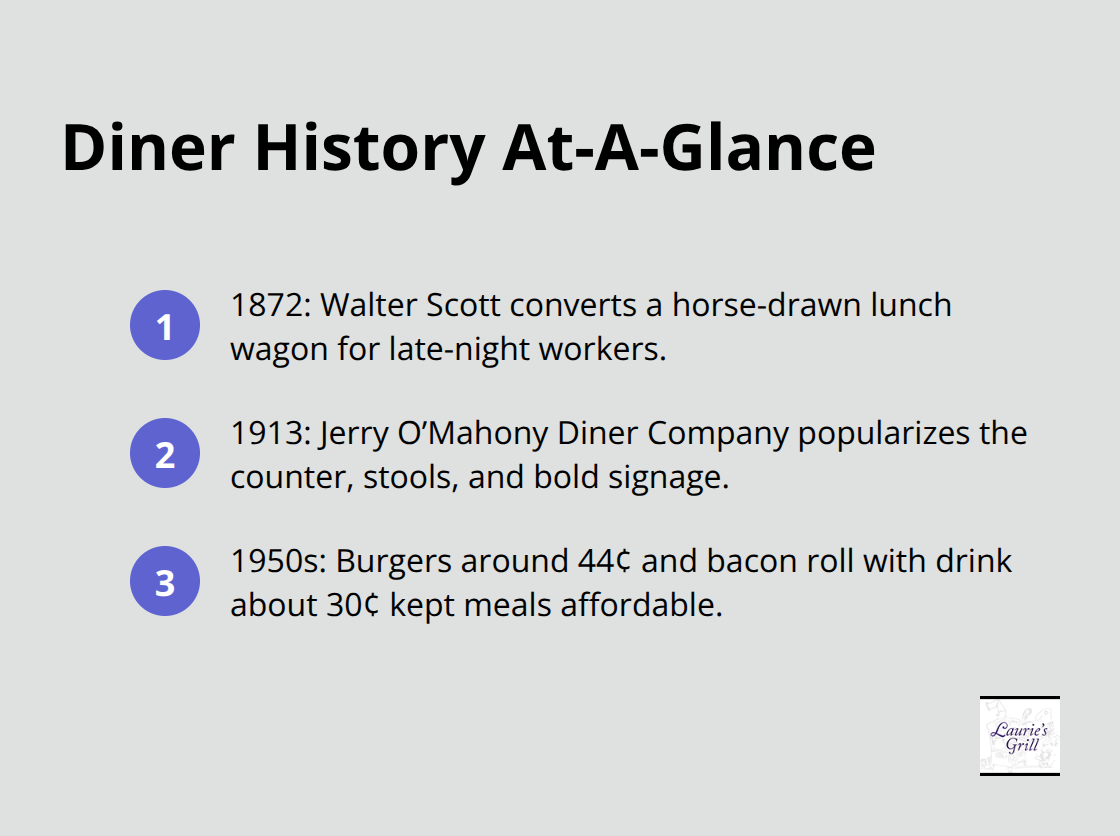
Diners were engineered to serve communities fast, with reasonable prices, and with genuine hospitality.
Diners as Social Infrastructure
The 1940s solidified diners as America’s living room, where workers gathered before and after shifts to share their daily lives. This was not just dining; it was social infrastructure. New Jersey alone had more than 500 diners, earning the state the nickname Diner Capital of the World. Diners became so embedded in American culture that presidential campaigns stopped at them for genuine conversations with voters, and civil rights activists used lunch counters as spaces for social change during the early 1960s sit-ins.
Design That Serves Purpose
The physical design matters because it serves purpose. Steel frames, neon signage, vinyl booths, and open kitchens were not chosen for nostalgia; they were chosen because they worked. Neon attracted customers from the street. Open kitchens let diners watch their food being prepared, which built trust. Vinyl booths maximized seating in tight spaces while remaining easy to clean. Counter seating encouraged conversation between strangers (and often turned them into regulars).
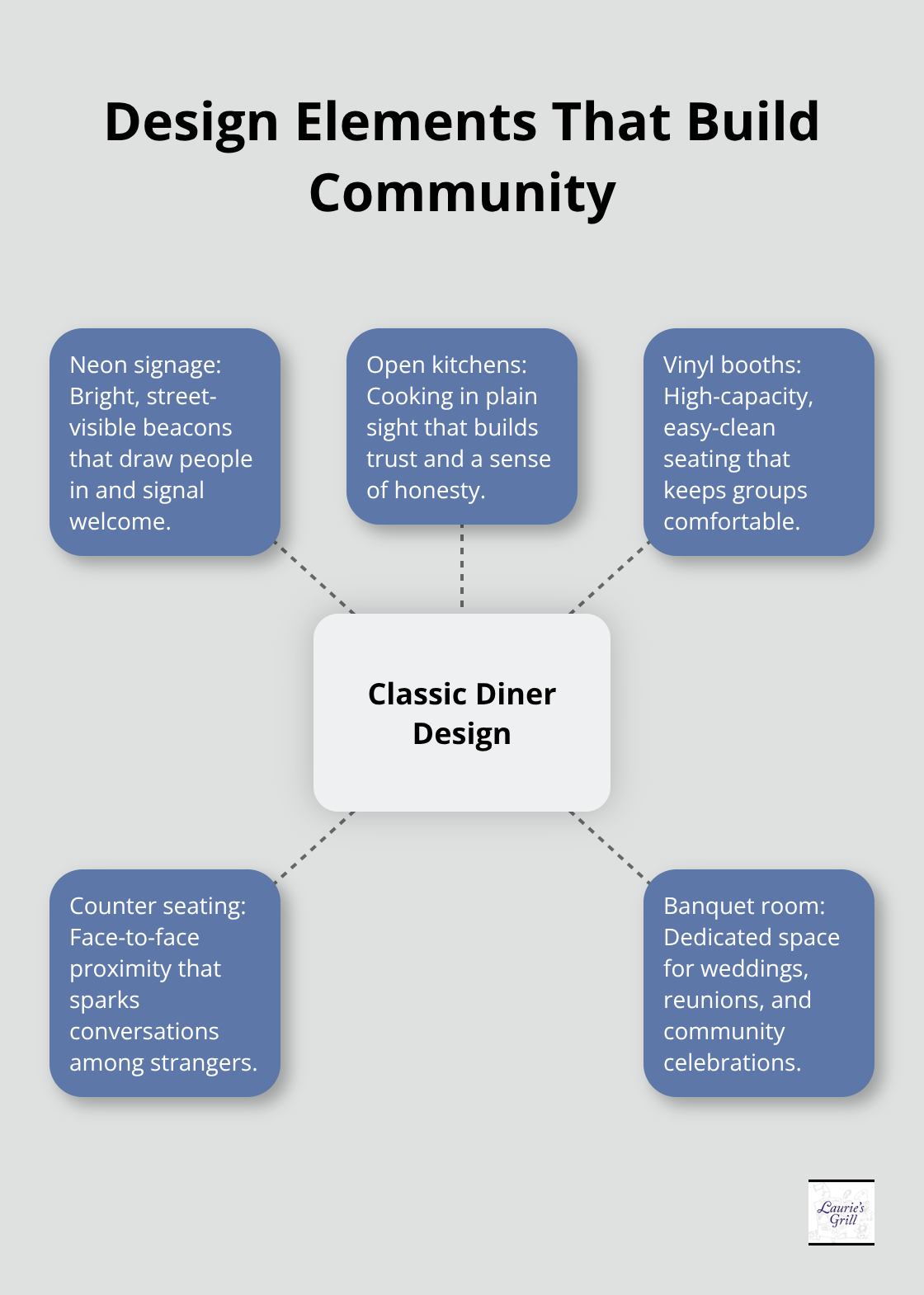
These design choices reflect values: speed without cutting corners, affordability without sacrificing quality, and community without pretense. Modern chains have abandoned this formula in favor of standardization and volume. Authentic diners, however, remain rooted in the belief that real food, reasonable prices, and genuine connection are what people actually want. This commitment to authenticity is what separates a true diner from a corporate imitation, and it’s what makes the diner experience worth protecting today.
What You’ll Find When You Walk Through Our Door
Real Food at Real Prices
At Laurie’s Grill, we cook real food at prices that don’t require a second mortgage. Our kitchen operates on the principle that diners should be accessible to everyone, from construction workers grabbing breakfast before dawn to families celebrating anniversaries. We’ve built our menu around dishes that people actually crave, and we serve breakfast all day because hunger doesn’t follow a schedule. Our Triple Decker Club, Monagon’s Famous French Toast, and hearty burgers reflect what made diners essential to American communities in the first place. We price our meals so regulars can afford to return tomorrow, not just once a year.
A Space Where People Belong
The warmth you feel walking in is intentional. We’ve created a space where the staff knows your name, where families feel comfortable staying for hours, and where strangers become regulars because they belong here. Our banquet room serves parties, weddings, and reunions because we believe diners should function as gathering places for life’s important moments, not just quick transactions. This approach matters because it’s becoming rare. Corporate chains have trained people to expect efficiency over connection, but what they’ve actually created is anonymity.
Why Connection Still Wins
At Laurie’s Grill, we’ve rejected the corporate model entirely. Our community knows us because we’ve chosen to stay rooted in Bend, to cook from scratch, and to treat every customer like family. That’s not a marketing slogan. That’s the difference between a diner and a restaurant that happens to look like one. This commitment to genuine hospitality sets the stage for understanding why diners remain so relevant in today’s world, where people increasingly hunger for spaces that feel authentic and welcoming.
Why Diners Matter Right Now
The Rejection of Chain Standardization
People actively reject the sterile efficiency of fast-food chains, and consumer behavior confirms this shift. Independently-owned restaurants have accelerated their growth over the past five years, with customers specifically seeking establishments that prioritize authenticity over standardization. Chain restaurants optimize for speed and profit margins, which means frozen ingredients, assembly-line preparation, and interchangeable experiences across thousands of locations. A diner operates on entirely different principles. Real kitchens with real cooks, daily specials based on what’s fresh, and staff who remember regular customers by name and order represent the actual reasons people choose diners over chains. These qualities are not quaint touches-they reflect how diners function as genuine alternatives to corporate food service.
How Diner Design Builds Community
Nostalgia for authentic diners reflects a rational response to the homogenization of American dining. Diners function as genuine community gathering spaces because their physical design and operational model demand it. Counter seating encourages conversation. Booths accommodate groups without isolation. Open kitchens build transparency and trust. A banquet room serves weddings, reunions, and celebrations because diners historically accommodated life’s important moments, not just fuel stops. The architecture and menu of a classic diner reflect values that modern corporate restaurants have abandoned: food should remain affordable, hospitality should be genuine, and a restaurant should belong to its community rather than extract profit from it.
Why Authenticity Survives Economic Pressure
Diners have survived decades of economic pressure and chain expansion because people recognize the difference between a space designed for connection and a space designed for throughput. As communities increasingly recognize that the loss of local gathering spaces creates social isolation, diners become essential infrastructure rather than nostalgic relics. The values embedded in diner culture-accessibility, transparency, and community investment-address real needs that chains cannot satisfy. Customers vote with their dollars for restaurants that treat them as neighbors rather than transactions, and this preference shows no signs of weakening. The diner model persists because it solves problems that standardized corporate dining creates: isolation, inaccessibility, and the erosion of local identity.
The Diner as Social Infrastructure
Diners function as more than restaurants; they operate as social infrastructure for their communities. A space where construction workers grab breakfast before dawn, where families celebrate anniversaries, and where strangers become regulars because they belong there serves purposes that fast-food chains deliberately avoid.
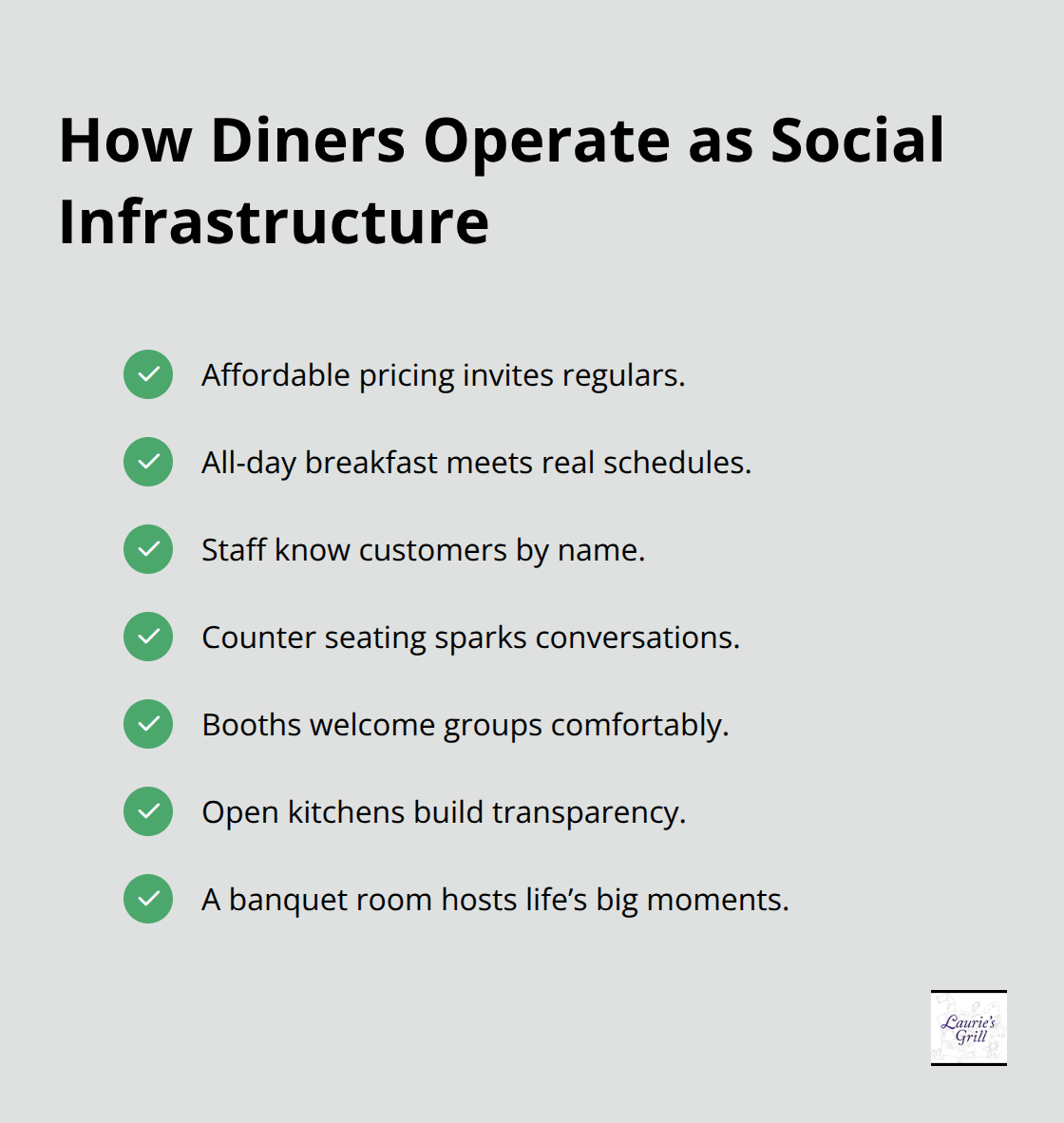
This infrastructure matters because it creates the conditions for genuine human connection. The physical layout (counter seating, booths, open kitchens) and operational choices (affordable pricing, all-day breakfast, staff familiarity) work together to make community possible. When a restaurant prioritizes these elements, it signals that profit margins matter less than people, and that commitment resonates deeply with customers who have grown weary of corporate anonymity.
Final Thoughts
The enduring appeal of an old-fashioned diner in Bend rests on a simple truth: people crave spaces where they belong. An old-fashioned diner offers more than food-it offers connection, affordability, and the assurance that someone behind the counter cares whether you return tomorrow. This appeal has only strengthened as corporate chains have multiplied and standardized dining experiences across the country.
We at Laurie’s Grill understand this responsibility deeply. We serve breakfast all day because hunger doesn’t follow corporate schedules, we price our meals so regulars can afford to return, and we staff our banquet room for weddings and reunions because diners have always functioned as gathering places for life’s important moments. Our Triple Decker Club and Monagon’s Famous French Toast reflect what people actually crave when they walk through our door: real food at real prices, prepared by people who know their names.
When you choose an independent diner over a chain, you vote for a different model of business entirely. Visit us at Laurie’s Grill and experience what makes the diner model worth protecting.
Recent Comments