
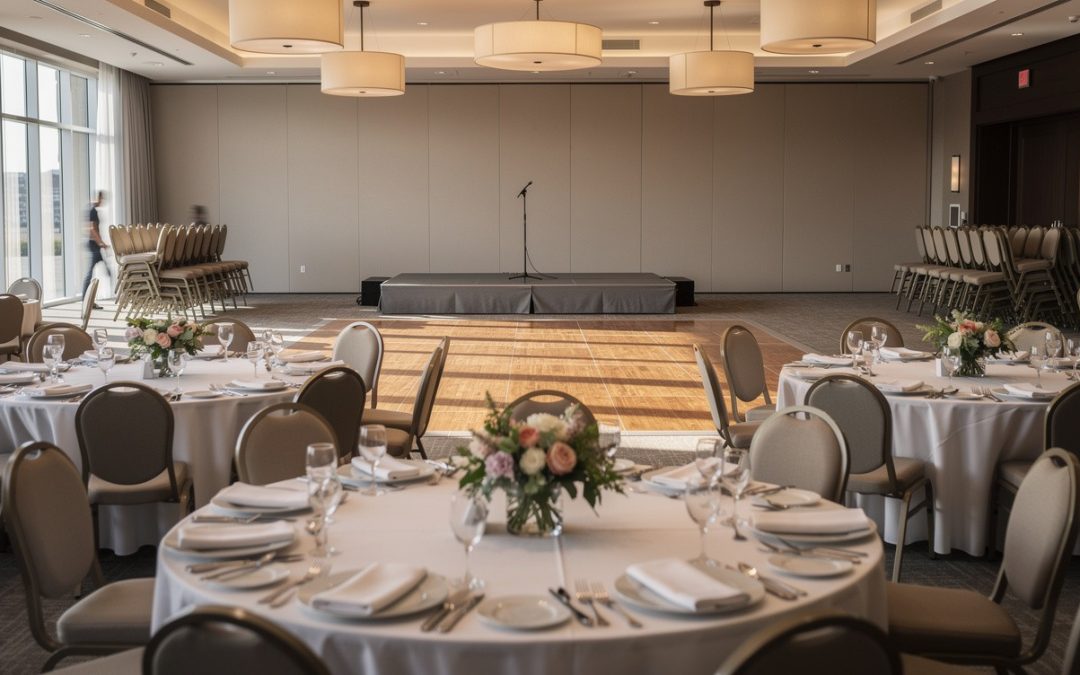
Planning a private event in Bend? You’ve picked one of Oregon’s most sought-after destinations for celebrations, weddings, and corporate gatherings.
At Laurie’s Grill, we know that finding the right private event venue Bend requires more than just a pretty location. You need flexible space, quality amenities, and a team that handles the details so you can focus on your guests.
Why Bend Is a Premier Private Event Destination
Bend has become a serious contender for private events across the Pacific Northwest, and the numbers back it up. Bend consistently ranks among the top destinations for destination weddings and corporate retreats, with the city attracting visitors year-round. The dramatic Cascade Mountain backdrop and Deschutes River access create natural settings that require minimal decorative intervention, which means you save on florals and staging costs. More importantly, Bend’s elevation at 3,600 feet and its location east of the Cascades means drier summers and predictable weather patterns compared to Portland or Seattle. According to Visit Bend, the city averages 300 days of sunshine annually, making summer and early fall ideal windows for outdoor ceremonies. This reliability matters because outdoor events reduce venue rental costs and allow flexible floor plans without massive tent investments.
Proximity That Matters for Your Guest List
Bend sits roughly 160 miles southeast of Portland and 180 miles from Seattle, positioning it as accessible without feeling remote. Redmond Municipal Airport, just 20 minutes north, handles direct flights from major West Coast hubs, which eliminates the logistical nightmare of guests driving hours after flying. The proximity also works in your favor for vendor coordination-local photographers, caterers, and florists understand Bend’s specific conditions and can deliver on tight timelines. Many venues in Bend partner with established local vendors, which streamlines the approval process and reduces coordination friction. If your guests scatter across the Pacific Northwest, Bend’s central location means fewer people travel extreme distances while still offering that destination-event feel.
Weather That Actually Works in Your Favor
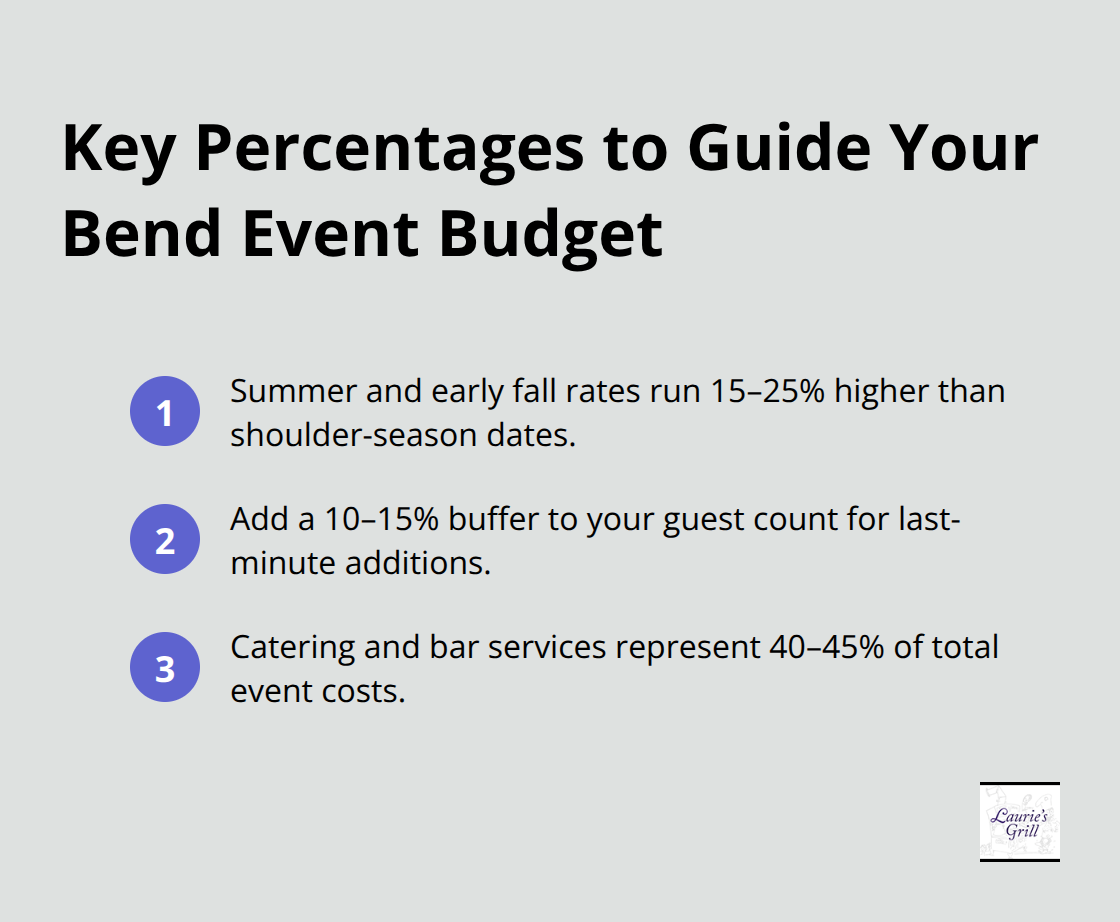
Bend’s shoulder seasons-September through October and May through June-deliver ideal conditions for outdoor events without peak-season pricing. According to The Knot, summer and early fall rates in Bend run 15–25% higher than shoulder-season dates, yet the weather remains excellent. September averages around 70 degrees during the day with minimal rain, making it superior to Portland’s unpredictable spring weather. Winter events work too if you embrace the setting; Bend’s ski culture means guests expect alpine aesthetics, and indoor venues with fireplaces eliminate weather anxiety entirely. Bend’s dry climate means you avoid constant rain contingencies like you would in western Oregon or Washington.
What This Means for Your Event Planning
Bend’s combination of natural beauty, accessibility, and reliable weather creates a foundation for successful events. The cost savings from outdoor spaces and shoulder-season availability free up your budget for what matters most-quality food, entertainment, and guest experience. Laurie’s Grill, a family-owned restaurant in Bend, offers a full banquet room perfect for parties, weddings, and reunions, providing an option that combines local character with practical event space. Now that you understand why Bend works as a destination, the next step involves identifying what features your specific venue must have to bring your event vision to life.
What Makes a Venue Actually Work for Your Event
The difference between a venue that looks good in photos and one that executes your event flawlessly comes down to four practical realities: how the space adapts to your guest count, what infrastructure already exists on-site, whether the staff can handle logistics without constant oversight, and if the venue understands Bend’s specific operational requirements. Most event planners prioritize aesthetics first, which is backwards. A stunning mountain view means nothing if the kitchen cannot handle your catering timeline or if parking forces guests to walk a quarter-mile in formal wear.
Flexible Space That Adapts to Your Vision
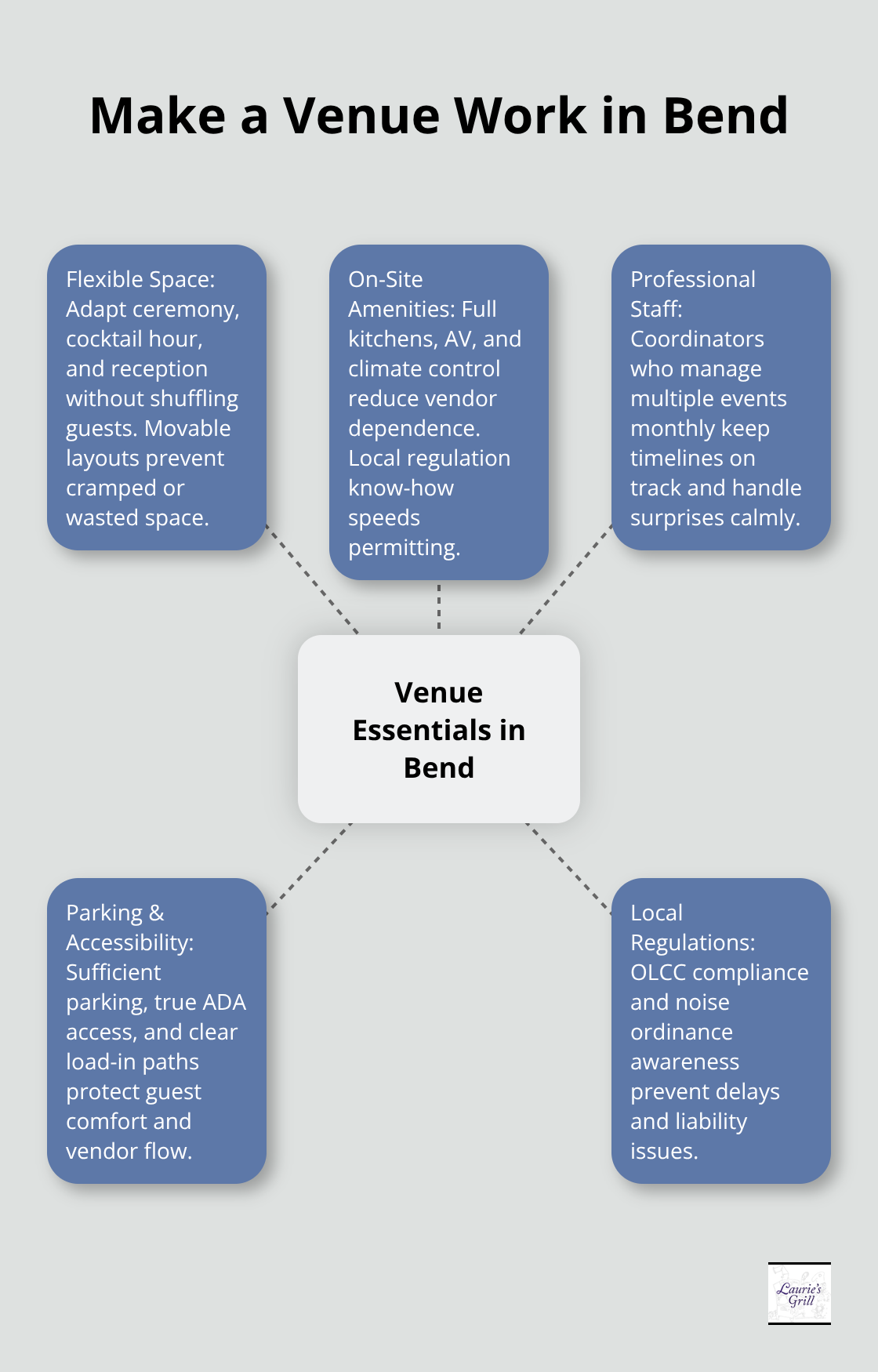
Flexible space allows your venue to accommodate ceremony, cocktail hour, and reception without guests shuffling between three different rooms or waiting outside in September’s unpredictable afternoon wind. The best spaces offer moveable walls, adjustable lighting, and floor plans that do not lock you into one configuration. This adaptability matters because rigid capacity constraints force you into venues that either waste space or feel cramped. Your venue should handle groups ranging from intimate gatherings to larger celebrations without requiring you to compromise on comfort or flow.
On-Site Amenities That Eliminate Coordination Headaches
On-site amenities matter enormously in Bend because vendor coordination across the city adds time and cost. Venues with full kitchens, built-in AV systems, and climate control eliminate dependency on outside services for basics. The City of Bend requires permits for amplified music and large outdoor crowds, so venues familiar with local regulations handle permitting faster than operations that treat Bend like any other market. Staff who understand these requirements save you from costly delays and compliance mistakes.
Professional Staff Who Execute Your Timeline
Professional staff make the difference between a timeline that runs thirty minutes late and one that hits every mark. Ask potential venues how many events their team manages monthly and whether the same coordinator handles your entire day. Venues managing fewer than four events monthly typically lack the operational muscle to handle unexpected changes smoothly. The staff you interact with during planning should answer specific questions about load-in times, equipment restrictions, and noise ordinance compliance without vague promises.
Parking, Accessibility, and Operational Transparency
Parking accessibility directly impacts guest experience-confirm that your venue offers at least 0.5 spaces per guest and that ADA-accessible spots sit genuinely close to entrances, not fifty feet away. Licensed bartending and OLCC compliance for alcohol service are not optional in Oregon; verify upfront whether the venue holds its own license or requires your caterer to carry one, as this affects both cost and liability. If a venue coordinator cannot tell you the exact dimensions of doorways for your AV company’s equipment or whether you can install temporary lighting fixtures, that signals a red flag about their operational depth.
These practical features separate venues that simply rent space from those that partner with you to execute your vision. The next step involves assessing your specific needs-guest count, layout preferences, and service requirements-so you can evaluate which Bend venues actually match your event’s demands.
Matching Your Event to the Right Venue
Determine Your Guest Count and Space Requirements
Start with your exact guest count, then add 10–15% as a buffer for last-minute additions. This number drives every subsequent decision about venue size, catering capacity, and parking needs. A venue that holds 150 people comfortably becomes cramped at 175, and undersized venues create bottlenecks during cocktail hours and meal service.
Walk through the actual space during a site visit and visualize your ceremony layout, cocktail flow, and dining arrangement. Measure doorways, ceiling heights, and the distance from parking to the entrance because these details determine whether your AV equipment fits through doors and whether elderly guests can navigate the space without assistance. Ask the venue coordinator to show you exactly where guests will stand during cocktails, where the bar will operate, and whether the kitchen can handle your catering timeline. Many venues claim flexibility but actually offer only one viable configuration; request floor plans in writing and do not accept verbal assurances about layout options.
Evaluate Catering and Bar Services
Catering and bar services represent 40–45% of total event costs, so evaluate these services with ruthless specificity. In Oregon, alcohol service requires OLCC licensing, meaning your venue must either hold its own license or your caterer must carry one-this distinction affects both cost and liability protection.
Ask whether the venue restricts outside caterers or requires use of approved vendors, then request three sample menus with pricing for your estimated guest count. Confirm that the kitchen can accommodate your caterer’s equipment and timeline, particularly if your event runs longer than standard service hours. The venue should provide detailed answers about food preparation space, refrigeration capacity, and whether staff can execute your specific service style without complications.
Verify Parking and Accessibility Standards
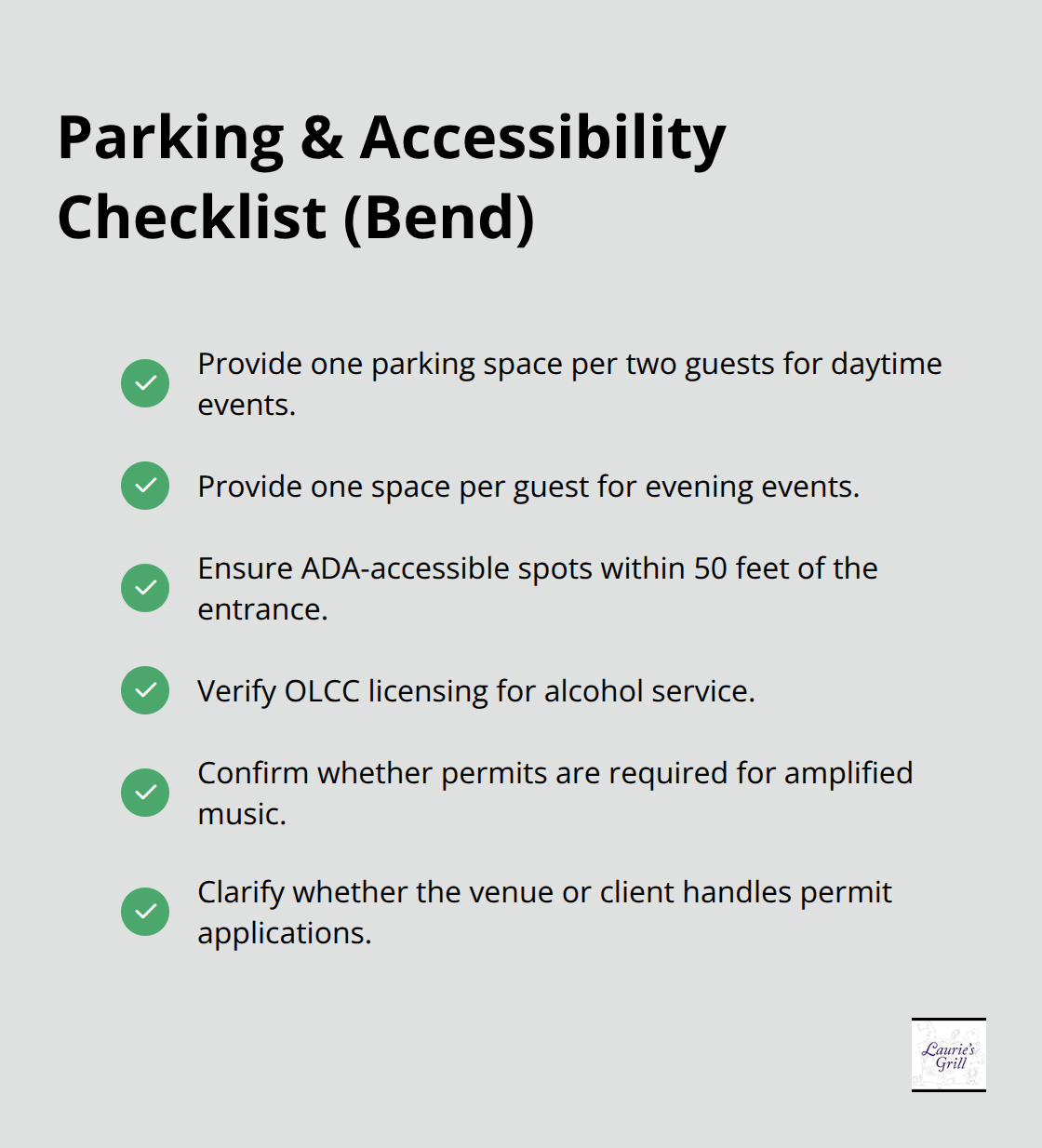
For parking, verify the venue provides at least one space per two guests for daytime events and one space per guest for evening events, with ADA-accessible spots located within 50 feet of the entrance. Contact the City of Bend directly to confirm whether your event requires permits for amplified music, and ask the venue whether they handle permit applications or pass this responsibility to you.
Accessibility extends beyond parking-confirm that restrooms accommodate guests with mobility limitations and that the venue can provide seating options for those who cannot stand for extended periods. The venue coordinator should answer specific questions about temperature control, lighting adjustments, and whether the space feels welcoming for guests across different age groups and physical abilities.
Choose a Venue That Simplifies Operations
Laurie’s Grill offers a full banquet room with an on-site kitchen and established operational procedures that align with Bend’s requirements, providing a straightforward alternative to venues requiring extensive vendor coordination. The venue eliminates much of the complexity surrounding catering logistics, licensing compliance, and local permitting through its integrated approach to event hosting.
Final Thoughts
Successful private events in Bend require matching your specific needs with a venue that handles logistics transparently and operates within Oregon’s regulatory framework. The best private event venue Bend offers combines practical infrastructure-reliable kitchens, adequate parking, ADA accessibility-with staff who understand local permitting requirements and execute your timeline without constant oversight. Aesthetics matter far less than whether your venue coordinator answers specific questions about doorway dimensions, OLCC licensing, and noise ordinance compliance.
When you’re ready to book, contact venues directly and request written floor plans, detailed catering information, and specific answers about parking capacity and accessibility features. Visit the space in person and walk through your exact guest flow, from ceremony setup through cocktail positioning to dining arrangement and exit routes. Ask how many events the venue manages monthly and whether your coordinator remains consistent throughout planning and execution.
At Laurie’s Grill, we combine an on-site kitchen, established operational procedures, and a team familiar with Bend’s specific requirements to simplify your event planning. Our full banquet room handles the logistics so you can focus on your guests and the moments that matter. Visit Laurie’s Grill to explore how our integrated approach to event hosting delivers the memorable occasion your community deserves.
Recent Comments