
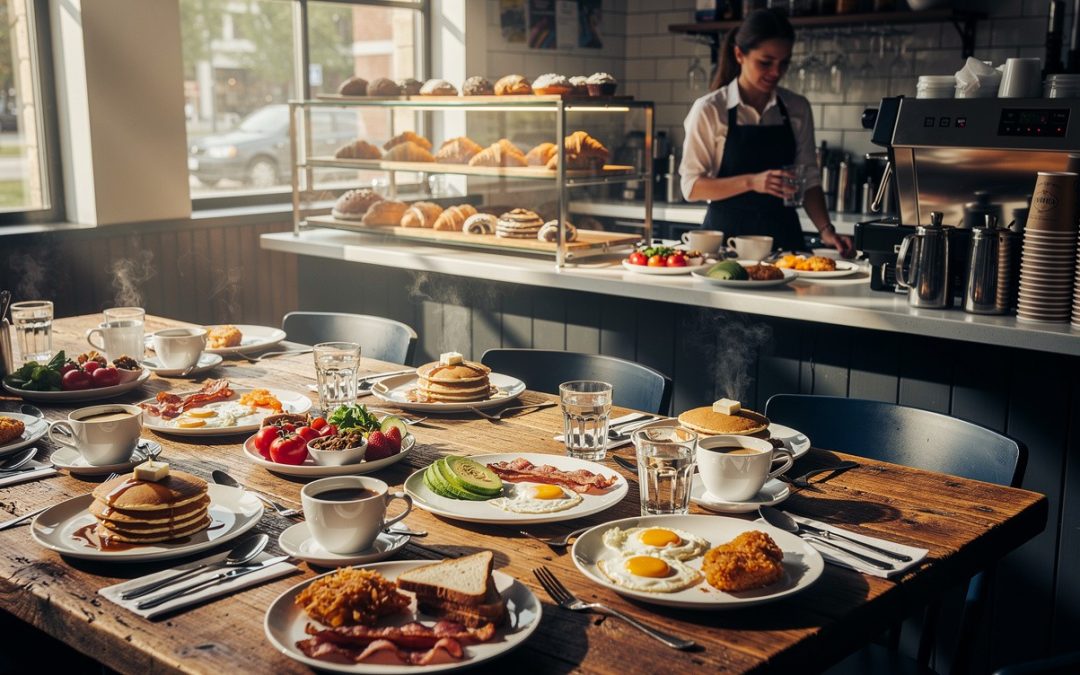
Bend’s dining scene is changing. More people work night shifts, sleep in, or simply crave eggs and pancakes at dinner time. At Laurie’s Grill, we’ve noticed this shift firsthand-customers want Bend all day breakfast options that fit their lives, not the other way around.
The demand is real and growing. This post explores why all-day breakfast matters, what people actually order, and how restaurants pull it off.
Why Bend’s Work Culture Demands All-Day Breakfast
Bend’s Economy Runs on Non-Traditional Schedules
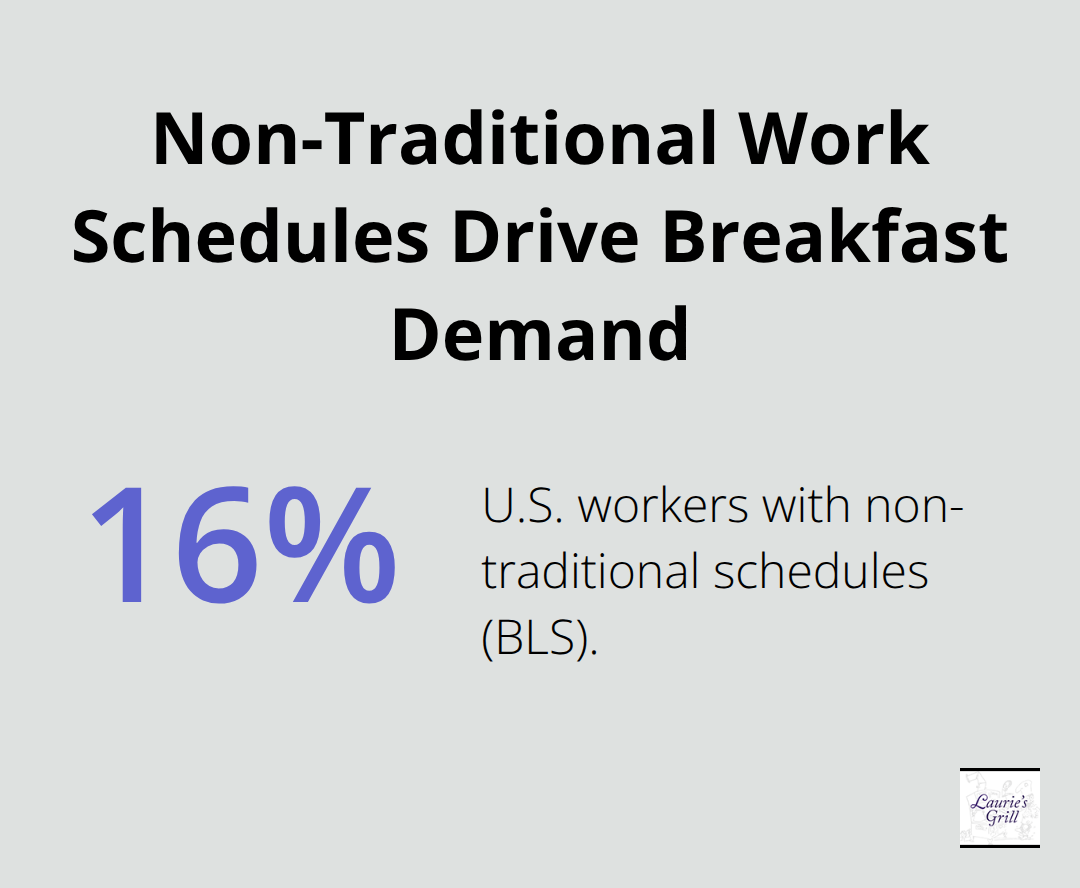
Bend’s economy operates differently than most American towns. The outdoor recreation industry drives employment here, and that means schedules break away from the traditional nine-to-five pattern. Ski patrol workers, river guides, and mountain bike instructors work split shifts or overnight hours. According to the U.S. Bureau of Labor Statistics, roughly 16 percent of American workers have non-traditional schedules, but in outdoor recreation hubs like Bend, that number climbs significantly higher. Night shift workers at hospitals, hotels, and distribution centers make up another substantial portion of our community.
Why Night Shift Workers Need Breakfast at Dinner Time
These people aren’t ordering breakfast at dinner time because they’re eccentric-they’re doing it because their bodies need fuel when they wake up, regardless of the clock. A night shift worker sleeps during the day and wakes at six in the evening. That person’s body signals hunger for breakfast foods, not dinner options. Late risers who don’t wake until noon face the same reality. They shouldn’t have to choose between eggs and burgers when they’re hungry at seven in the afternoon. The alternative-forcing people into arbitrary meal categories-simply doesn’t work anymore in a town where work schedules are as varied as Bend’s terrain.
Meeting Customers Where They Actually Are
The reality at restaurants is straightforward: demand for all-day breakfast reflects real life in Bend. Customers come in at four in the afternoon and ask for pancakes, and that request is legitimate. They’re not wasting time on menu items that don’t satisfy them; they’re ordering what genuinely appeals to their appetite and their lifestyle. This isn’t about indulgence-it’s about meeting customers where they actually are. People who work graveyard shifts deserve access to the same breakfast quality that early birds receive. Bend’s dining scene must adapt to how people actually live, not how tradition says they should eat.
What People Actually Order When Breakfast Is Available All Day
Eggs and Omelets Lead the All-Day Menu
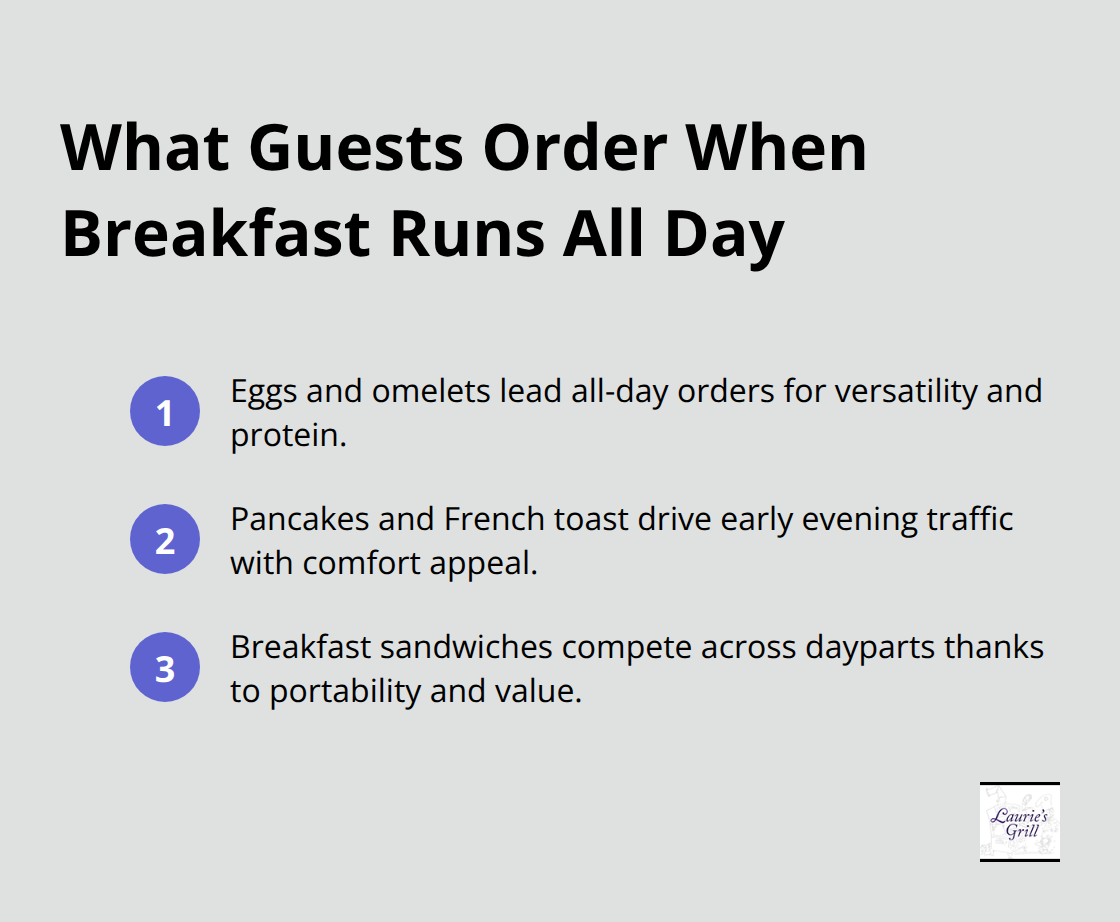
Eggs and omelets dominate the all-day breakfast order board, and the reason is simple: they’re versatile, customizable, and satisfy hunger better than most options. Customers order omelets filled with spinach, mushrooms, and cheese at five in the afternoon without hesitation. Omelets work because they adapt to what people crave, whether that’s a loaded Denver-style creation or something light with just cheese and herbs. The National Restaurant Association reports that eggs remain the most ordered breakfast protein across all dayparts, accounting for significant revenue even during traditional lunch and dinner hours.
Pancakes and French Toast Drive Evening Traffic
Pancakes and French toast create their own traffic pattern, particularly between four and eight in the evening. These items appeal to customers who work late shifts and want comfort food that actually satisfies them, not the heavy, savory options that dominate dinner menus. French toast especially resonates with people who remember eating it as kids, and there’s no reason that memory should be limited to weekend mornings.
Breakfast Sandwiches Compete Across All Dayparts
Breakfast sandwiches occupy a unique middle ground, competing directly with lunch and dinner orders because they’re portable, filling, and don’t require sitting down for a full meal experience. These items outperform traditional dinner options for customers who work non-traditional schedules.
How Supply Chains Shift for All-Day Breakfast
Restaurants that successfully run all-day breakfast operations stock higher volumes of eggs, dairy, and breakfast proteins year-round, which changes their supply chain significantly. A restaurant that serves breakfast only until eleven in the morning might keep eggs for two hundred servings daily, but extending breakfast all day can double or triple that volume. Smart restaurants also find that all-day breakfast increases table turnover when customers order familiar, satisfying items they genuinely want.
Revenue Streams Beyond Traditional Meal Times
The combination of eggs, pancakes, and breakfast sandwiches creates a revenue stream that doesn’t depend on time of day. Customers appreciate having options that match their actual hunger rather than arbitrary meal categories. This shift in ordering patterns reveals something important about how restaurants should think about their operations and staffing needs.
How Restaurants Manage All-Day Breakfast Operations
Inventory Control Separates Success from Waste
All-day breakfast operations require a completely different approach to inventory than restaurants limited to morning service. Breakfast ingredients spoil faster than most proteins and produce, which means restaurants either waste money or run out of stock. Eggs, dairy, and breakfast meats deteriorate quickly, so ordering triple quantities and expecting them to last simply doesn’t work. The National Restaurant Association reports that food waste is estimated at between 30-40 percent of the food supply, with breakfast ingredients representing the highest-waste category when operations extend beyond traditional hours.
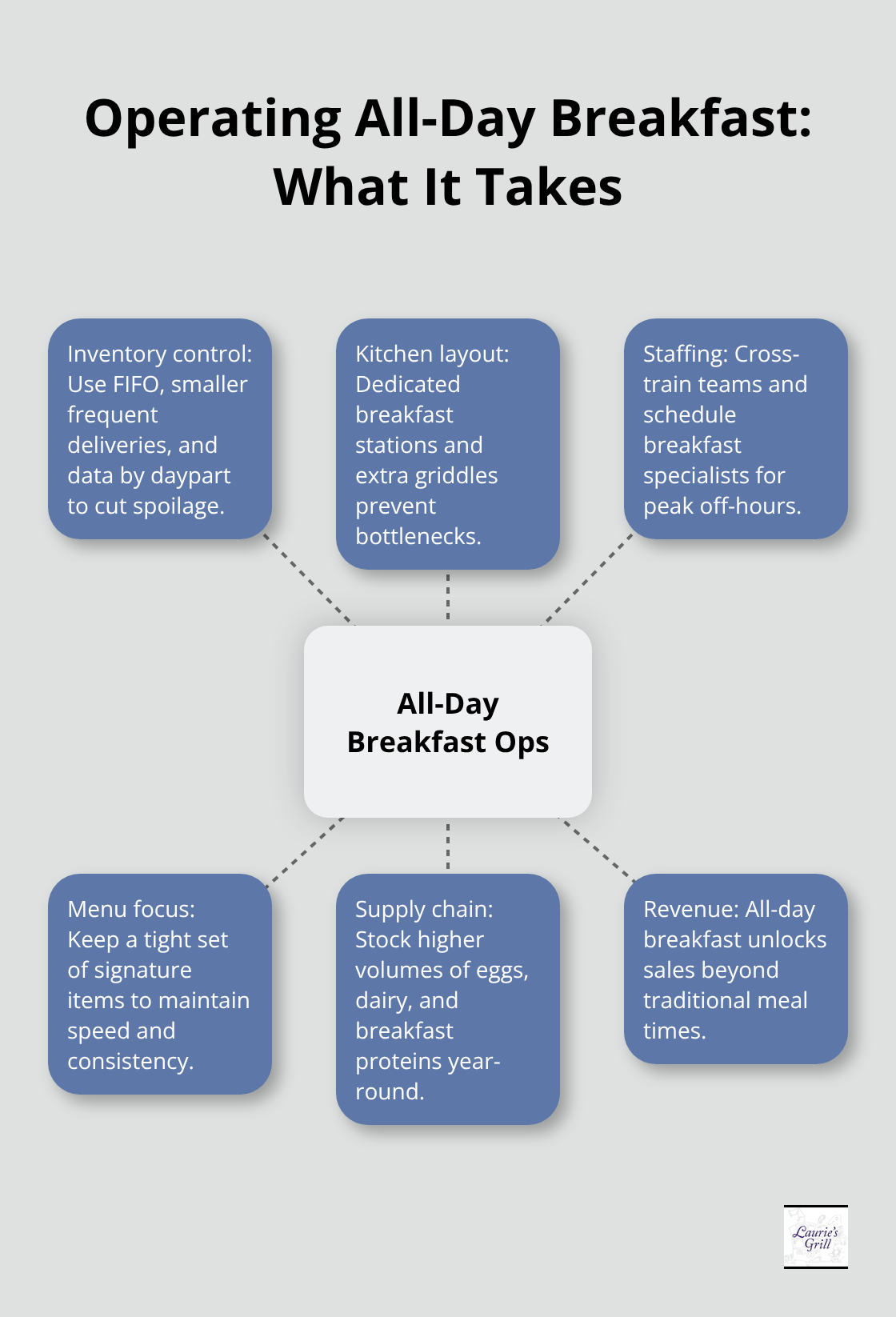
Successful restaurants implement first-in-first-out inventory rotation religiously and build relationships with suppliers who deliver fresh ingredients multiple times per week rather than once. Tracking which breakfast items sell during off-peak hours allows restaurants to adjust purchasing accordingly. Sales data by daypart reveals exactly when customers order omelets versus pancakes, which prevents overstock and spoilage.
Kitchen Layout and Equipment Demands
A kitchen designed for breakfast-only service operates differently than one handling omelets at six in the evening alongside dinner orders. Breakfast cooks need equipment and workflow patterns that differ significantly from dinner operations. Many restaurants fail at all-day breakfast because they treat it as an afterthought rather than redesigning their entire service model around it.
Dedicated breakfast stations work better than integrating breakfast orders into a unified line. This means investing in additional griddles and equipment specifically for pancakes, eggs, and French toast. The physical separation prevents bottlenecks when orders spike during non-traditional hours and allows cooks to maintain consistent speed and quality.
Staffing and Cross-Training Reality
Cross-training staff matters enormously because breakfast cooks need to understand how to keep the line moving when orders arrive during non-traditional hours, and they need to work alongside dinner cooks who operate at different speeds and priorities. Kitchen teams that succeed with all-day breakfast develop flexibility and communication systems that prevent confusion during transitions between dayparts.
Dedicated breakfast personnel who specialize in morning items often work better than rotating staff through all stations. This approach builds expertise and consistency, which customers notice immediately in food quality and service speed.
Menu Focus Over Menu Expansion
Menu complexity actually works against speed in all-day breakfast operations. Restaurants that succeed typically keep their breakfast menu focused on signature items that staff can execute consistently. Adding fifteen breakfast options sounds appealing until the kitchen bogs down during the evening rush because cooks cannot manage the variety.
Focusing on items that customers genuinely want during off-peak hours (eggs, pancakes, and breakfast sandwiches) allows customization without requiring the kitchen to memorize dozens of variations. The result is faster service, fewer mistakes, and more satisfied customers who receive exactly what they ordered.
Final Thoughts
Bend’s dining landscape has shifted, and all-day breakfast is no longer a novelty-it’s a necessity. The town’s non-traditional work schedules, outdoor recreation economy, and diverse population demand flexibility that traditional meal times simply cannot provide. Restaurants that recognize this reality and adapt their operations accordingly meet customers where they actually live, not forcing people into arbitrary categories that stopped making sense years ago.
The data supports what we observe every day at Laurie’s Grill. Customers order eggs at six in the evening, pancakes at four in the afternoon, and breakfast sandwiches whenever hunger strikes. This reflects genuine demand from night shift workers, late risers, and people whose schedules don’t align with traditional dining hours, making Bend all day breakfast a core business model rather than a passing trend.
Managing all-day breakfast requires real operational changes across inventory control, kitchen layout, staffing decisions, and menu focus. Restaurants that invest in these systems see the payoff through reduced waste, faster service, and customers who return because they found exactly what they wanted when they needed it. As work schedules continue to diversify and people demand more control over their lives, restaurants that offer genuine all-day breakfast options will thrive.

Recent Comments