
Chicken fried steak has been a diner staple for generations, and for good reason. It’s affordable, satisfying, and customers keep coming back for it.
At Laurie’s Grill, we know this dish isn’t just comfort food-it’s a profit driver. In this post, we’ll show you exactly why this classic belongs on your menu and how to execute it perfectly.
Where Chicken Fried Steak Came From and Why It Matters
European Roots Meet American Beef
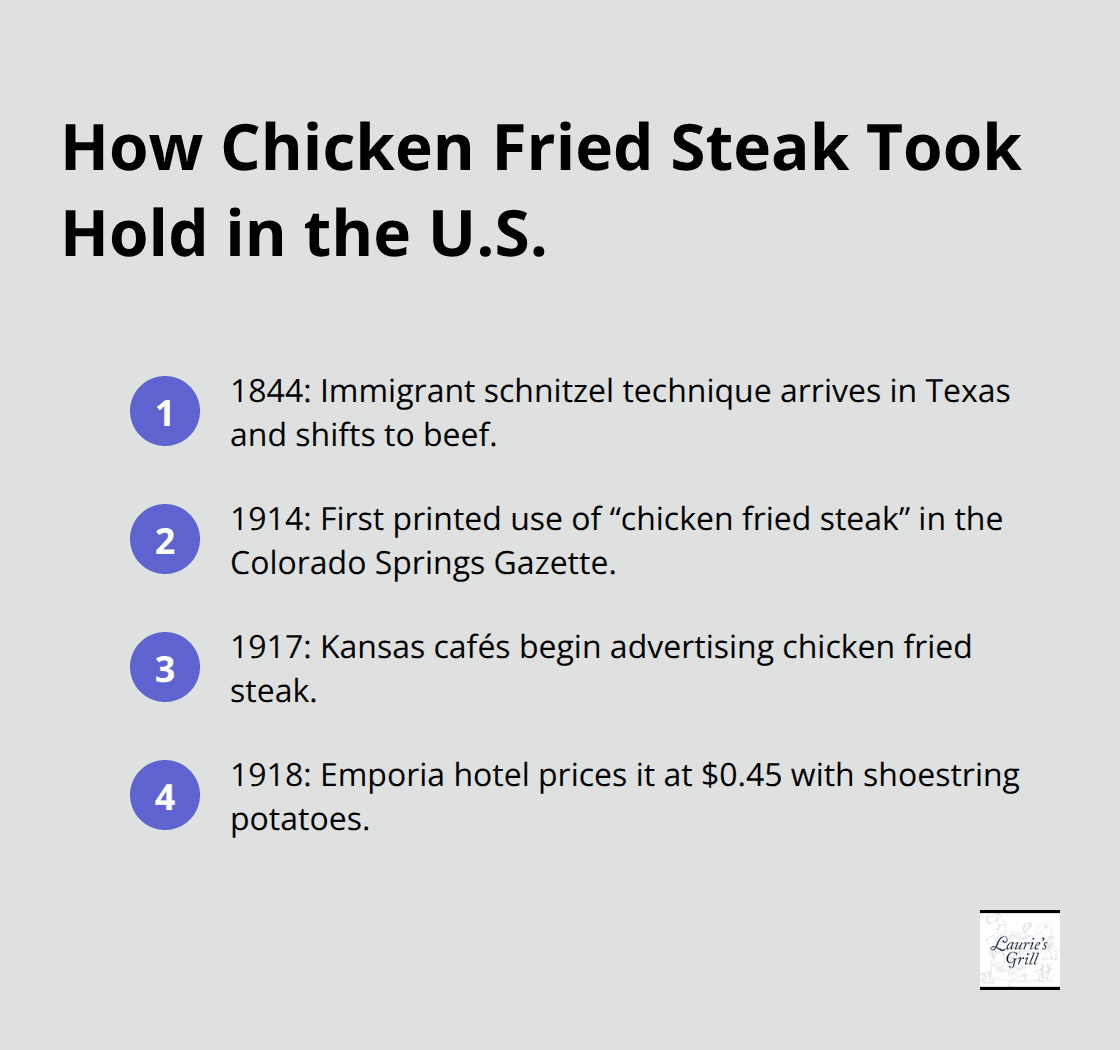
Chicken fried steak didn’t emerge from a single kitchen or moment-it evolved from European immigrant traditions meeting American beef abundance. German and Austrian immigrants brought schnitzel techniques to Texas starting around 1844, but they adapted the dish to use beef instead of veal, creating something distinctly American. The Colorado Springs Gazette first printed the term “chicken fried steak” in 1914, and Kansas cafés advertised it by 1917. An Emporia, Kansas hotel menu from 1918 priced it at 45 cents with shoestring potatoes, positioning it as affordable diner fare from the start.
A Working Person’s Meal
This wasn’t haute cuisine-it was practical food designed for working people who needed hearty meals at reasonable prices. The National Restaurant Association ranked chicken fried steak number three in its top ten favorite restaurant dishes in 1942, proving the dish had already captured mainstream appeal well before the mid-century diner boom. Restaurants across the country recognized that customers wanted satisfying, budget-friendly options, and chicken fried steak delivered on both fronts.
Texas Claims Its Identity
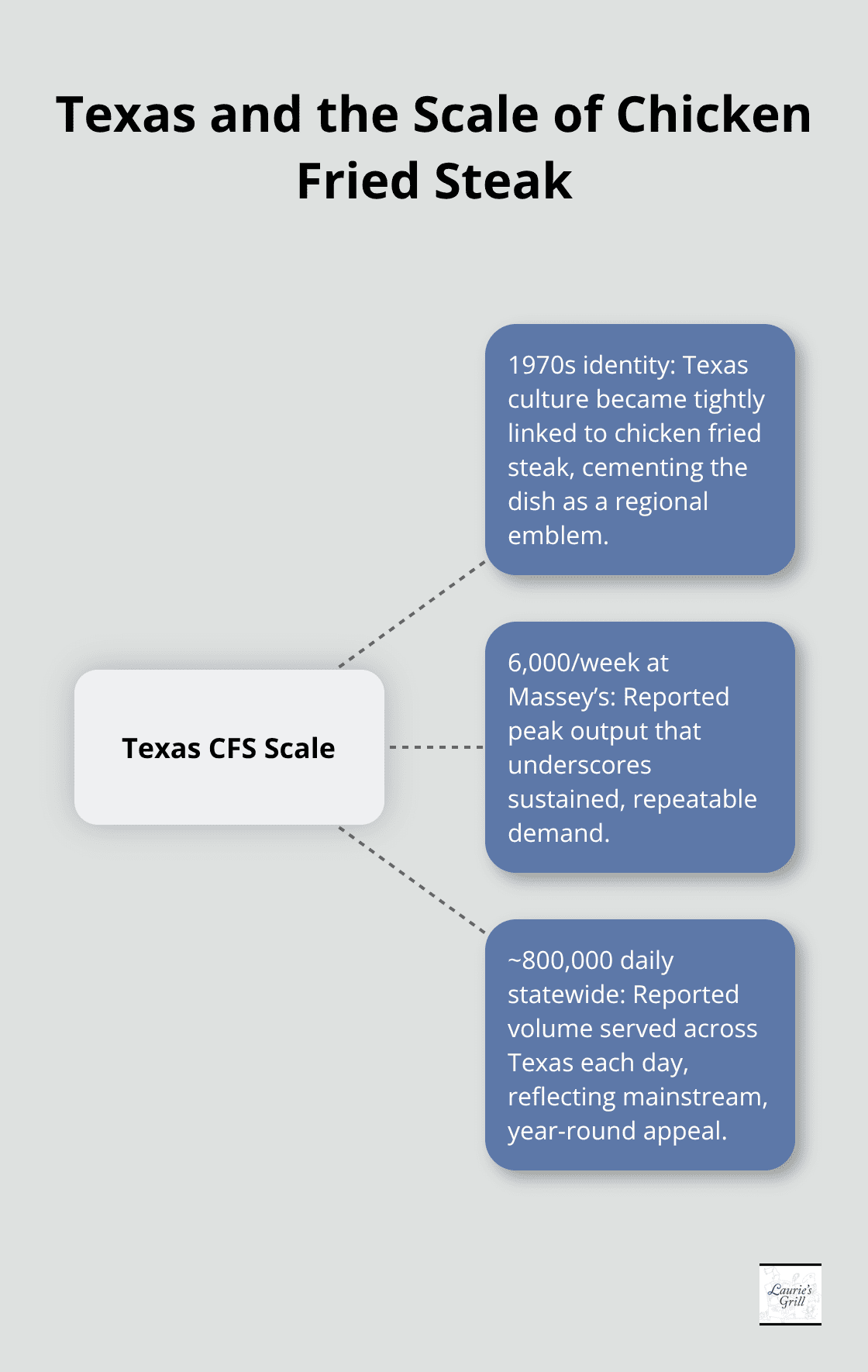
Texas solidified its cultural ownership of the dish during the 1970s, when the state’s identity became inseparable from chicken fried steak. Massey’s Restaurant in Texas reportedly served about 6,000 chicken fried steaks per week during peak demand-a staggering volume that shows just how central this dish became to regional dining. Today, the Texas Restaurant Association reports approximately 800,000 chicken fried steaks are served daily across the state alone.
Understanding Regional Execution
The distinction between chicken fried and country fried steak matters for execution: chicken fried uses deep-frying and cream gravy for a crisper exterior, while country fried employs pan-frying with brown gravy for a lighter result. Regional preferences still shape how you’ll serve this dish-Southern diners expect cream gravy at dinner, while Midwest establishments sometimes feature it on breakfast menus with eggs and hash browns. Understanding these regional expectations helps you position the dish correctly on your menu and meet customer expectations the moment they order. Your next step involves selecting the right beef cuts and mastering the technique that transforms an affordable cut into a plate that keeps customers returning.
Why Chicken Fried Steak Drives Diner Revenue
The Numbers Behind the Demand
Chicken fried steak sits on your menu because it moves units and protects your margins, not because it’s trendy. Demand for this dish extends nationwide with sustained customer appetite that transcends region. This consistency matters operationally. Customers order it predictably, which means your revenue stabilizes, your kitchen runs efficiently, and your staff executes the dish without hesitation. That operational rhythm translates directly to profitability.
Cost Control and Margin Protection
Cube steak costs far less than premium cuts, and your suppliers stock them reliably. A single order of chicken fried steak with mashed potatoes and gravy generates solid margin because ingredient costs remain low while perceived value stays high. Customers see a plate piled with comfort and feel they’re getting genuine value for their money, even though your food cost sits well below typical entree benchmarks. This perception matters more than the actual numbers on your invoicing. Your food costs stabilize, your prep time becomes routine, and your kitchen staff executes the dish without thinking.
Versatility Across Dayparts
Chicken fried steak works equally well at breakfast and dinner, which reveals its true operational power. Serve it with eggs and hash browns in the morning, then pair it with green beans and mashed potatoes at night. Your griddle space and fryer don’t sit idle. Your prep team uses the same beef cuts, the same breading station, and the same gravy base regardless of service time. That operational simplicity keeps labor costs controlled and reduces training complexity for new kitchen staff.
Menu Flexibility Without Complexity
The dish adapts to menu changes without requiring new suppliers or equipment. Want to test a new side? Chicken fried steak accepts any vegetable, any potato preparation, any gravy variation. That flexibility means you respond to seasonal availability or customer feedback without rebuilding core menu economics. Your next step involves selecting the right beef cuts and mastering the technique that transforms an affordable cut into a plate that keeps customers returning.
How to Execute Chicken Fried Steak in Your Kitchen
Selecting the Right Cube Steak
Cube steak forms your foundation, and your supplier choice matters more than most diner operators realize. Cube steak arrives pre-tenderized, which means the mechanical breakdown of tough muscle fibers happens before it reaches your kitchen. This matters because consistency becomes automatic. You won’t rely on individual prep staff to pound meat to the correct thickness or apply the right amount of force. A 3/8-inch cube steak from a reliable distributor fries evenly every time, and that uniformity protects your margins and your reputation. When you call your supplier, specify thickness and ask about their tenderizing process. Some distributors use blade tenderizers that create shallow indentations, while others use needle tenderizers that puncture the meat. Both work, but needle tenderization tends to produce more uniform results across the entire steak.
Mastering Fryer Temperature and Equipment
Your fryer temperature sits at 350 degrees Fahrenheit, and this specific number matters more than most operators understand. Too hot and your crust burns before the interior cooks through. Too cool and the meat absorbs oil instead of developing that crispy exterior customers expect. A reliable deep-fry thermometer mounted inside your fryer becomes non-negotiable equipment. Check it daily. If your thermometer drifts even 10 degrees, your execution suffers immediately.
The Double-Dredging Technique
The breading process determines whether your chicken fried steak stays crispy or turns soggy by the time it reaches the table. Double-dredging works better than single-dredging, and this technique separates competent kitchens from mediocre ones. First, coat your cube steak in seasoned flour mixed with salt and pepper. Then dip it into an egg wash made with eggs and milk, not water. Milk creates a richer coating that adheres better. Finally, dredge the steak a second time in seasoned flour. Let the breaded steak rest on a sheet pan for at least 30 minutes before frying. This resting period allows the coating to set, which prevents breading from separating during frying.
Gravy and Plate Composition
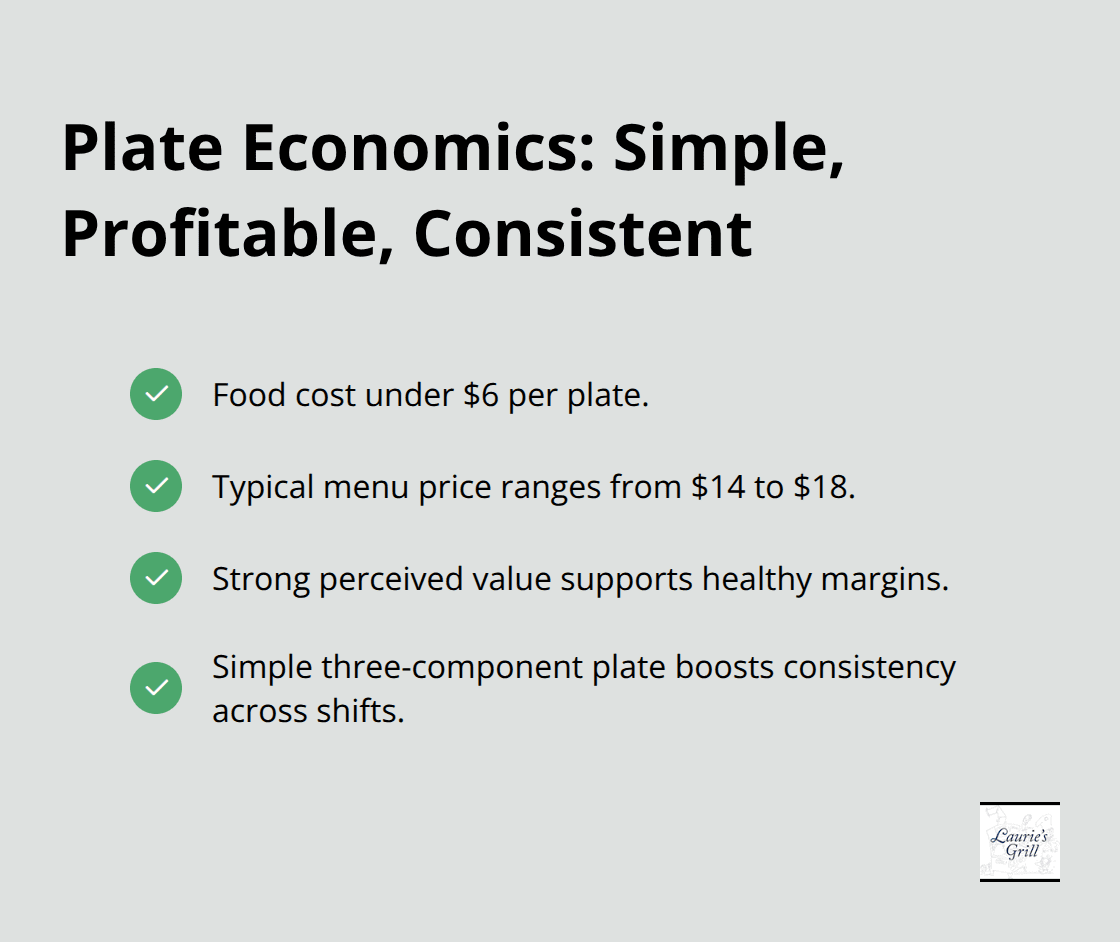
Your gravy choice determines regional accuracy and customer satisfaction. Southern customers expect a white cream gravy made from pan drippings, beef stock, and heavy cream, finished with cracked black pepper. Midwest customers sometimes accept brown gravy, but country sausage gravy remains the most versatile option across regions. Make your gravy fresh from pan drippings whenever possible. The fond left in your frying pan after cooking chicken fried steak contains flavor that bottled gravy cannot replicate. Pair your steak with mashed potatoes and one green vegetable (typically green beans or steamed broccoli). This three-component plate costs less than 6 dollars in food cost and sells for 14 to 18 dollars depending on your market. The margin protects your operation while the simplicity keeps your plating consistent across every shift.
Final Thoughts
Chicken fried steak endures on diner menus because it delivers what customers actually want: satisfying food at honest prices. This dish doesn’t rely on trends or culinary innovation. It works because generations of diners have ordered it, trusted it, and returned for it again. Texas alone serves 800,000 chicken fried steaks daily, and that volume reflects genuine customer demand, not manufactured hype.
Your success with this dish hinges on execution consistency. When you select reliable cube steak, master your fryer temperature, and nail the double-dredging technique, you create a plate that tastes the same every time a customer orders it. That reliability builds loyalty faster than any marketing campaign. Customers return because they know exactly what they’ll receive, and that certainty matters more than novelty.
The real competitive advantage lies in understanding that chicken fried steak isn’t just a menu item-it’s operational efficiency disguised as comfort food. Your margins stay protected because ingredient costs remain low, your kitchen staff executes the dish without hesitation because the technique is straightforward, and your fryer runs consistently because you cook the same product repeatedly. That operational rhythm translates directly to profitability and staff confidence. Visit Laurie’s Grill in Bend, Oregon to experience how we apply these principles to every plate we serve.

Recent Comments