
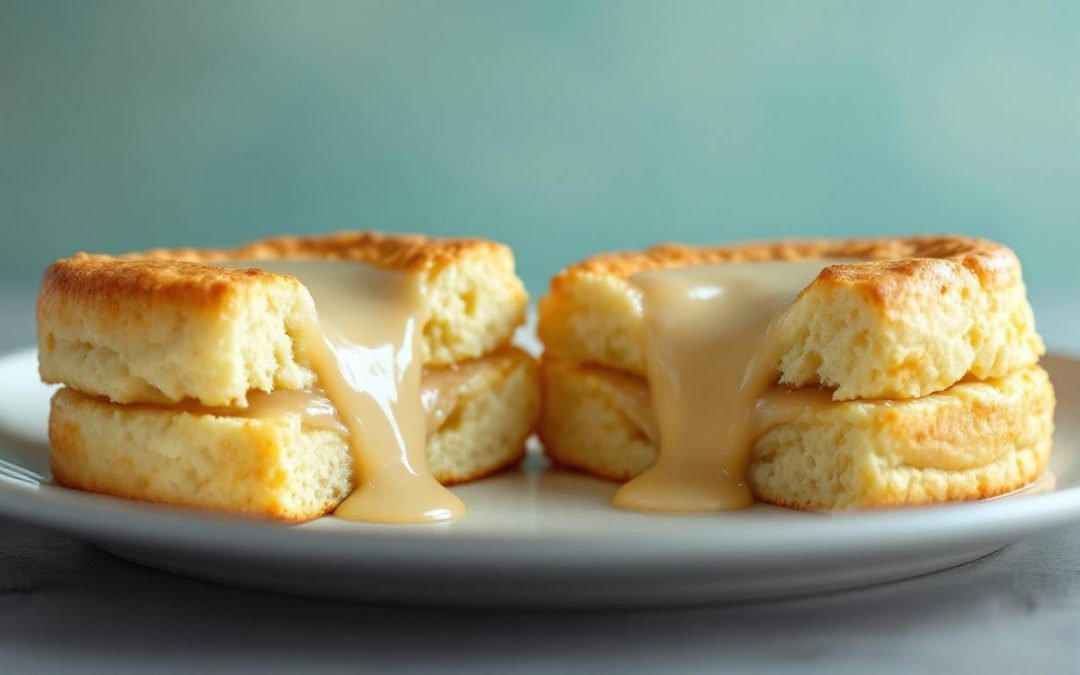
Sunday mornings deserve a meal that matches their promise. Biscuits and gravy is the dish that makes families linger at the table, trading stories and laughter over steaming plates.
We at Laurie’s Grill have perfected this recipe through countless weekend breakfasts. This guide walks you through every step to create biscuits and gravy that taste like home.
Why Biscuits and Gravy Matter for Sunday Breakfast
Biscuits and gravy is not a trendy breakfast dish. It is a working-class meal born from necessity and perfected over generations in American kitchens, particularly across the South. The dish gained mainstream recognition relatively recently-Joy of Cooking did not include a biscuits and gravy recipe until 2006, and the Southern Foodways Alliance notes that regional gravies developed from what they call a heritage born of privation, which shaped distinctive versions like red-eye gravy with coffee and country ham, Charleston shrimp gravy, and Appalachian chocolate gravy. This history matters because it means the dish carries real substance. A Sunday morning biscuits and gravy breakfast is not about following a trend. It is about eating something that has sustained families and communities for over a century.
The practical appeal for your weekend
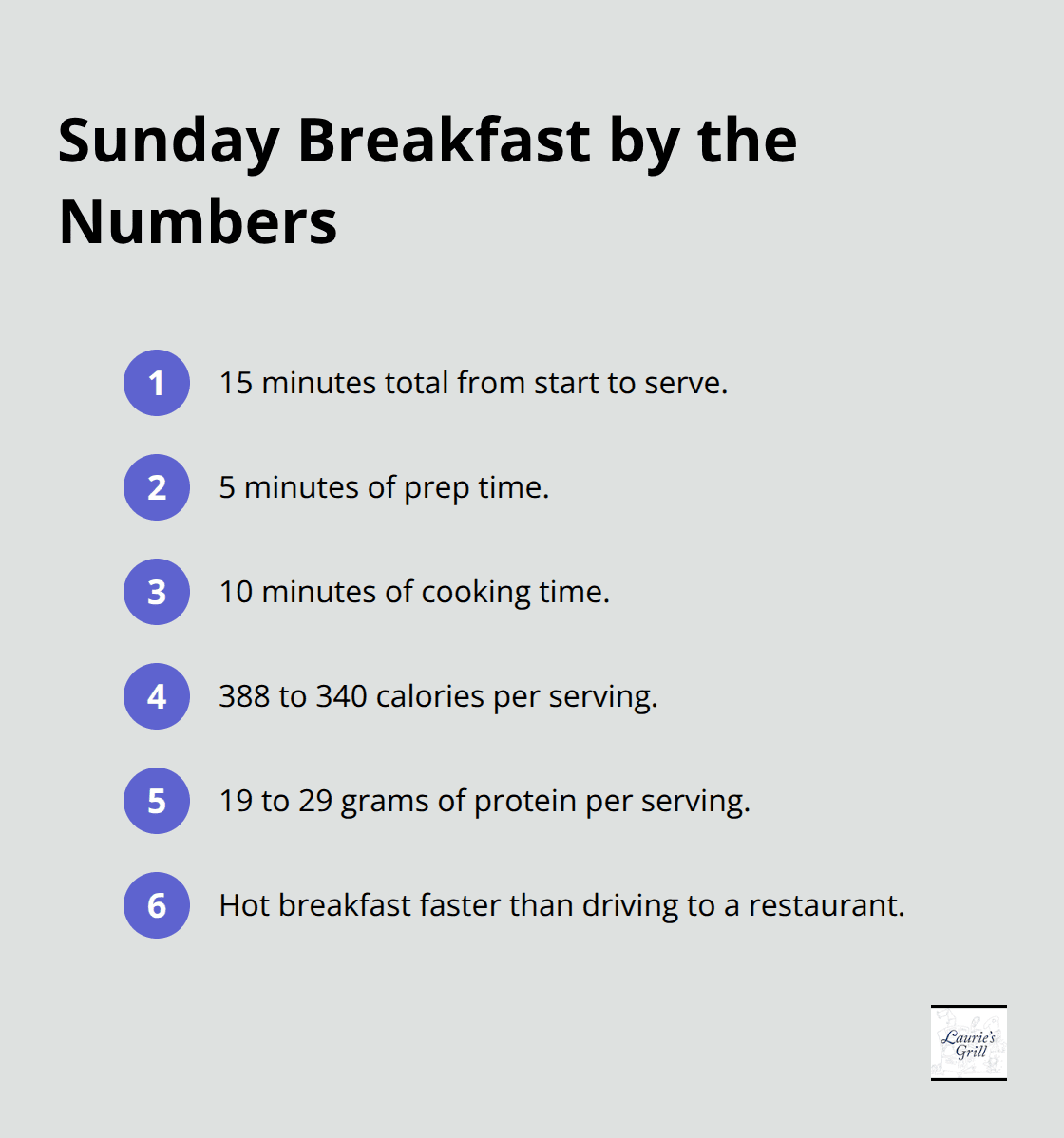
A proper biscuits and gravy breakfast delivers 388 to 340 calories per serving depending on your recipe, with roughly 19 to 29 grams of protein and substantial fat content that keeps you satisfied through a full morning. The entire meal cooks in 15 minutes total-5 minutes prep, 10 minutes cooking-which means you can have hot food on the table faster than driving to a restaurant. Sunday mornings move at their own pace, and this recipe respects that rhythm.
You prepare everything fresh, watch the gravy thicken as it cooks, and pull golden biscuits from the oven while family gathers. The meal works because it requires attention without demanding stress. Cold buttermilk reacts with baking soda to create an ultra-tender texture, and the sausage gravy thickens as milk reduces naturally-both processes happen without complicated timing or precision equipment. This is food that teaches you something about cooking just through the act of making it.
Why families stay at the table
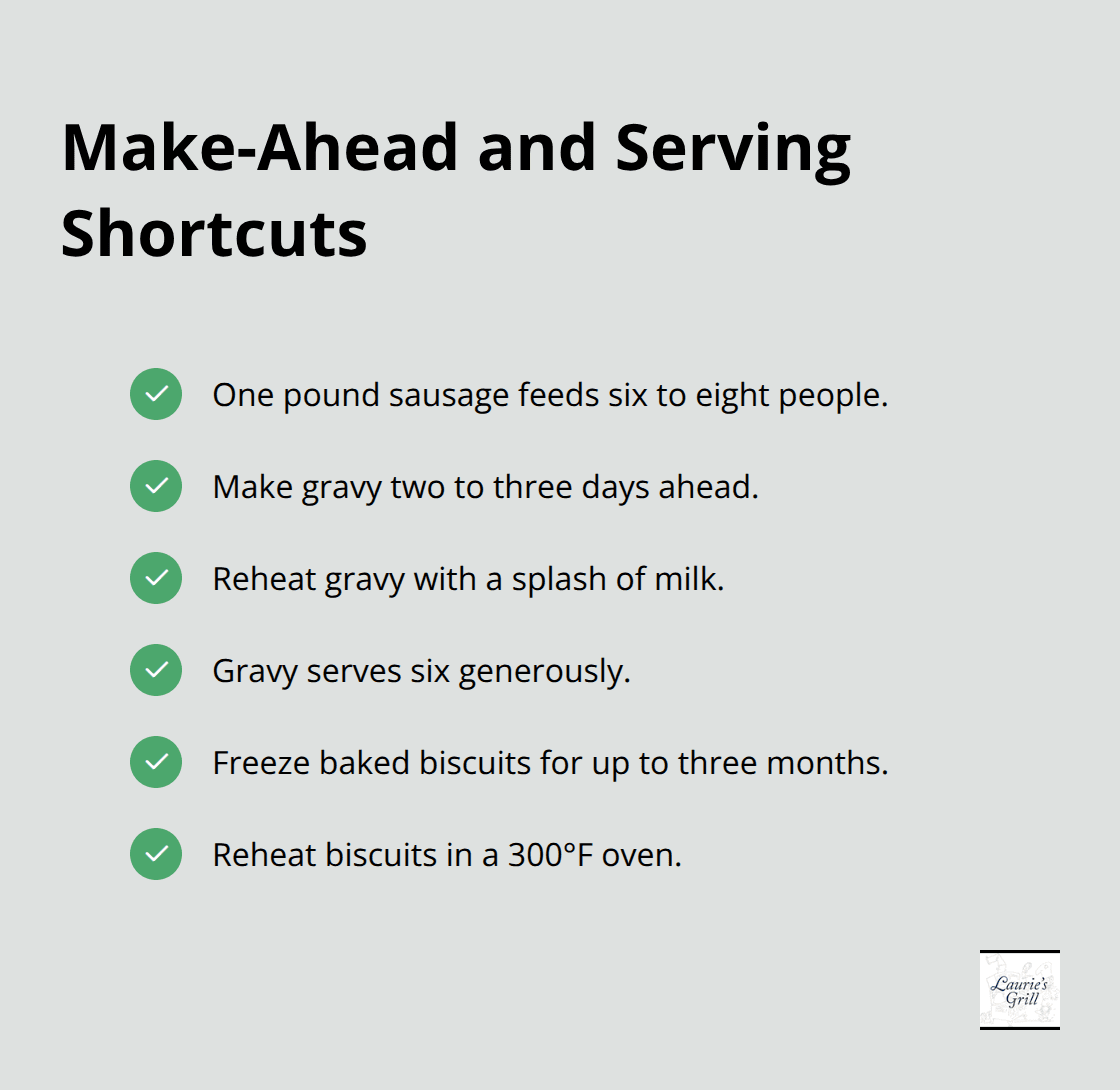
Biscuits and gravy holds families together because it cannot be rushed or consumed alone. The dish requires a table, plates, and conversation. Unlike grab-and-go breakfast options, this meal signals that Sunday morning matters enough to spend time on. The combination of warm biscuits, creamy gravy, and optional sides like eggs or roasted potatoes creates a complete breakfast that satisfies without feeling heavy. One pound of pork breakfast sausage feeds six to eight people generously, making the economics sensible for families. The make-ahead options strengthen this further-you can prepare the gravy two to three days in advance and store it in the refrigerator, then reheat with a splash of milk before serving, which means less stress on the morning itself.
What you need to know before you start
The success of this dish rests on two foundations: proper biscuit technique and a well-made gravy. Biscuits demand cold ingredients and gentle handling. Gravy requires patience and whole milk for the right creamy consistency. Both components reward attention but punish overthinking. The next section walks you through the exact ingredients and preparation steps that transform these simple components into a breakfast that tastes like it took hours to prepare.
What Ingredients Actually Matter for Biscuits and Gravy
Cold Ingredients Make Flaky Biscuits
Cold butter and cold buttermilk are non-negotiable for biscuits. The cold fat creates steam pockets as the biscuits bake, which produces the flaky layers that separate from each other when you pull them apart. Room-temperature butter eliminates these layers and leaves you with dense, cake-like biscuits instead.
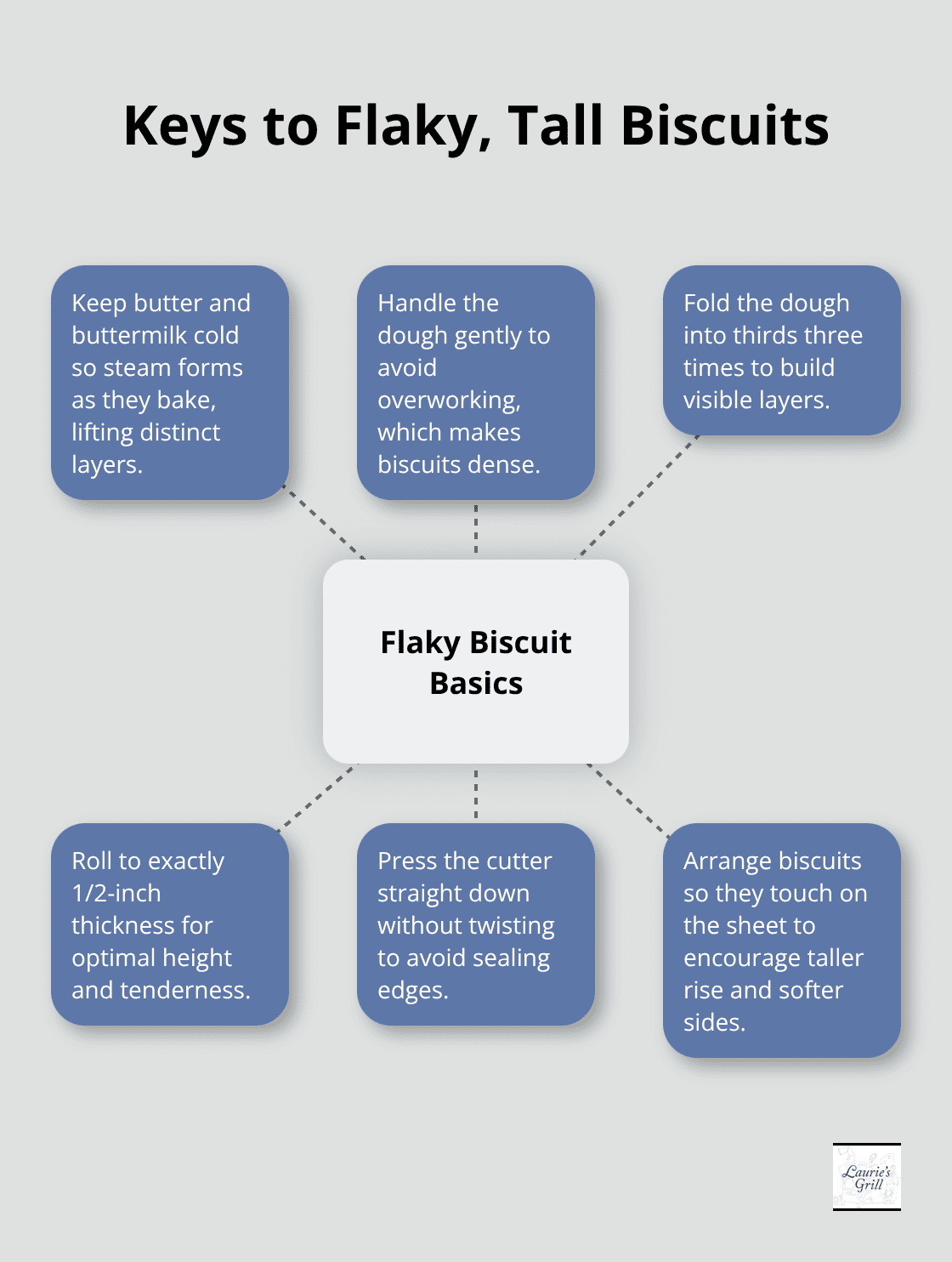
Cut unsalted cold butter into small pieces and work it into two cups of all-purpose flour mixed with one tablespoon of baking powder, one-quarter teaspoon of baking soda, two teaspoons of sugar, and one teaspoon of salt. Cold buttermilk matters equally because its acid reacts with the baking soda to create lift and an ultra-tender crumb. Pour three-quarter cup of cold buttermilk into your flour mixture and fold gently until the dough just comes together. Stop as soon as you see no dry flour remaining, since overworking the dough ruins everything.
The Folding and Rolling Technique
Fold the rectangular dough into thirds like a letter, then repeat this fold process two more times for a total of three folds. Roll the folded dough to exactly one-half inch thickness-thinner dough reduces height and rise. Cut with a floured two-point-five inch cutter and press straight down without twisting, which prevents sealing the edges and allows proper rise. Arrange the cut biscuits on a parchment-lined baking sheet so they touch each other; this helps them rise taller and yields softer sides. Bake at four hundred fifty degrees for fifteen to seventeen minutes until lightly golden brown. The entire biscuit process takes about thirty minutes and yields ten biscuits.
Building the Sausage Gravy Base
One pound of pork breakfast sausage with sage flavoring forms the foundation of your gravy. Brown the sausage in a skillet over medium heat without draining the grease-this is where the flavor lives. Break the meat into small pieces as it cooks, then sprinkle one-quarter cup of all-purpose flour directly over the browned sausage. Stir immediately to absorb the flour and break up any clumps with a spoon or whisk before they harden. Gradually whisk in two and one-half cups of whole milk, not lower-fat alternatives, because whole milk creates the proper creamy consistency that coats a biscuit properly.
Thickening and Seasoning Your Gravy
The gravy thickens as the milk reduces naturally over five to seven minutes of simmering. Cook longer if you want it thicker rather than adding more flour, which risks lumps. Season with crushed red pepper if you want heat, plus salt and black pepper to taste. The gravy reaches proper consistency when it coats the back of a spoon without running off immediately. This entire process takes about ten minutes and serves six people generously. Make the gravy the night before if needed, refrigerate it in an airtight container, then reheat gently with a splash of milk before serving.
Timing Your Components for Assembly
Both biscuits and gravy demand attention at slightly different moments, which means coordinating your timing matters. Start your gravy about ten minutes before you pull the biscuits from the oven so both components finish hot and ready to combine. The biscuits stay warm for several minutes after baking, and the gravy holds its temperature well during a gentle reheat. This coordination transforms two separate components into a unified breakfast that tastes like it took hours to prepare, even though you invested only thirty minutes total. With your ingredients understood and your technique clear, the next section walks you through the exact step-by-step process that brings everything together on your plate.
How to Cook Biscuits and Gravy That Taste Homemade
Preparing Your Biscuit Dough
Preheat your oven to 450 degrees Fahrenheit and line a baking sheet with parchment paper. Mix your dry ingredients in a large bowl: two cups all-purpose flour, one tablespoon baking powder, one-quarter teaspoon baking soda, two teaspoons sugar, and one teaspoon salt. Cut cold unsalted butter into small cubes and work it into the flour with your fingertips until the mixture resembles coarse breadcrumbs with some pea-sized butter pieces still visible. Pour in three-quarter cup of cold buttermilk and fold gently with a spatula until the dough just comes together with no dry flour remaining. Stop immediately when combined, as overworking kills flaky texture.
Folding and Shaping the Dough
Turn the dough onto a lightly floured surface and fold it into thirds like a letter. Repeat this fold two more times for three total folds. Roll to exactly one-half inch thickness-thinner dough produces shorter, denser biscuits. Cut with a floured 2.5-inch cutter and press straight down without twisting to avoid sealing the edges. Arrange your biscuits touching each other on the prepared sheet and place them in the oven for 15 to 17 minutes until lightly golden brown. This yields 10 biscuits and takes about 30 minutes total.
Building Your Sausage Gravy
While biscuits bake during their final 10 minutes, heat a large skillet over medium heat and add one pound of breakfast sausage. Break the meat into small pieces as it browns, and do not drain the grease since that fat carries flavor. Once fully browned, sprinkle one-quarter cup all-purpose flour directly over the meat and stir immediately with a spoon or whisk to break up any lumps before they harden. Gradually whisk in two and one-half cups of whole milk. Simmer for five to seven minutes, stirring occasionally, until the gravy thickens enough to coat the back of a spoon without running off immediately.
Seasoning and Finishing
Add crushed red pepper if you want heat, then season with salt and black pepper to taste. The gravy reaches proper consistency when it moves slowly across the spoon rather than immediately sliding off. Pull your biscuits from the oven and let them cool for two minutes while your gravy finishes thickening. Split a warm biscuit and spoon generous amounts of gravy over the top, then serve immediately. This coordination means both components finish hot and ready at the same moment, creating a breakfast that tastes like you spent hours preparing when you invested only 30 minutes total from start to finish.
Final Thoughts
This recipe belongs in your regular rotation because it produces real food in minimal time-thirty minutes from start to finish yields a breakfast that satisfies completely and costs far less than restaurant alternatives. The 388 to 340 calories per serving, combined with 19 to 29 grams of protein, keeps you full through a busy morning. Swap sage sausage for spicy breakfast sausage if you prefer heat, serve the gravy over eggs or roasted potatoes instead of biscuits alone, or try regional variations like red-eye gravy made with coffee and country ham.
The warmth of biscuits and gravy does not require Sunday to arrive-make this dish on Wednesday evening when you need comfort food, or prepare the gravy two to three days ahead and reheat it with a splash of milk whenever hunger strikes. Freeze baked biscuits for up to three months and reheat them in a 300-degree oven, transforming a quick breakfast into something that tastes freshly made. The make-ahead flexibility means you can enjoy this meal without weekend pressure.
Visit Laurie’s Grill to experience the same dedication to classic American diner food that guides this recipe. Whether you cook biscuits and gravy at home or join us for a meal, the goal remains the same: creating moments that taste like home.

Recent Comments