
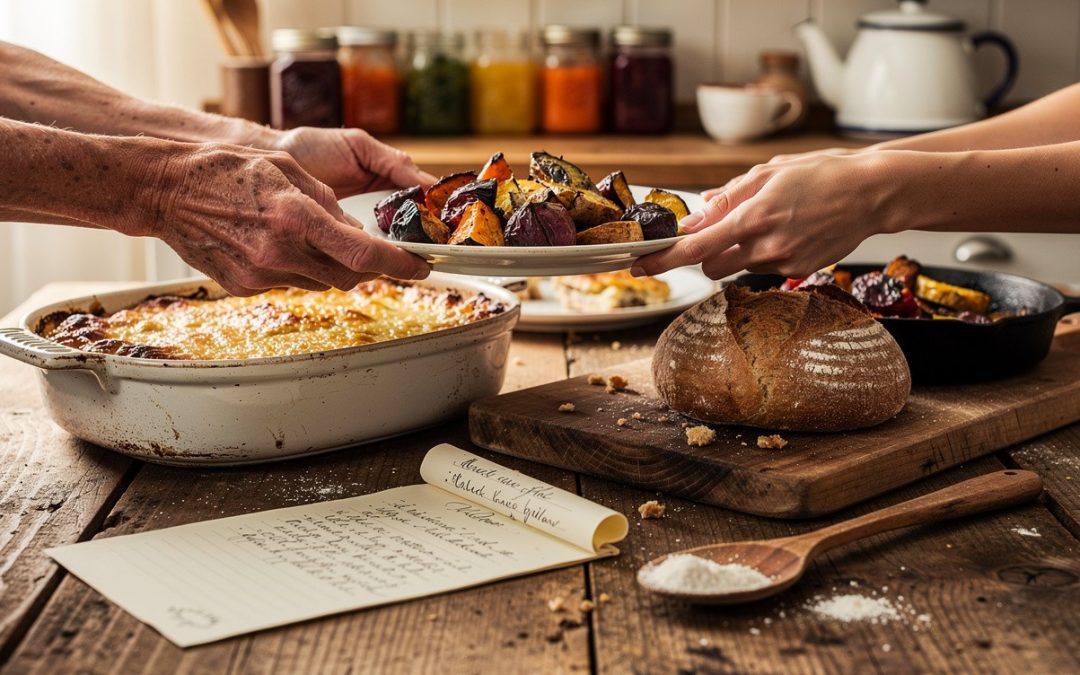
Your grandmother’s recipes hold stories that store-bought meals never will. At Laurie’s Grill, we believe traditional family recipes in Bend and beyond deserve a place at your table, not just in old notebooks.
These dishes connect you to your heritage while bringing your family closer together. Learning to cook them properly means preserving something real for the next generation.
Why Your Family’s Recipes Matter
The Stories Embedded in Every Dish
Your family’s recipes carry real weight. They represent specific people, specific moments, and specific flavors that shaped who you are. When you cook your grandmother’s pot roast or your mother’s biscuits, you maintain a direct connection to the people who came before you. Research from Cornell University found that people who cook family recipes report stronger emotional connections to their heritage and family identity than those who don’t. The act of preparing these dishes requires you to pay attention to details, timing, and technique in ways that mass-produced food never demands.
Recipes as Historical Records
Food anthropologist Dr. E.N. Anderson notes that traditional recipes function as historical documents, encoding information about where your family lived, what resources they had access to, and what they valued nutritionally and socially. These meals tell stories about your ancestors’ lives and choices. When you prepare these dishes with your own children or grandchildren, you actively teach them problem-solving, patience, and respect for craftsmanship.
Building Stronger Family Connections
The shared experience of cooking together and eating what you’ve made strengthens family relationships in measurable ways. Studies show that families who eat together regularly have better communication and stronger bonds. Traditional recipes also tend to use whole ingredients and simpler preparations, which means you know exactly what’s going into your food (unlike restaurant meals or packaged alternatives). This transparency about ingredients matters more now than ever before.
Why Technique and Ingredients Matter
The engagement with the cooking process itself becomes a form of cultural preservation that happens in real time, in your own kitchen. You control the quality of what reaches your table. This hands-on approach to food preparation stands in sharp contrast to the convenience culture that dominates modern eating habits. Understanding why your family prepared food a certain way-and then executing that method yourself-connects you to generations of accumulated knowledge.
These reasons explain why learning your family’s recipes matters so much. Now it’s time to identify which heirloom dishes are worth mastering first.
Which Heirloom Dishes Should You Learn First
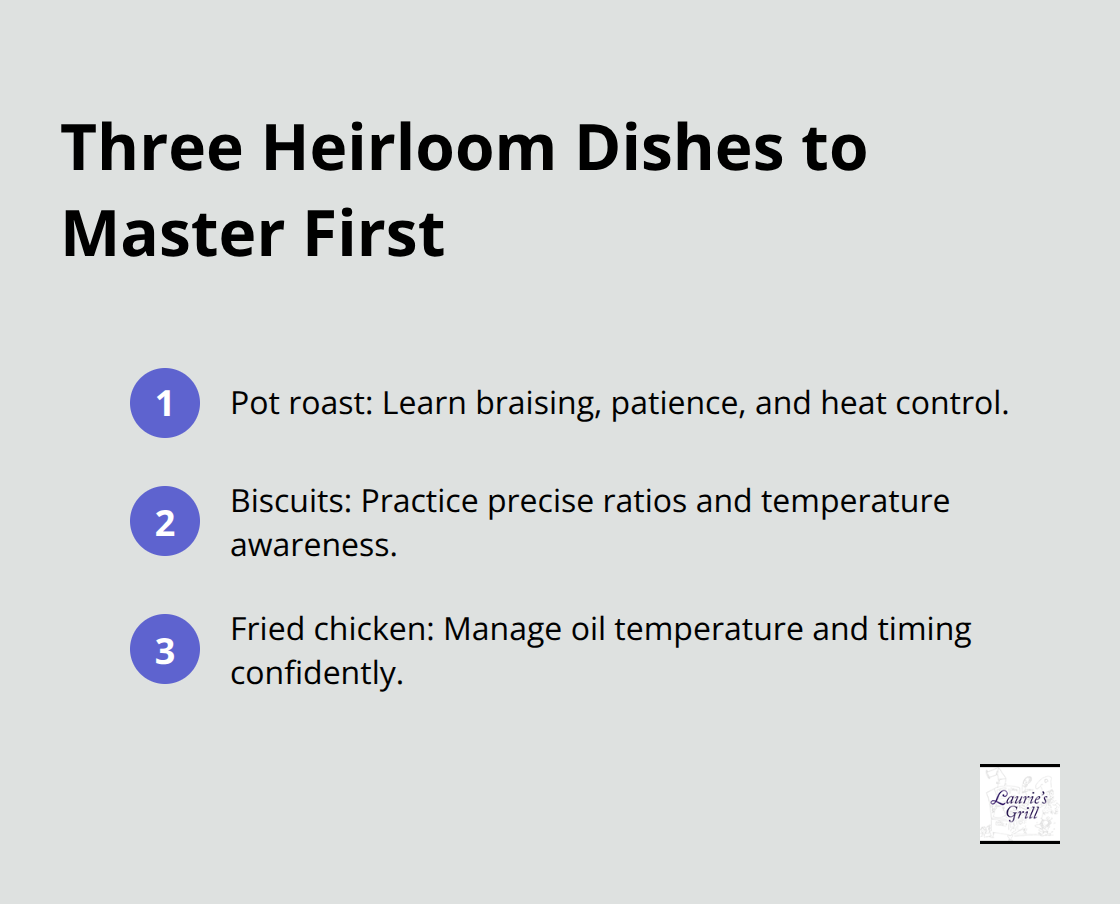
Start with dishes that use ingredients you can find easily and techniques that don’t require specialized equipment. Pot roast, biscuits, and fried chicken represent the foundation of American home cooking for a reason: they teach fundamental skills while delivering genuine comfort. These three dishes alone cover braising, baking, and frying, which means mastering them gives you competence across multiple cooking methods. Pot roast teaches patience and heat control. Biscuits teach precision with ratios and temperature. Fried chicken teaches oil management and timing.
Home-cooked meals using whole ingredients contain significantly fewer additives and preservatives than restaurant equivalents, which matters when you’re teaching younger generations what real food tastes like.
Start With What Your Family Actually Ate
The best heirloom recipe isn’t necessarily the fanciest one. It’s the dish your family returned to repeatedly because it worked with what they had. Regional traditions exist because they reflect local ingredients and practical constraints. Southern fried chicken developed because chickens were affordable and abundant. Midwest pot roast became standard because it used tougher cuts of beef that benefited from slow cooking. New England clam chowder emerged from coastal access and preservation needs. When you learn these regional specialties, you learn why your ancestors cooked the way they did. Ask older family members which three dishes appeared most often on their tables. Those dishes matter more than recipes from cookbooks because they carry actual family weight. The ingredients list tells you what was available to your family. The cooking method reveals what equipment they owned and how much time they could spend cooking.
Master Simple Ingredients First, Complexity Later
Traditional recipes don’t fail because of fancy techniques. They fail because cooks don’t understand basic ingredient quality or measurements. Good butter, fresh eggs, and quality meat make more difference than any special skill. A pot roast made with tough meat and low-quality broth tastes nothing like one made with quality beef chuck and homemade or quality store-bought broth. Start by learning which ingredients truly matter in each dish and which ones don’t. For biscuits, the flour-to-fat ratio determines success far more than any technique does. For fried chicken, the oil temperature matters more than the exact seasoning blend. Learn to test oil temperature with a thermometer rather than guessing. Use a kitchen scale for baking rather than volume measurements. These practical habits eliminate most failures before they happen.
Tools and Equipment You Actually Need
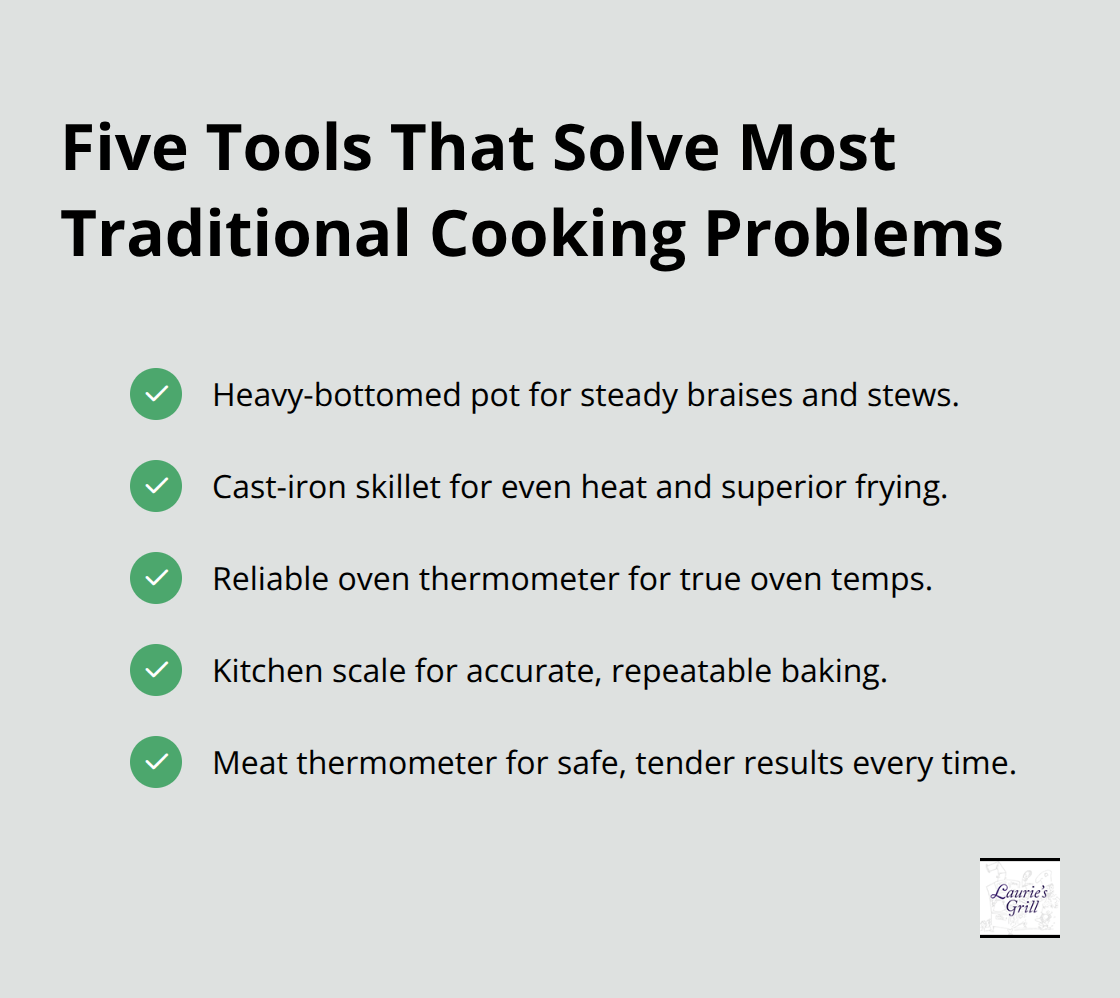
You don’t need a kitchen full of gadgets to cook traditional recipes well. A heavy-bottomed pot handles pot roast without scorching the bottom. A cast-iron skillet fries chicken better than any modern non-stick pan because it distributes heat evenly and maintains temperature. A reliable oven thermometer (not the one built into your oven) tells you the actual temperature inside, which matters for biscuits and roasted dishes. A kitchen scale removes guesswork from baking measurements. A meat thermometer eliminates the anxiety of wondering if your chicken is cooked through. These five tools solve most problems that home cooks face with traditional recipes.
Everything else is optional.
Common Mistakes That Derail Traditional Cooking
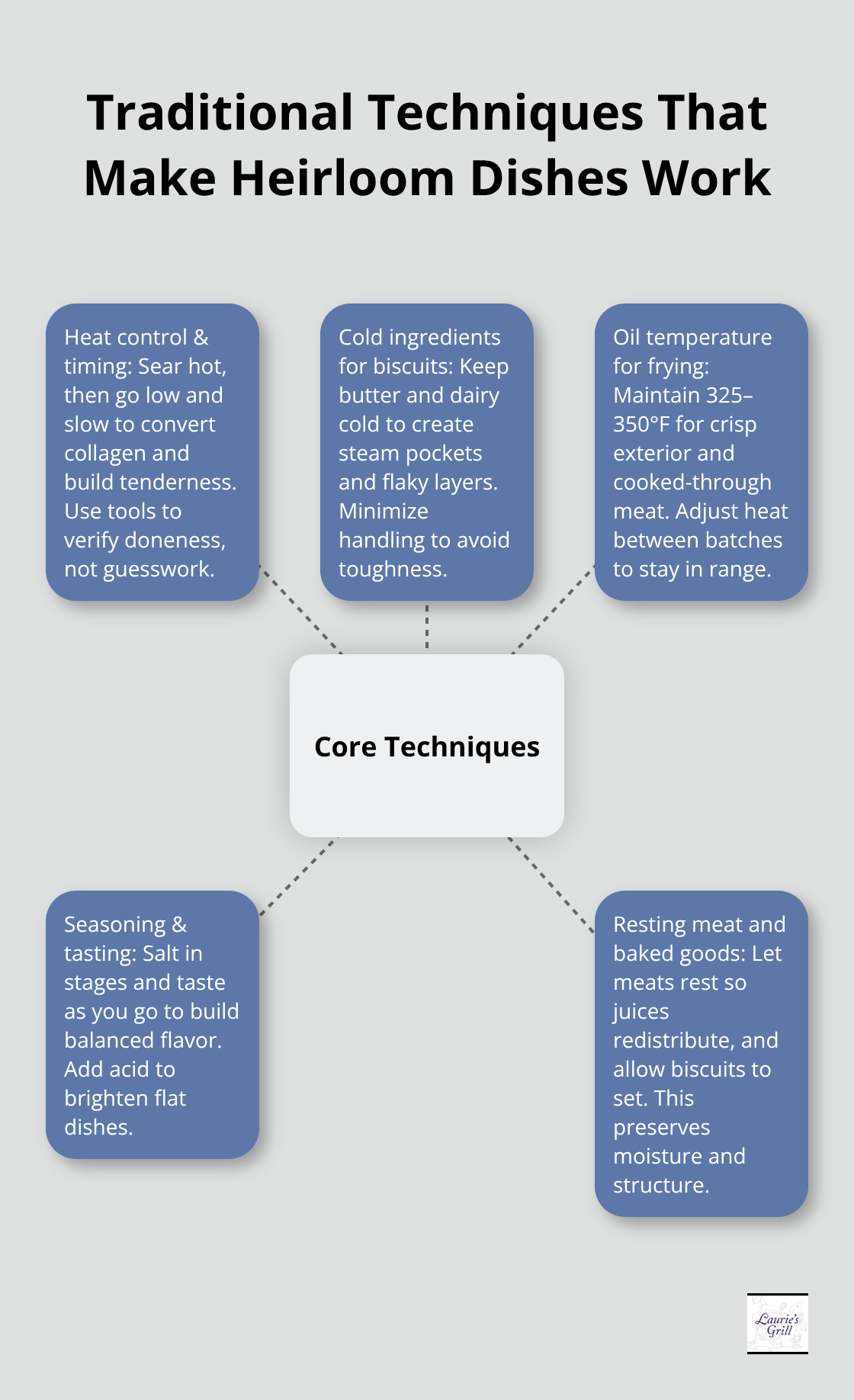
Rushing the cooking process tops the list. Pot roast needs time for the meat to break down and flavors to develop. You can’t speed this up without sacrificing the final result. Using cold ingredients in baking (especially biscuits) changes the texture completely. Cold butter creates flaky layers; warm butter creates dense, tough biscuits. Not tasting as you cook prevents you from adjusting seasoning before the dish is finished. Salt and acid (vinegar or lemon juice) transform bland food into something memorable. Overcrowding the pan when frying chicken lowers the oil temperature and produces greasy results instead of crispy skin. These mistakes repeat across kitchens because cooks don’t understand the why behind each step. Once you grasp why each technique matters, you avoid these pitfalls naturally.
Understanding which dishes to tackle first and what mistakes to avoid sets you up for success. The next step involves learning the specific techniques that make these heirloom dishes taste authentic.
Master the Techniques That Make Heirloom Dishes Work
Heat Control and Timing Transform Tough Cuts
The difference between a mediocre pot roast and an exceptional one comes down to understanding heat control and timing rather than following instructions blindly. Traditional cooking techniques work because they solve specific problems that your ancestors faced repeatedly. Braising requires you to sear meat at high heat to develop a flavorful crust, then lower the temperature to allow collagen in tough cuts to convert into gelatin over several hours. This transformation happens around 160 to 180 degrees Fahrenheit, which is why patience matters more than high heat. A meat thermometer tells you when the internal temperature reaches 190 degrees, the point where the meat becomes tender enough to shred with a fork.
Cast iron excels at braising because it retains heat evenly and transitions smoothly from stovetop to oven without temperature fluctuation.
Cold Ingredients Create Flaky Biscuits
Baking biscuits demands the opposite approach: cold ingredients and minimal handling. The fat in cold butter remains separate from the flour, creating distinct layers that puff up when heat vaporizes the moisture. Warm butter gets incorporated uniformly into the dough, producing dense, tough results instead of flaky texture. A kitchen scale removes the guesswork here. Weigh your flour at 120 grams per cup rather than scooping, since scooped flour compacts and throws off your ratios. Temperature precision matters far more than technique when you bake biscuits.
Oil Temperature Controls Fried Chicken Results
Frying chicken requires oil between 325 and 350 degrees Fahrenheit, which a reliable thermometer measures accurately. Oil cooler than this produces greasy chicken with raw centers. Oil hotter than this burns the outside before the inside cooks through. The Maillard reaction, which creates that golden-brown crust, happens most effectively in this narrow temperature range. These three techniques cover the fundamental skills that unlock everything else in traditional cooking.
Seasoning and Tasting Build Flavor Depth
Seasoning decisions separate good cooks from great ones, and traditional recipes teach you to taste constantly throughout cooking rather than seasoning only at the end. Salt enhances flavors that already exist; it doesn’t mask them. Add salt incrementally and taste after each addition, because you can always add more but cannot remove it. Acid from vinegar or lemon juice brightens flavors that taste flat or dull, even when salt levels are correct. A pot roast braising liquid needs both salt and acid to taste complete. This is why vinegar-based pot roast gravies taste better than those made with broth alone.
Mistakes That Derail Traditional Cooking
Overcrowding your pan when frying chicken drops the oil temperature immediately, and the chicken steams instead of fries. Leave space between pieces so air circulates and oil maintains temperature. Not letting meat rest after cooking means the juices redistribute unevenly, making the meat dry. Pot roast needs 15 minutes of rest before serving. Chicken needs 5 to 10 minutes. Biscuits baked straight from the oven need to cool slightly so the structure sets properly. Common mistakes happen because cooks skip the tasting step or rush through it. Understanding these principles transforms you from someone following recipes into someone who knows why each step matters and can adapt when circumstances change.
Final Thoughts
Your family’s recipes represent something that no restaurant or grocery store can replicate. When you master these dishes properly, you preserve knowledge that would otherwise vanish. The techniques your ancestors developed solved real problems with the ingredients and equipment they had available, and traditional family recipes in Bend carry that same weight today.
Call an older family member and ask which three dishes appeared most often on their table. Write down what they remember about how those dishes were prepared, because those details matter far more than you might think. Cook pot roast monthly until you understand how heat and time transform tough meat into something tender, make biscuits weekly until your hands know the right texture without thinking, and fry chicken until you can judge oil temperature by sound and appearance.
We at Laurie’s Grill built our restaurant on this same principle-serving home-style cooked meals that taste like someone who cares prepared them. Visit us to experience the kind of food that reminds you why these recipes matter, and start your own culinary journey in your kitchen with quality ingredients and a willingness to taste as you cook.

Recent Comments