
Mashed potatoes are one of those dishes that should be simple, yet so many home cooks struggle to get them right. The difference between creamy, buttery perfection and gluey disappointment often comes down to a few specific techniques.
At Laurie’s Grill, we’ve tested countless methods to nail this classic side dish every single time. This guide walks you through the exact steps that eliminate guesswork and deliver results you’ll be proud to serve.
Selecting and Preparing Your Potatoes
Choose the Right Potato Variety for Creaminess
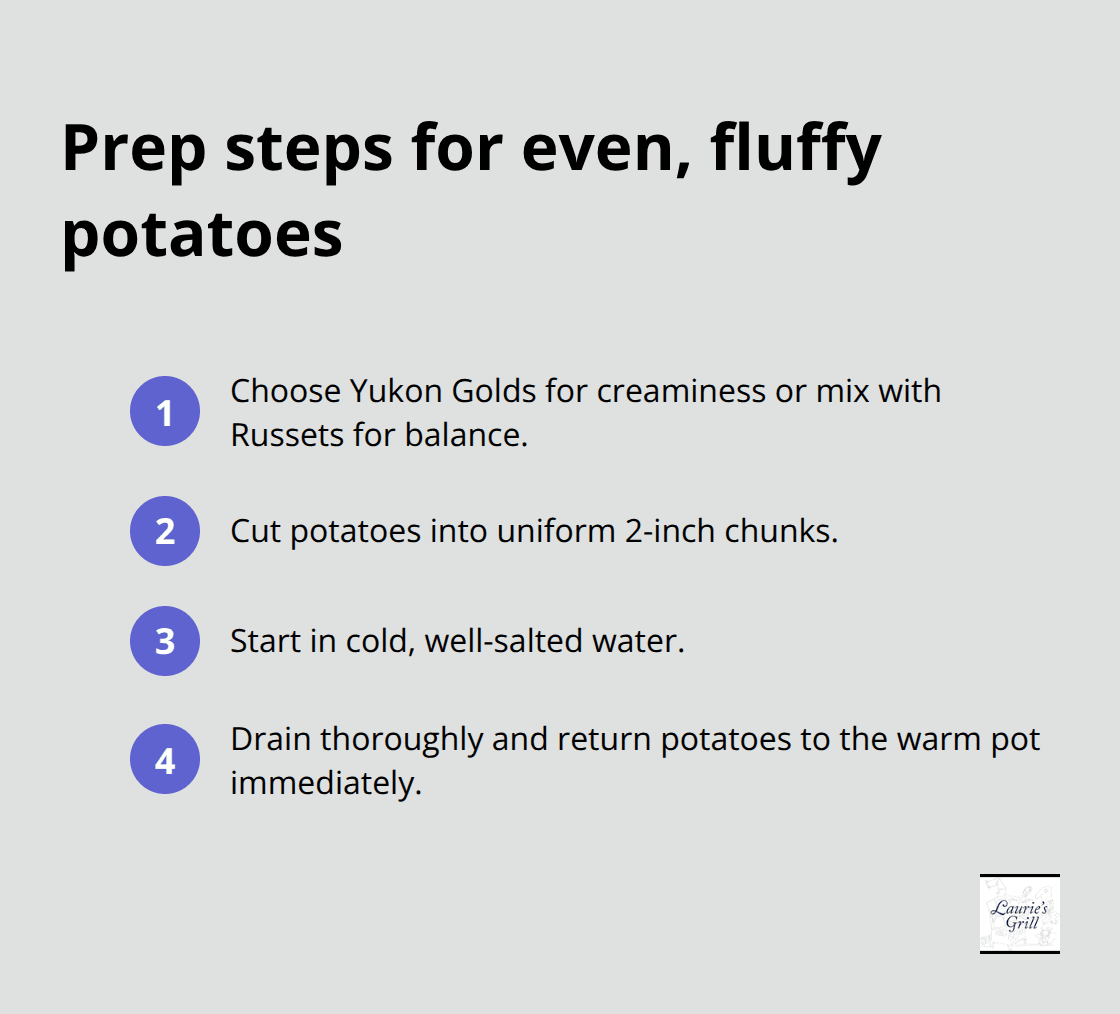
The potato variety you select determines everything about your final dish. Russet potatoes, with their high starch content around 20%, deliver fluffy mashed potatoes, but they don’t always produce the creamiest results. Yukon Gold potatoes contain more moisture than Russet potatoes, making them creamier without requiring extra effort. Most home cooks obsess over achieving creaminess through added butter and cream, yet the potato itself matters more than most realize. We recommend using Yukon Gold potatoes if creaminess ranks as your priority, or mixing equal parts Russet and Yukon Gold if you want the fluffiness of Russets combined with the natural richness of Yukon Golds. You’ll need about 4 pounds of potatoes for 10 servings, which takes roughly 20 to 25 minutes to cook once boiling.
Cut Potatoes Into Even Pieces
Cut your potatoes into evenly sized pieces-roughly 2-inch chunks work best-because uneven pieces cook at different rates, leaving you with some undercooked and others waterlogged. Start potatoes in cold salted water rather than adding them to boiling water, which helps them cook more evenly throughout. The salt in the water (typically around 1 to 2 tablespoons per large pot) seasons the potatoes from the inside out and prevents them from absorbing excess water.
Drain and Rest Your Potatoes
After your potatoes reach fork-tender consistency, drain them thoroughly in a colander. This resting period allows steam to escape, which prevents watery, disappointing mashed potatoes that won’t hold their texture. Return the drained potatoes to the warm pot immediately-never let them cool down-because cold potatoes won’t incorporate butter and cream smoothly. The temperature difference between hot potatoes and cold dairy creates lumps and uneven texture, no matter how hard you mix. Work quickly from the draining step through to the final mashing, keeping everything hot throughout the process. This temperature control sets the stage for the techniques that transform your potatoes into something truly creamy.
The Secret to Creamy Mashed Potatoes
Temperature Control Determines Your Success
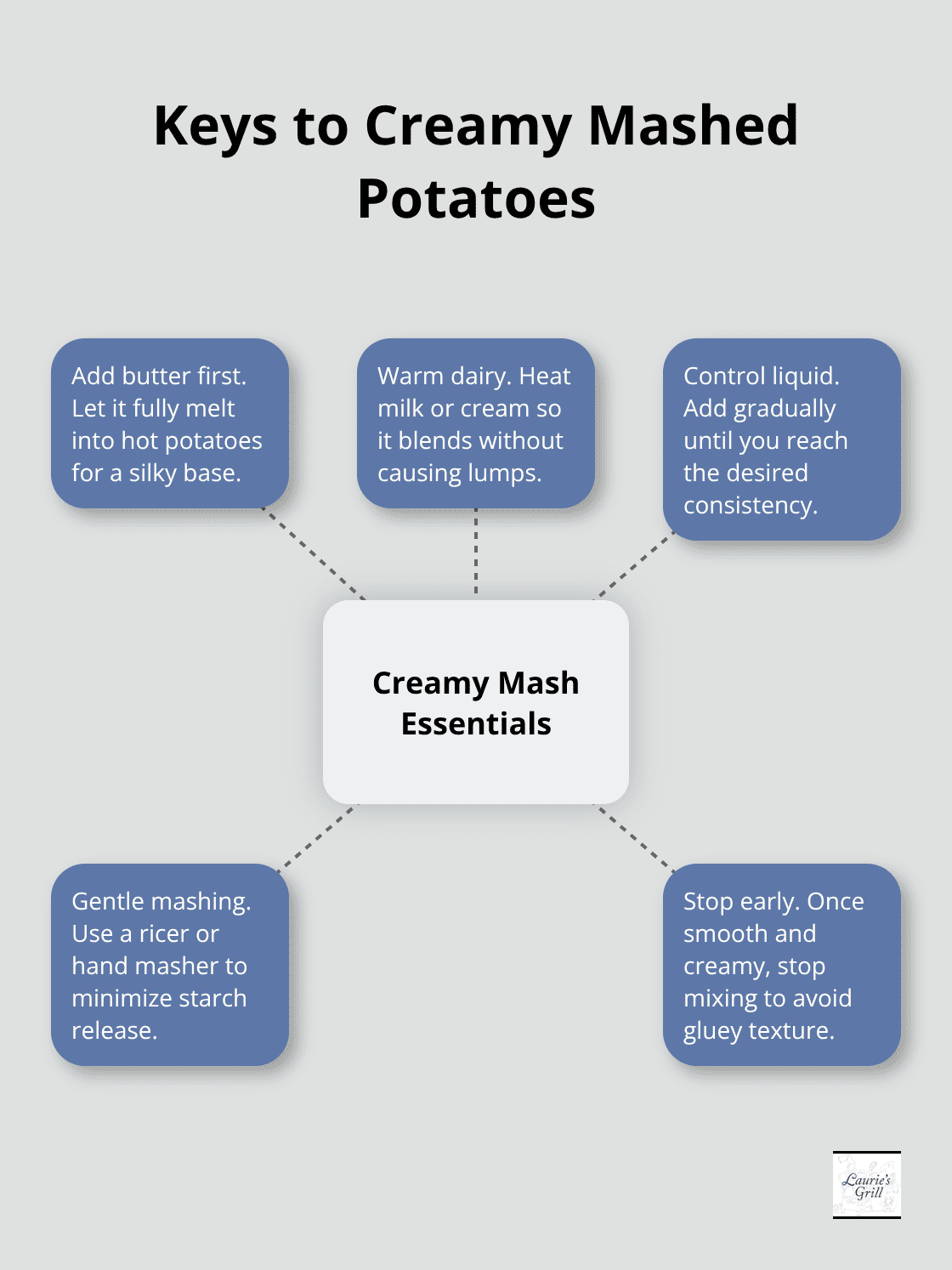
The moment you drain those hot potatoes, you enter the most critical phase of the entire process. Hot potatoes absorb butter and cream efficiently, while cooling potatoes reject them, creating separation and a grainy texture that no amount of mixing can fix. Add your butter first while potatoes sit in the warm pot, allowing it to melt completely into the starch. Use 3/4 cup of butter per 4 pounds of potatoes (roughly 3 tablespoons per pound).
This ratio might sound heavy, but it delivers the silky mouthfeel that defines genuinely creamy mashed potatoes.
Warm your milk or cream before adding it to the potatoes. Cold dairy straight from the refrigerator shocks hot potatoes and creates lumps instantly. The temperature difference between hot potatoes and cold liquid creates separation and uneven texture that no amount of mixing can fix.
Liquid Ratios Control Creaminess, Not Mixing
Add warmed liquid gradually, starting with 1 cup and adjusting from there, because you control creaminess through liquid volume, not through aggressive mixing. Each potato variety absorbs moisture differently, so Yukon Gold potatoes need less liquid than Russets. Stop adding liquid the moment your potatoes reach your desired consistency, because excess liquid creates a soupy side dish that tastes more like potato soup than mashed potatoes.
The Right Mixing Method Prevents Gluey Paste
Use a potato ricer or sturdy hand masher exclusively, applying steady downward pressure without twisting or grinding motions. A ricer produces the smoothest texture because it forces potatoes through small holes, creating uniform consistency in roughly 2 to 3 minutes. Electric mixers and food processors damage potato cells, releasing excess starch and turning your creation into wallpaper paste within seconds. Once your potatoes reach your target texture, stop mixing completely. Additional mixing only makes things worse.
Seasoning and Finishing Touches
Season with salt gradually, tasting as you go, because mashed potatoes need roughly 1 to 1.5 teaspoons of salt per 4 pounds to taste properly seasoned without oversalting. Fresh cracked black pepper and fresh chives added at the very end brighten the dish without requiring additional mixing. Transfer finished mashed potatoes to a serving bowl immediately, or keep them warm in a slow cooker on the lowest setting with a pat of butter pressed onto the surface to prevent a skin from forming. These techniques set the foundation for perfect mashed potatoes, but common mistakes can still derail your efforts even when you follow every step correctly.
Common Mistakes That Ruin Mashed Potatoes
Overcooking Potatoes Destroys Your Foundation
Most home cooks sabotage their mashed potatoes at the cooking stage without realizing it. Potatoes that cook for even five minutes too long transform from fluffy to waterlogged, and once that happens, no amount of butter or cream can save them. The window between perfectly cooked and overcooked sits at roughly 20 to 30 minutes for 2-inch chunks starting from cold water. Test your potatoes with a fork at the 18-minute mark instead of waiting until they fall apart in the water. Potatoes that are slightly underdone firm up slightly during the mashing and resting process, while overcooked potatoes absorb water and turn to mush. This single mistake accounts for roughly half of all mashed potato failures.
Cold Dairy Creates Instant Lumps and Separation
The second major error happens immediately after draining, when home cooks add cold dairy straight from the refrigerator. Cold milk or cream temperature-shocks hot potatoes and creates instant lumps and separation that persist no matter how thoroughly you mix. This temperature differential forces the starch to seize up and reject the liquid, leaving you with grainy texture and visible separation. Warming your dairy beforehand takes three minutes in a saucepan over medium heat and eliminates this problem entirely. Hot potatoes accept warm liquid smoothly, while cold potatoes resist it completely.
Electric Mixers and Overmixing Turn Potatoes to Paste
The third critical mistake involves using electric mixers or continuing to mix after you’ve reached the right consistency. Electric mixers activate potato starch excessively, releasing compounds that transform your dish into a gluey paste. A sturdy hand masher or potato ricer requires roughly 2 to 3 minutes of work and produces superior results because it works gently without damaging cell structure. Once you achieve your desired texture, stop working the potatoes completely. Continuing to mix after you’ve reached the right consistency only makes texture worse, turning silky potatoes into something resembling library paste.
Final Thoughts
Perfect mashed potatoes rest on three core principles: selecting the right potato variety, maintaining temperature control throughout the process, and stopping your mixing the moment you reach the desired texture. Yukon Gold potatoes deliver natural creaminess, hot potatoes accept butter and cream without resistance, and a sturdy hand masher produces silky results that electric mixers cannot match. These fundamentals eliminate the guesswork that trips up most home cooks.
Customizing your mashed potatoes beyond the basic recipe opens endless possibilities without compromising quality. Sour cream or Greek yogurt adds tanginess and richness, while shredded cheddar or parmesan introduces savory depth. Roasted garlic, caramelized onions, and fresh herbs like rosemary or thyme transform the dish into something entirely new while maintaining the creamy foundation you’ve built (start with the core technique, then experiment with additions once you’ve mastered the fundamentals).
Prepare mashed potatoes ahead to eliminate stress on busy cooking days, then cool them to room temperature and refrigerate in an airtight container for up to five days. Reheat in a covered baking dish at 325°F for 35 to 40 minutes, adding a splash of milk and a pat of butter to restore creaminess. Visit Laurie’s Grill in Bend, Oregon, to experience the comfort food traditions that define genuine American dining.

Recent Comments